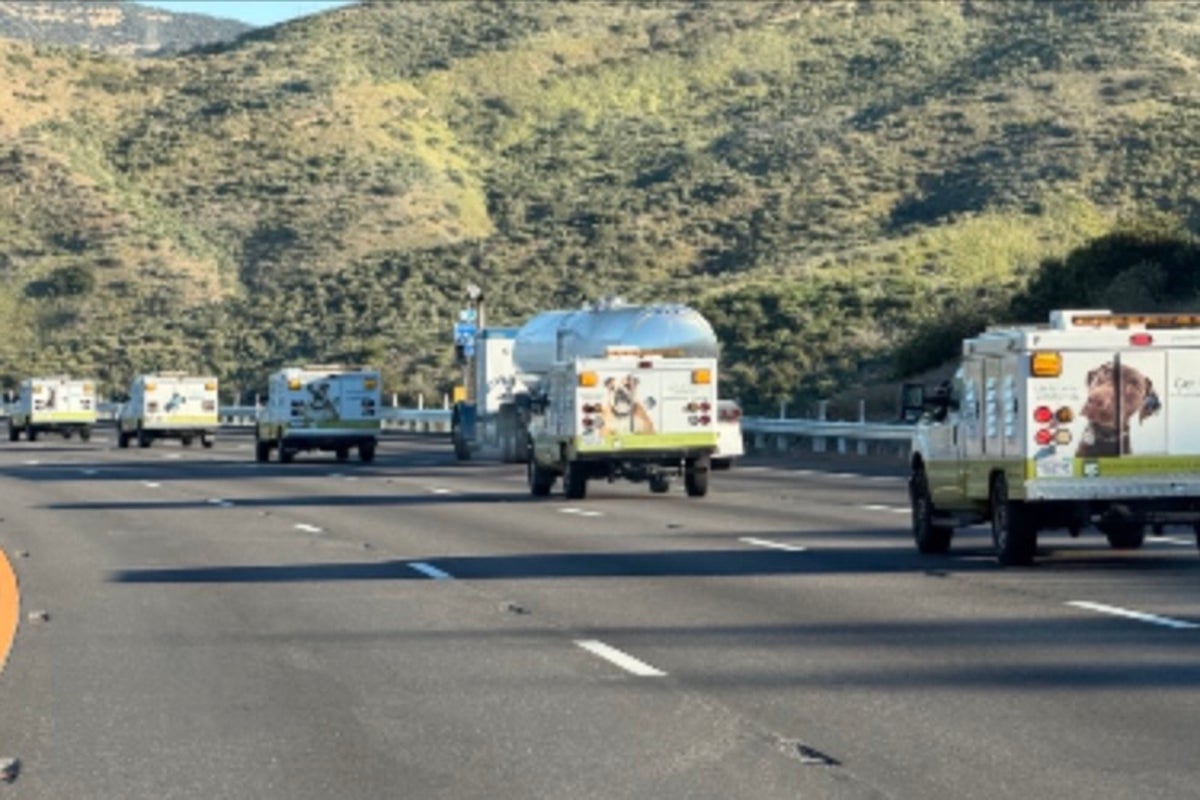
The discovery of 700 animals living in squalor across Los Angeles County is not a freak occurrence or a simple case of a rescue operation gone wrong. It is the predictable result of a broken enforcement system and a regulatory vacuum that allows high-volume animal hoarding to masquerade as humanitarian aid. When authorities moved in to seize hundreds of dogs and cats from properties this week, they weren't just clearing out cages; they were exposing a systemic failure in how the state monitors those who claim to protect the vulnerable.
This operation represents one of the largest seizures in Southern California history. The numbers alone—700 lives—suggest an industrial scale of operation that should have been flagged by local oversight months, if not years, ago. Instead, these animals were left to languish in overcrowded, unsanitary conditions until the stench and the noise became impossible for the surrounding community to ignore.
The Business Model of the Hoarder Rescue
To understand how 700 animals end up in a single operation, you have to look at the distorted economics of modern animal rescue. In the investigative world, we see a recurring pattern where the line between a legitimate non-profit and a hoarding situation becomes blurred. Many of these large-scale seizures involve individuals who started with good intentions but lacks the infrastructure, funding, or psychological capacity to manage the sheer volume of animals they take in.
They often rely on "pulling" animals from municipal shelters that are desperate to lower their euthanasia rates. This creates a dangerous incentive structure. Municipal shelters get to report better "live release" numbers, while the private rescues take on more animals than they can ethically house.
When a rescue stops being about rehabilitation and starts being about collection, the animals pay the price. In the LA County case, investigators found animals stacked in crates, suffering from untreated respiratory infections, skin conditions, and severe malnutrition. This isn't an accident. It is the mathematical certainty of putting 700 living beings into a space designed for fifty.
The Failure of Municipal Oversight
Los Angeles County has some of the most stringent animal control laws on paper, but the enforcement is chronically underfunded and reactive rather than proactive. The Department of Animal Care and Control (DACC) often finds itself trapped in a cycle of responding to complaints after the damage is done.
The "why" behind this specific disaster lies in the lack of a mandatory, rigorous inspection regime for private rescues and sanctuaries. Currently, once a group attains 501(c)(3) status, they often fly under the radar unless a neighbor smells something or a disgruntled volunteer leaks photos to the press.
We are seeing a massive gap in the "How" of public safety.
- Permit Loop holes: Many large-scale operations run on properties zoned for residential use, bypassing commercial kennel requirements.
- Budget Strains: Code enforcement officers are spread thin, prioritizing immediate threats to human life over animal welfare reports.
- Shelter Pressure: The political push for "No-Kill" status in city shelters leads to a "don't ask, don't tell" culture regarding where those animals go once they leave the city's gates.
If the county was monitoring the intake numbers of these organizations against their known square footage and staffing levels, a seizure of 700 animals would never be necessary because the intervention would have happened at animal number seventy-five.
The Physical and Psychological Toll of Mass Seizure
When an operation of this magnitude occurs, the immediate focus is on the "rescue." But for the animals, the seizure is another layer of trauma. Moving 700 sick and terrified dogs and cats requires a massive logistical mobilization that rivals military deployments.
The animals aren't going to a field of daisies. They are going back into an already overcrowded municipal system. They are being placed in temporary holding facilities, often in "emergency" crates that aren't much better than the ones they were rescued from. The logistical nightmare includes:
- Medical Triage: Every single one of the 700 animals must be examined by a veterinarian. This creates an instant backlog in the county's medical resources.
- Evidence Collection: Because this is a criminal investigation into animal cruelty, each animal’s condition must be documented as evidence. This slows down the process of getting them the long-term care they need.
- Legal Custody: The "owner" of these animals may fight the seizure in court. This means the 700 animals are essentially "legal evidence" and cannot be adopted out until a judge rules on the case.
This is the brutal truth of the situation. The rescue is just the beginning of a long, bureaucratic, and often painful process for the animals involved. Some will be too sick to save. Others will be too behaviorally damaged by the confinement to ever be placed in a home.
Countering the Lone Wolf Narrative
The media often portrays these cases as a single "crazy" individual who lost their way. This is a convenient narrative because it absolves the system of responsibility. If it’s just one bad actor, we don't have to change the laws.
However, an investigation into the "How" suggests that these operations often have a network of enablers. This includes donors who give money based on heartbreaking social media posts without ever visiting the facility. It includes other rescues who dump their "unadoptable" dogs on these hoarders just to clear their own books. It includes local officials who ignore early warning signs because they don't want to deal with the cost of seizing hundreds of animals.
The LA County operation was likely visible from space in terms of its logistical footprint. You don't hide 700 animals. You exist in plain sight because the people tasked with watching you are looking the other way.
Moving Toward Accountability
If we want to stop the cycle of mass seizures, the solution isn't more "awareness" or more donations to the same broken system. It is a fundamental shift in how we regulate animal organizations.
The state needs to implement a mandatory registration and inspection program for any entity housing more than 20 animals. This program must be funded by licensing fees, not just taxpayer dollars. Furthermore, there must be a centralized database that tracks animal movement from municipal shelters to private rescues. If a rescue "pulls" 500 dogs in a year but only has an adoption rate of 10%, an automatic audit should be triggered.
We must also address the psychological component. Animal hoarding is a recognized mental health disorder. Treating these cases purely as criminal matters ignores the fact that without intervention, these individuals will simply start over the moment the police leave.
The sheer volume of this seizure should serve as a final warning. We are running out of space, out of money, and out of excuses for a system that allows 700 animals to suffer in the shadows of one of the wealthiest counties in the world.
Demand that your local representatives support the Emergency Animal Oversight Act, which proposes stricter zoning and mandatory bi-annual inspections for all private animal sanctuaries within county limits.