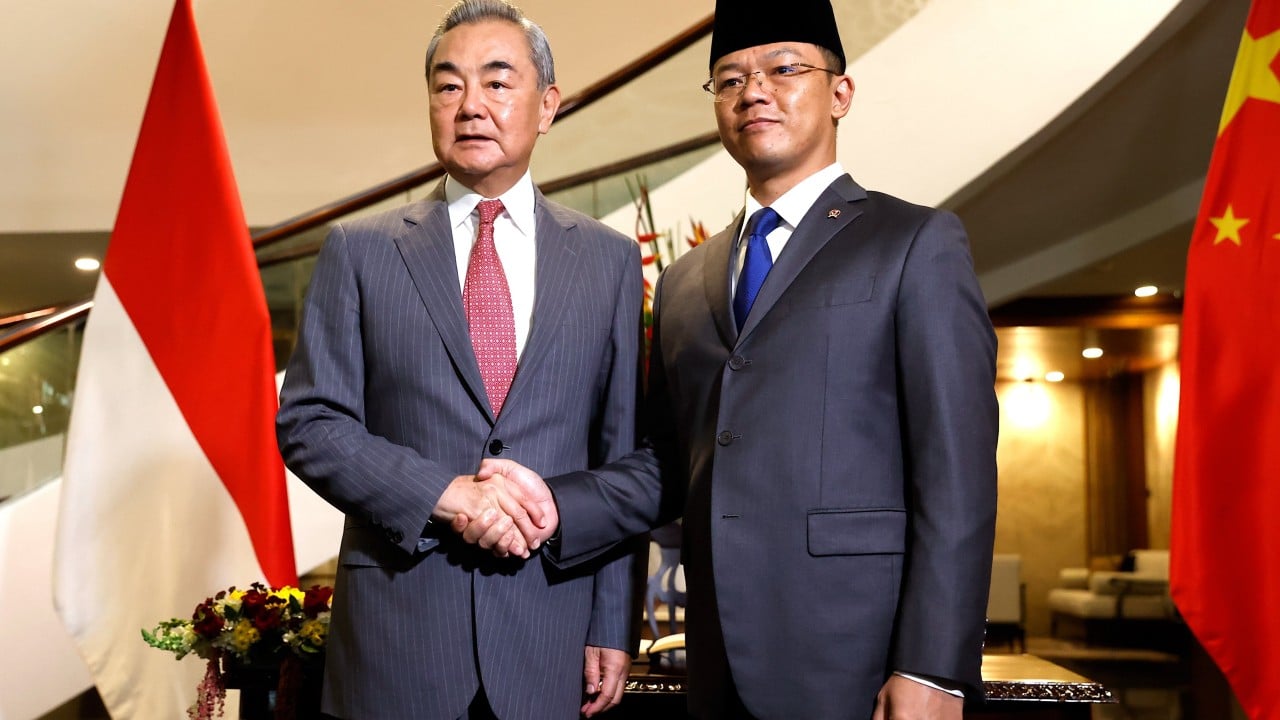
When an Indonesian navy frigate crossed paths with a Chinese warship east of Taiwan for a routine passing exercise, alarm bells rang across foreign ministries from Washington to Tokyo. Beijing immediately painted the interaction as a strategic joint operation, hoping to normalize its territorial claims. Jakarta called it standard maritime diplomacy on the way home from Russia.
You're probably wondering if other Southeast Asian nations will jump on this bandwagon and start running joint drills with China too. The short answer is no. Most of the region's capitals are watching Indonesia's diplomatic tightrope walk with quiet anxiety rather than envy.
The Reality of ASEAN Hedging
Southeast Asia doesn't operate as a single bloc when it comes to military partnerships. Every nation plays its own game of strategic survival against the backdrop of superpower rivalry. Indonesia holds a constitutional commitment to a "free and active" foreign policy, meaning it talks to everyone and allies with no one.
Other ASEAN members look at Indonesia's recent Chinese naval encounter as a cautionary tale rather than a blueprint. When Jakarta conducted that brief passing exercise with the Chinese vessel Honghe, Beijing capitalized on the optics instantly. Analysts pointed out that Indonesia lacked the necessary strategic guardrails to prevent a friendly wave at sea from being weaponized for Chinese propaganda.
Other capitals notice these traps. Countries like the Philippines face direct maritime friction with Beijing in the South China Sea daily. For Manila, joint drills with China are off the table. Vietnam balances an equally cautious line, preferring self-reliance and multi-directional defense diplomacy over high-profile naval maneuvers with its giant northern neighbor. Singapore relies heavily on a deeply integrated security network with Western partners while maintaining commercial ties with Beijing, carefully avoiding exercises that could signal a sudden tilt.
The Cost of Strategic Naivety
Indonesia's experience proves that playing nice with every major power has steep hidden costs. If you aren't aggressively managing your narrative, other nations will write it for you.
The timing of the drill didn't help. It happened just as senior defense officials from the United States were visiting Jakarta to negotiate deeper defense ties. Days after the Chinese passing exercise made headlines, Indonesian defense and foreign ministers held high-level talks in Jakarta to reaffirm broad-spectrum cooperation. Jakarta clearly tries to keep its options wide open, balancing major economies without sliding into any single orbit.
Yet, this balancing act leaves room for operational miscalculations. Smaller ASEAN nations don't have Indonesia's economic size or diplomatic weight. If a smaller state stumbles into a similar public relations trap with Beijing, they lack the leverage to shrug off the regional fallout. They cannot afford to accidentally legitimize contested maritime claims near Taiwan or inside the South China Sea.
What Real Regional Defense Integration Looks Like
If you want to see where Southeast Asia actually invests its military trust, look at multilateral exercises instead of bilateral photo-ops. Indonesia itself hosts large-scale events like the Multilateral Naval Exercise Komodo and leads regional drills such as the ASEAN Solidarity Exercise. Multinational frameworks dilute the risk of being co-opted by a single superpower.
Furthermore, Indonesia's core defense institutionalization remains heavily anchored to Western and regional partners. Exercises like Super Garuda Shield involve thousands of personnel from the United States, Australia, Japan, and other aligned nations. Those ties run deep, featuring structured training, intelligence sharing, and long-term procurement lines that a casual passing drill with Beijing simply cannot replace.
You won't see a domino effect across Southeast Asia following Indonesia's latest naval episode. Neighboring states view the event as an accidental diplomatic stumble rather than a masterclass in hedging.
To navigate the current geopolitical storm without losing sovereignty, regional capitals must enforce strict communication guardrails. Stop treating naval diplomacy as a casual handshake. Demand absolute clarity on how maneuvers are publicized, or risk becoming an unwitting prop in someone else's territorial drama.
To explore the details of how this naval drill near Taiwan unfolded and why it sparked regional controversy, watch China Naval Drill with Indonesia East of Taiwan Sparks Taipei Protest.
http://googleusercontent.com/youtube_content/1



&cropxunits=693&cropyunits=464)