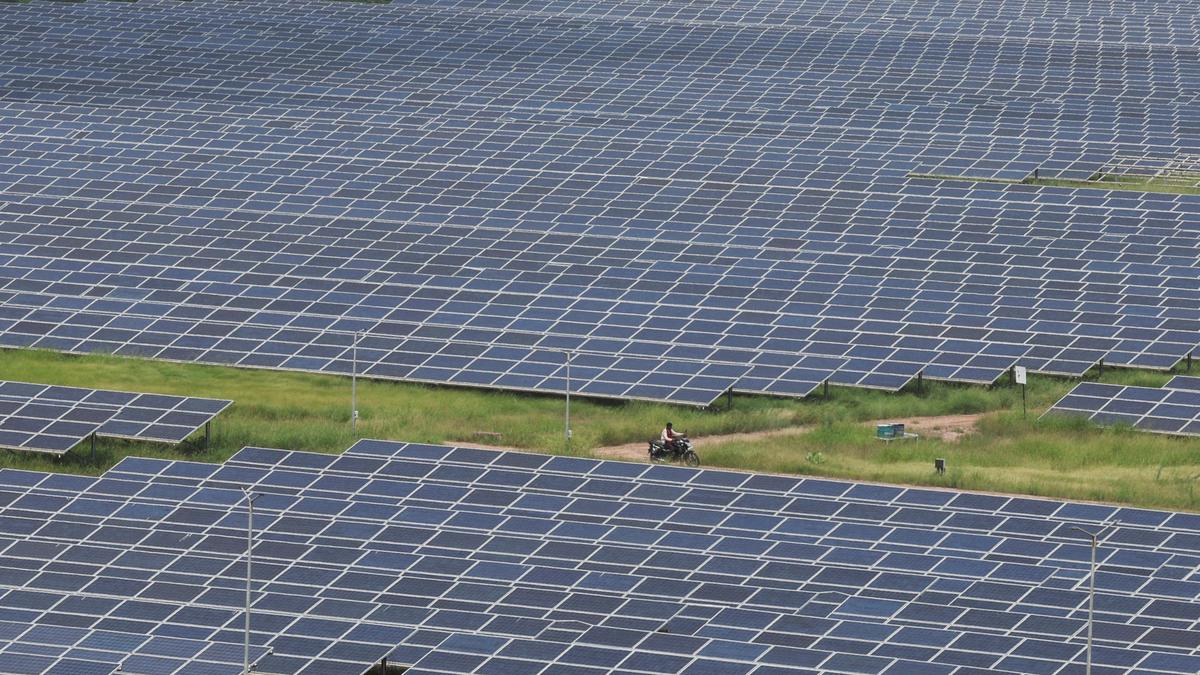
India is throwing a staggering amount of money at its power and fuel networks. The International Energy Agency (IEA) just dropped its World Energy Investment 2026 report, and the headline figure is massive. India's annual energy investment is on track to hit a record $170 billion this year.
If you listen to the standard talking points, you'll hear a clean, simple story about a massive solar boom. That's part of it. Solar spending has grown by 25% annually since 2020, putting a massive dent in global emission trajectories. But if you think India is completely abandoning fossil fuels, you're missing the real story. For a closer look into similar topics, we suggest: this related article.
The reality is messy, pragmatic, and highly strategic. Look past the green PR and you'll find a country balancing a desperate need for immediate energy security with its long-term climate goals. India isn't just building solar panels. It's simultaneously expanding its crude oil refining capacity, aggressively digging for more domestic coal, and completely rebuilding its electrical grid from the ground up to prevent the whole system from collapsing under the weight of intermittent renewable power.
The Dual Engines of Solar and Refining
The IEA report shows that India's energy investments have surged by an average of 11% annually over the past five years. When you look closely at where that growth is coming from, two sectors stand out. Solar power and oil refining together drove an incredible 25% of the total investment increase. For additional information on this topic, in-depth coverage is available at Forbes.
That seems like a contradiction. Why pour billions into expanding oil refineries when you're also leading a global renewable charge? Because India's economy is growing at a breakneck pace and its population needs fuel today, not just a decade from now.
The surge in downstream processing capital means India is on track to expand its crude refining capacity by nearly 15% by 2030. Right now, the country sits at about 260 million metric tonnes per annum (MMTPA) of refining capacity. The goal is to cross 300 MMTPA quickly. The administration isn't shy about this either. At India Energy Week earlier this year, the official line was clear. India intends to establish itself as a primary global refining hub.
The catch is that India still imports the vast majority of its crude oil. While downstream processing is booming, upstream investment—actually drilling for oil and gas within India—has shrunk by an average of 7% every year since 2020. The government is trying to reverse this with new licensing regimes and exploration pushes, even looking at frontiers like the Andaman and Nicobar basin. But for now, India's strategy relies on buying foreign crude and processing it domestically to keep fuel prices stable for its citizens.
The Irony of the Coal Supply Boom
You can't talk about India's energy footprint without talking about coal. It remains the absolute bedrock of the nation's industrial demand and baseload power generation.
While Western nations try to regulate coal out of existence, India has become the world's second-largest investor in coal supply. The country's coal investments have literally tripled over the last ten years. In 2026 alone, capital spending on coal supply will hover around $13 billion.
The goal here isn't to spite global climate agreements. It's about basic survival and economic sovereignty. India currently produces around 1 billion tonnes of coal annually, but it wants to push that to 1.5 billion tonnes by 2030. Why? To insulate itself from volatile global commodity markets. Buying expensive imported coal drains foreign exchange reserves and leaves the domestic grid vulnerable to geopolitical shocks. Tripling down on domestic mining keeps the lights on while the green infrastructure catches up.
But don't mistake this coal push for an absolute rejection of clean energy. The spending ratio tells a fascinating story. Five years ago, India spent about $1.50 on renewable and nuclear energy for every dollar it spent on fossil fuel power generation. Today, that ratio has doubled. India now invests roughly $3 into clean power and nuclear for every single dollar directed toward fossil fuel electricity. In fact, total investment in building new coal-fired power plants has plummeted to just 40% of its 2010 peak.
So, the nuance is critical. India is spending less on building new coal power plants, but it's spending far more on securing the domestic coal supply to feed its existing plants while renewables scale up.
Why the Grid Is the Real Battlefield
Building solar farms is the easy part. Managing the electricity they produce is where things get incredibly complicated.
India achieved a major milestone in 2025 by hitting its Nationally Determined Contribution target early, sourcing 50% of its installed power generation capacity from non-fossil sources. Solar and wind combined now represent over half of the country's total installed capacity.
That sounds like a victory, but it creates a massive engineering headache. Solar power only works when the sun shines. Wind power is entirely dependent on the weather. When you flood a national grid with highly variable power, you risk destabilizing the entire network or being forced to dump perfectly good green energy because the wires can't handle the sudden surges.
To prevent this massive curtailment of renewable energy, the focus of capital has shifted dramatically to transmission, distribution, and storage. Investment in the grid network is projected to hit $26 billion this year. This comes after half a decade of steady 15% annual growth in grid infrastructure spending.
[Renewable Generation: >50% Capacity] ──> [Grid Intermittency Shock]
                                                 │
    ┌────────────────────────────────────────────┴────────────────────────────────────────────┐
    ▼                                            ▼                                            ▼
[Transmission Upgrades]               [Battery Storage Deployment]                [Pumped Hydro Storage]
($26B in 2026 via GEC)               (PSDF Viability Gap Funding)                (CEA 100 GW Target by 2036)
The heavy lifting here is being done by initiatives like the Green Energy Corridor project. The first phase of this program has deployed over 3,000 kilometers of heavy-duty transmission lines designed specifically to evacuate clean energy from remote, sun-drenched regions and inject it into the national grid. These projects require serious financial engineering, utilizing a mix of 30% equity and 70% debt backed by multilateral development banks and commercial lenders.
Cracking the Energy Storage Puzzle
The ultimate success of India's $170 billion gamble depends heavily on energy storage. You have to store daytime solar energy so you can use it at 8 PM when demand peaks.
The market response here has been swift, driven primarily by falling technology costs and aggressive state intervention. In 2023, the discovered tariff for battery storage in India sat at a pricey $14,700 per megawatt per month. By 2025, that cost plummeted to less than $3,000 per megawatt per month.
To keep this momentum going, the state has rolled out a viability gap funding mechanism supported by the Power System Development Fund. This program acts as a financial cushion, absorbing some of the initial capital risk for private investors building large-scale battery storage installations.
But there's a strategic catch. To qualify for this cash, developers must meet a strict 20% local content requirement. India isn't just looking to buy cheap imported batteries to fix its grid. It wants to use this historic energy transition to build a domestic clean energy manufacturing supply chain.
Beyond batteries, the Central Electricity Authority has mapped out a massive long-term roadmap for pumped hydro storage. The plan calls for developing 100 GW of pumped storage capacity by the mid-2030s. It turns out that pumping water up a hill when solar power is abundant and letting it run down through turbines when the sun sets is still one of the most reliable ways to balance an overloaded electrical grid.
What This Realignment Means for Your Capital
If you're an asset manager, developer, or supply chain strategist, looking at India through a purely green or purely fossil lens will lose you money. The data points to a highly synchronized hybrid reality.
Keep a close eye on the transmission and storage tenders coming out of the Central Electricity Authority. The real money isn't just in generating megawatts anymore. It's in the infrastructure that stabilizes those megawatts. Look for opportunities in the expanding ecosystem of wind-solar hybrid projects and independent energy storage systems.
Factor in the strict domestic manufacturing mandates. Whether you're bidding on solar components or battery arrays, navigating the local content rules is the only way to tap into state subsidies and viability gap funding.
Expect continued regulatory shakeups in the upstream oil and gas sector. The government's desperation to reverse the 7% annual decline in domestic drilling means they'll likely keep sweetening the deal for exploration capital. At the same time, don't write off domestic coal infrastructure investments. They remain heavily protected by state policy to ensure baseline economic security.
The massive capital allocation highlighted by the IEA proves India isn't waiting around for global consensus. They're spending historic sums to build an energy network that protects their growth today while building the infrastructure required for tomorrow.