The rain in Vladivostok smells of diesel and salt. From the window of a drab, Soviet-era office building overlooking the Golden Horn Bay, you can watch the massive Chinese container ships slide through the gray water. Twenty years ago, those ships felt like guests. Today, they feel like landlords.
For a long time, the Western world looked at the map of Eurasia and saw a simple, comforting hierarchy. There was Beijing, the economic titan, the factory of the world, ascending to global dominance. And there was Moscow, the bruised ex-superpower, isolated by sanctions, burning through its resources, and forced to play the role of the desperate supplicant. The term "junior partner" became a fixture of diplomatic briefings. It was a neat box to put Russia in. It made the chaotic reality of geopolitics feel ordered, predictable, and safe.
But geopolitical realities are rarely neat.
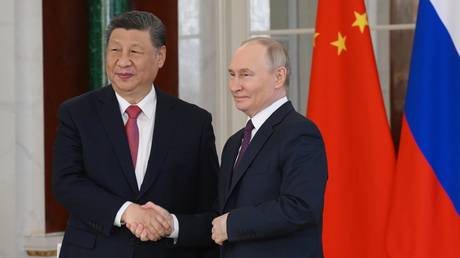
To understand why this hierarchy is crumbling, you have to look past the soaring trade data and the staged handshakes in the Great Hall of the People. You have to look at the psychological architecture of the Kremlin and the cold, transactional math of survival. China did not inherit a puppet. It locked itself into an embrace with a nuclear-armed power that has decided it has absolutely nothing left to lose.
The Weight of the Bear
Imagine two men sharing a life raft. One is a billionaire wearing a tailored suit, desperate to get back to his boardroom. The other is a scarred sailor who just watched his ship sink and is perfectly comfortable swimming through sharks if it means taking his enemy down with him.
Who holds the real leverage in that boat?
Beijing operates on a timeline measured in decades. Its grand strategy—the Belt and Road Initiative, the slow decoupling from Western financial systems, the technological race—relies on global stability. It needs open shipping lanes, predictable markets, and a world order that changes gradually, not violently.
Moscow, by contrast, operates on the timeline of the next winter. Having severed its ties with Europe, Russia transformed its entire society into a war economy. It did not break under the weight of Western sanctions; instead, it adapted with a brutal, fluid resilience that caught Western economists off guard.
When Beijing looks at Moscow today, it does not see a compliant junior partner waiting for instructions. It sees a massive, volatile engine of disruption. Russia possesses the one thing China desperately lacks: raw, unfiltered combat experience against Western-trained forces and an existential willingness to upend the global chess board.
Consider the sheer volume of what flows across that frozen 2,600-mile border. It is easy to look at the tankers filled with cheap Siberian crude oil and assume China is dictating the terms. After all, Russia needs Chinese yuan to keep its economy afloat, and Chinese consumer goods to replace the Western brands that fled Moscow. But dependency is a two-way street.
By consuming Russia’s energy, China has secured a mainland supply line that the United States military cannot easily blockade in the event of a conflict over Taiwan. The Malacca Strait, a maritime choke point through which most of China’s energy currently flows, can be closed by an American carrier strike group. The pipelines stretching across Siberia cannot.
Russia’s energy is no longer just a commodity; it is China’s strategic insurance policy. And insurance is never cheap.
The Invisible Toll of Subservience
There is a distinct human cost to being patronized, and it applies to nations just as it does to individuals. Russian political culture is deeply rooted in a fierce, almost mystical sense of exceptionalism. It is a culture that prides itself on enduring suffering that would break softer societies. The idea that Russia would permanently accept a subordinate role to any foreign power—even one providing its economic life support—misreads centuries of history.
Behind closed doors in Moscow, the reliance on Beijing is viewed not with gratitude, but with a grim, watchful caution. Russian officials know exactly what happens to countries that become entirely dependent on Chinese credit and technology. They have watched parts of Central Asia and Africa struggle under the weight of infrastructure debt. They have no intention of letting the Russian Far East become a resource colony for the Chinese Communist Party.
To assert its equality, Moscow uses the tools it knows best: leverage, unpredictability, and specialized capability.
While China has built a formidable navy and a highly advanced technological sector, Russia still holds the keys to foundational military technologies. Moscow’s expertise in nuclear submarine silencing, hypersonic missile design, and advanced air defense systems represents decades of research that China cannot easily replicate. For years, Russia guarded these crown jewels jealously, selling China older generations of hardware while keeping the best for itself.
That luxury is gone. But the exchange is no longer a one-sided extraction.
When Moscow shares its most sensitive military secrets with Beijing now, it is not acting out of deference. It is demanding a high price. It wants co-development, technology transfers, and diplomatic cover on the world stage. It is an alliance born of mutual vulnerability, where the partner with less money often wields the sharper knife.
The Central Asian Friction
The true test of this fragile equilibrium is not happening in Moscow or Beijing. It is playing out in the vast, windswept steppes of Central Asia—in Kazakhstan, Uzbekistan, and Kyrgyzstan.
For generations, this region was Moscow’s backyard. The Russian language was the lingua franca; the security architecture was anchored by Russian troops. Then came China’s economic expansion. Billions of dollars in investments poured into high-speed rail lines, gas pipelines, and dry ports, quietly buying up influence where Russian factories used to stand.
A junior partner would have stepped aside, deferring to the wealthier patron. Russia did the opposite.
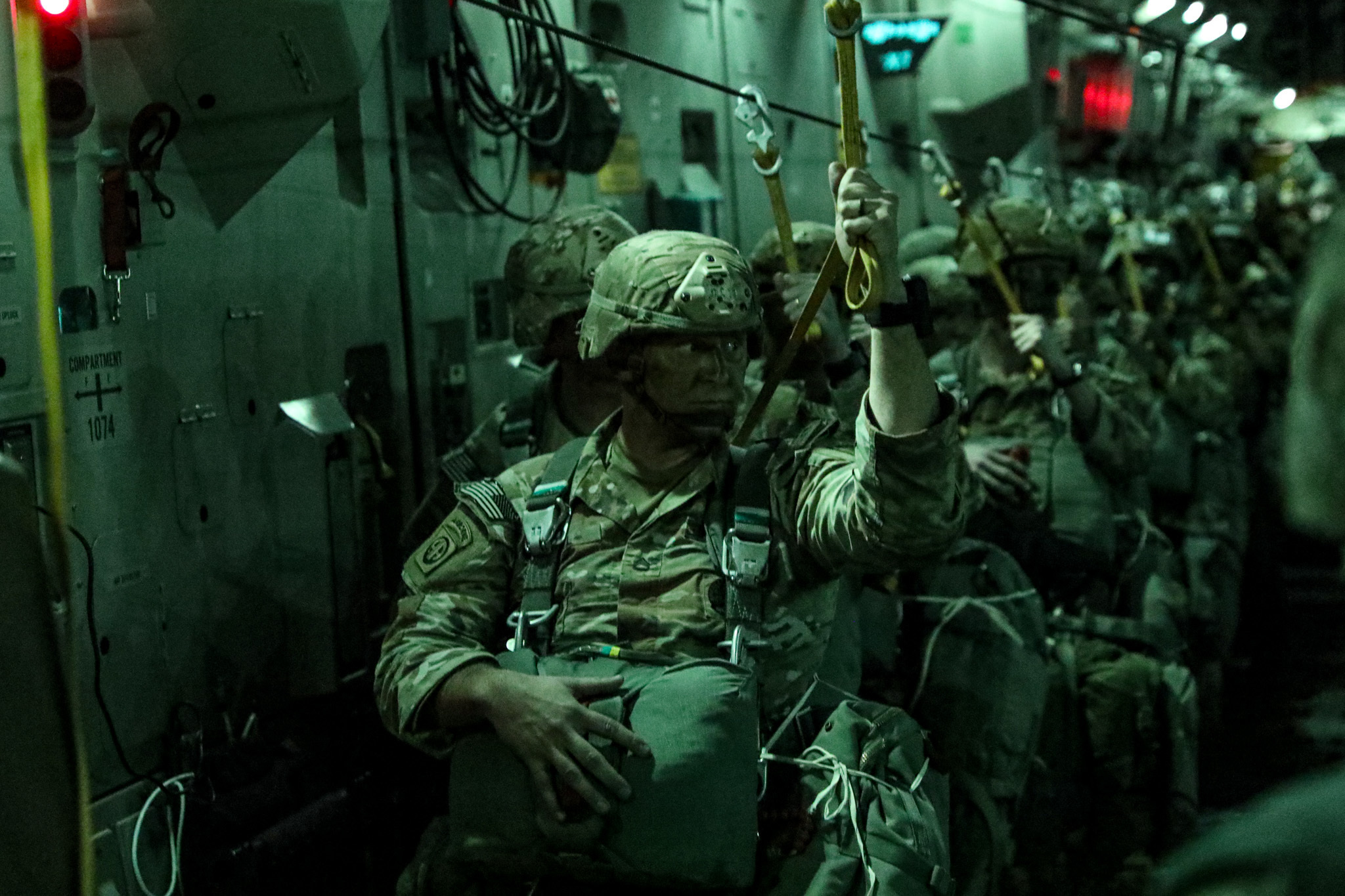
Instead of retreating, Moscow reinforced its position as the indispensable security guarantor of the region. When instability flared in Kazakhstan, it was Russian paratroopers, operating under the Collective Security Treaty Organization, that deployed to stabilize the regime—not Chinese police. Moscow effectively signaled to Beijing that while Chinese money is welcome to build the roads, Russian steel still guards them.
This creates a complex, overlapping matrix of power. China cannot secure its western frontier without Russia’s cooperation, and Russia cannot fund its state apparatus without China’s market. It is a relationship stripped of all ideological romance. There is no shared vision of a communist utopia, nor is there a deep cultural affinity. There is only a cold alignment of grievances against the West.
The Tyranny of the Equal
What happens when the illusion of the junior partner finally shatters?
We are already seeing the shifts. In international forums, Russian diplomats no longer take cues from their Chinese counterparts. They act with an aggressive autonomy, frequently forcing Beijing into uncomfortable diplomatic corners. When Russia escalates tensions in Europe or deepens its military ties with unpredictable regimes like North Korea, it does not ask for Beijing’s permission. It presents China with a fait accompli.
Beijing is left with a difficult choice: publicly distance itself from Moscow and risk losing its vital strategic rear, or double down on its support and further alienate its crucial trading partners in Europe and North America. It is a masterclass in asymmetrical leverage. The poorer, more reckless partner is successfully driving the geopolitical agenda of the wealthier, more cautious one.
The West’s strategy of trying to drive a wedge between the two powers by highlighting Russia’s perceived inferiority has failed. It was based on the flawed assumption that Moscow’s pride would make it snap under Chinese dominance. But Moscow understood the dynamics far better than the analysts in Washington or Brussels. They knew that by making themselves indispensable to China’s long-term survival, they could transform their economic weakness into geopolitical strength.
The ships will continue to move through the gray waters of Vladivostok, carrying timber, oil, and metals south, and returning with microchips, cars, and machinery. The balance sheet will always favor Beijing. The skyscrapers of Shanghai will continue to dwarf the crumbling infrastructure of the Russian provinces.
But out in the deep, cold waters of the Pacific, where Chinese and Russian nuclear submarines now conduct joint patrols, the ledger looks entirely different. There are no junior partners at two hundred meters below the surface. There are only two entities bound together by a shared hatred of the shore, each waiting to see who will blink first when the storm finally hits.