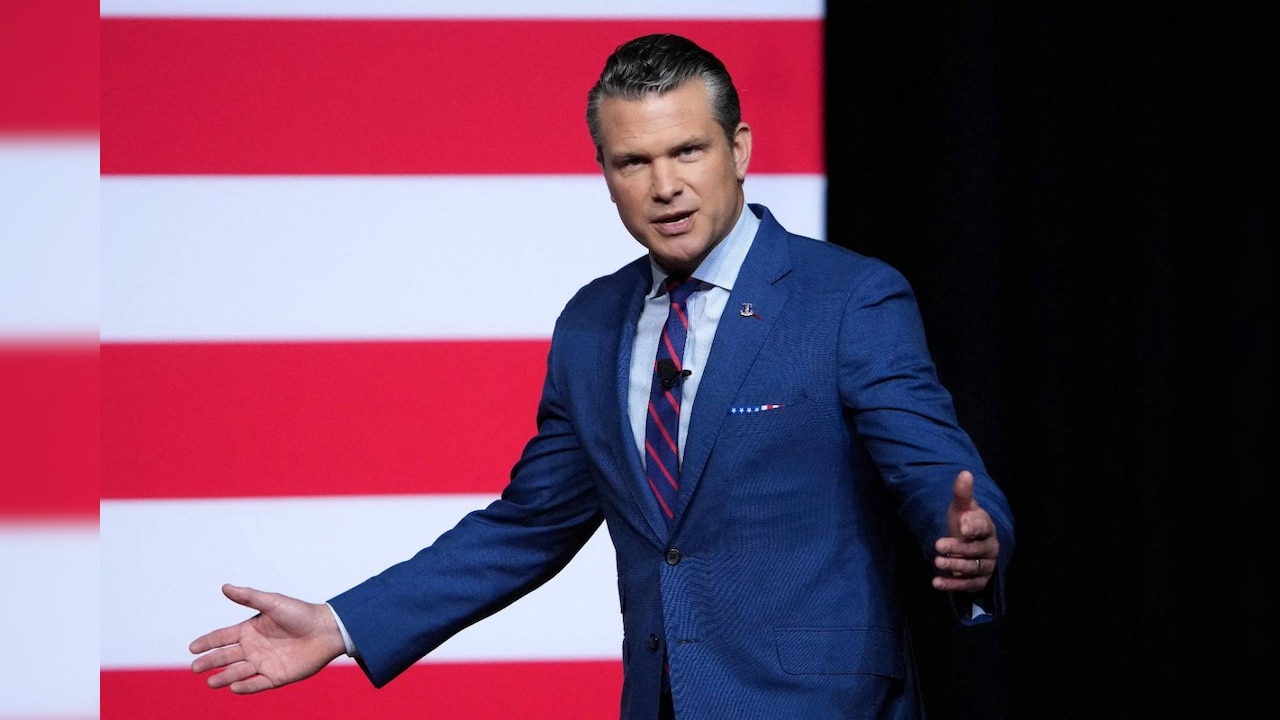
The United States has officially upended its post-war alliance framework in Asia, replacing decades of strategic ambiguity with a cold, transactional realism that leaves India in an exposed and precarious position. During his address at the Shangri-La Dialogue in Singapore, U.S. Secretary of War Pete Hegseth explicitly declared that the era of Washington subsidizing foreign defense budgets is finished, demanding that partners match American resolve by spending 3.5 percent of GDP on defense or risk being demoted to the back of the line. While Hegseth publicly lauded India as a powerful military force and a critical anchor to hold the line against Chinese hegemony, the subtext of his speech signals a dangerous shift for New Delhi. Instead of a trusted strategic partner, Washington now views India through a purely corporate lens, expecting it to act as a frontline buffer state that bears the direct military costs of containing China while the U.S. retreats into a distributed, transactional defense posture.
For decades, Indian policymakers operated under the assumption that Washington viewed New Delhi’s strategic autonomy not as an obstacle, but as an asset. Hegseth’s doctrine shatters that complacency. By explicitly linking American defense priority to raw spending metrics and manufacturing mobilization, the U.S. is signaling that its geopolitical relationships are no longer based on shared democratic values or long-term regional stability, but on immediate operational muscle and burden-sharing. India, which currently spends around 2.4 percent of its GDP on defense, faces an impossible choice: drain its developing economy to meet Washington’s arbitrary benchmarks or prepare to navigate a hostile neighborhood with a volatile, unpredictable American partner.
The Mirage of the Critical Anchor
The praise showered on New Delhi in Singapore was not a diplomatic compliment. It was an eviction notice from the global security umbrella. When the Pentagon chief describes India as a critical anchor to hold the line in South Asia, the operating phrase is "hold the line." The underlying strategy requires regional powers to absorb the initial, devastating shocks of a potential conflict with Beijing while the United States maintains a quiet, distributed posture designed to limit its own direct exposure.
[Traditional U.S. Asian Presence] ---> Deep, forward-deployed American security subsidies
[The Hegseth Doctrine]            ---> 3.5% GDP defense mandate + Frontline nations absorb direct risks
This transactional realism shifts the burden of deterrence entirely onto regional capitals. Hegseth explicitly noted that the U.S. is moving away from a reliance on Washington, emphasizing that a powerful India acting in its own self-interest advances American goals. However, India's self-interest has long been rooted in strategic autonomy, avoiding formal military alliances, and maintaining a delicate diplomatic balancing act with Moscow and Beijing. By forcing a binary choice between total military self-sufficiency under an American procurement blueprint or strategic abandonment, the new U.S. doctrine strips New Delhi of its traditional diplomatic leverage.
The Trap of Co-Production and Industrial Mobilization
A central pillar of the new Washington playbook is the aggressive push for defense co-production, specifically highlighting items like Javelin anti-tank guided munitions. On paper, this aligns with India’s domestic manufacturing goals. In reality, it embeds India’s defense industrial base deeply into the American supply chain, creating a structural dependency that contradicts New Delhi's foundational foreign policy.
- Technology Transfer Delays: Washington promises co-production but routinely holds back the foundational source codes and high-end engineering data.
- Logistical Entanglement: Building heavy industrial and logistics capacity to sustain high-end military operations according to U.S. standards makes India dependent on American components, spare parts, and regulatory approval during a crisis.
- Geopolitical Alignment: Accepting this industrial integration forces India to abandon its historical reliance on Russian defense systems, removing its primary geopolitical counterweight against Western pressure.
This industrial mobilization is designed to solve a domestic American crisis, not an Indian security threat. The U.S. defense industrial base is currently strained, struggling to keep pace with simultaneous global conflicts. By outsourcing the manufacturing of basic munitions and heavy logistics to India, Washington is effectively turning the subcontinent into a manufacturing backshop for Western deterrence, while retaining control over the highest tiers of military technology.
The Dangerous Illusion of the Model Ally
The administration’s introduction of the "model ally" concept introduces an unstable variable into Asian security architecture. Moving nations that are most capable and clear-eyed to the front of the line creates an artificial tier system in Asia, pitting regional powers against one another for Washington’s favor.
For India, this creates a profound structural vulnerability. New Delhi cannot afford to view its security through the lens of a quarterly corporate earnings report where military readiness is audited by a foreign power. India shares a fiercely contested 2,100-mile border with an aggressive nuclear armed neighbor. Unlike island nations like Japan or Australia, which can rely on maritime distances and deep-water defense strategies, India face immediate, existential land-based threats that cannot be deterred by a distributed, businesslike cooperation framework managed from across the Pacific.
Furthermore, the insistence on a 3.5 percent GDP defense spending target ignores the economic realities of a developing nation. Forcing New Delhi to divert hundreds of billions of dollars from critical infrastructure, health, and education into immediate military procurement to maintain its standing in Washington is a recipe for internal economic destabilization. Beijing does not need to win a hot war along the Line of Actual Control if it can successfully goad New Delhi into an unsustainable arms race that cripples its domestic economic growth.
The hard truth of the Shangri-La address is that Washington is preparing for a partial retrenchment, packaging its withdrawal from global security obligations as a grand strategy of regional empowerment. New Delhi has spent the last decade building a foundational partnership with the West, believing it was securing a reliable counterweight to regional aggression. Instead, India now finds itself positioned at the very edge of a shifting geopolitical frontline, holding an American-designed line with its own blood and treasure, while the architect of that line steps back into the shadows of the Pacific.