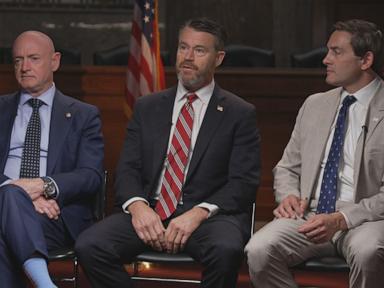
The televised performance of political unity has become a familiar ritual in Washington, particularly as the United States reaches its 250th anniversary. When lawmakers gather on Sunday morning news broadcasts to plead for cross-aisle cooperation, they offer a comforting script to a fatigued public. Democratic Senator Mark Kelly of Arizona and Republican Senator Todd Young of Indiana recently stood shoulder to shoulder to argue that consensus remains possible even within a deeply fractured republic. They pointed to their shared work on national security and veterans issues as proof that the legislative gears can still turn when pragmatic minds prevail. Yet this clean, optimistic narrative deliberately obscures a much darker institutional reality. The truth is that cross-aisle cooperation in modern legislative chambers is not a growing trend but a carefully managed exception used to mask deep systemic decay.
Behind the scenes, the mechanics of Capitol Hill operate on structural incentives that actively punish moderation. While individual senators can occasionally bridge the gap on specific, narrow defense or infrastructure bills, the broader machinery of national governance remains locked in perpetual paralysis. The celebration of the American semiquincentennial highlights a profound contradiction between the historic ideals of self-governance and the operational reality of a government that relies on crisis management rather than deliberate policymaking.
The Closed Doors of Modern Dealmaking
To understand why genuine cooperation is failing, one must look at how laws are actually written. The traditional legislative process, where committees debate bills openly and offer amendments in public view, has largely ceased to exist. Instead, major policy decisions are hammered out by a handful of party leaders behind closed doors, often hours before a government shutdown deadline.
When individual lawmakers attempt to build cross-aisle coalitions on substantive issues like immigration reform or fiscal policy, they face immediate resistance from their own leadership. Party strategists recognize that a compromise gives the opposing side a political victory to campaign on. Consequently, rank-and-file members are pressured to withdraw from negotiations to preserve party purity ahead of the next election cycle. The few bills that do pass with broad support are frequently stripped of any controversial or truly transformative measures, leaving behind watered-down legislation that fails to address the root causes of national problems.
The Polarization Market
A massive industry now profits directly from political division. Campaign consultants, small-dollar fundraising platforms, and partisan media outlets have built business models that require conflict to survive. A senator who compromises with the opposing party risks facing an immediate primary challenge funded by national activist groups.
- Fundraising Penalties: Data from recent election cycles shows that firebrand lawmakers who reject compromise generate significantly more small-dollar donations than their moderate colleagues.
- Primary Vulnerabilities: Closed primary systems ensure that the most ideologically extreme voters dictate who wins the nomination, forcing incumbents to cater to the fringes of their parties.
- Media Incentives: Cable networks and social media algorithms maximize engagement by amplifying outrage, leaving little room for the dry, complex work of legislative negotiation.
This financial and political calculus makes the cooperative stance of lawmakers like Kelly and Young look less like a blueprint for the future and more like a historical relic. Both men possess unique political profiles as military veterans, which grants them a degree of protection from partisan attacks that most of their colleagues simply do not have.
The Defense Sector Exception
When cross-aisle cooperation does occur, it is almost exclusively confined to areas where corporate interests and national security imperatives overlap. The passage of specialized manufacturing initiatives and defense authorization bills are frequently cited as triumphs of unity. However, these bills often pass because they involve distributing massive amounts of federal funding to home states, a process that satisfies donors and creates local jobs without requiring either party to make ideological sacrifices.
True consensus would require addressing structural deficits, reforming entitlement programs, or fixing the broken immigration system. On these fronts, the silence is absolute. By focusing national attention on symbolic victories, lawmakers create a false sense of progress while the foundational crises of the state remain unaddressed.
The Cost of Symbolic Unity
The emphasis on stage-managed agreement has real consequences for the public. It creates a governing class that excels at commemorating history but struggles to write it. The recent dedication of a 250-year time capsule in Emancipation Hall served as a perfect example of this dynamic. Leaders from both parties spoke eloquently about the long arc of American democracy, yet outside the chamber, the basic responsibilities of governance, such as passing standard appropriations bills on time, continue to be ignored.
The reliance on short-term funding extensions has destabilized federal agencies, complicated long-term economic planning, and diminished public trust in the stability of the republic. This is the underlying crisis that the rhetoric of unity attempts to conceal.
A System Built for gridlock
The structural design of the legislature was intended to slow down the lawmaking process to prevent tyranny, but it was never meant to stop governance altogether. The modern misuse of procedural tools has turned institutional checks into permanent blockades. The routine use of the filibuster means that a simple majority is no longer sufficient to conduct basic business, requiring a supermajority for nearly every meaningful action.
This procedural reality means that even when a bipartisan group of senators agrees on a path forward, a small faction can derail the entire effort. The system now rewards obstruction over creation, giving immense leverage to individual holdouts who want to elevate their personal profiles.
+------------------------------------------------------------+
|                THE CYCLE OF LEGISLATIVE STAGNATION        |
+------------------------------------------------------------+
|  1. Public Outrage on a Critical National Issue            |
|                           v                                |
|  2. Bipartisan Working Group Forms to Draft Compromise     |
|                           v                                |
|  3. Party Leadership & Media Outlets Attack the Deal      |
|                           v                                |
|  4. Bill Dies; Factions Revert to Fundraising on Blame   |
+------------------------------------------------------------+
The Path of Greatest Resistance
Breaking this cycle requires more than optimistic speeches on television. It demands structural changes to the way politicians are elected and how the legislative body governs itself. Without open primaries, independent redistricting commissions, and campaign finance reform, the incentives will continue to favor hostility over cooperation.
Relying on the exceptional courage of individual lawmakers is a failed strategy for a nation of over 340 million people. The current political ecosystem ensures that those who seek compromise are gradually weeded out, replaced by figures who view governance as a zero-sum conflict. As the nation marks two and a half centuries of existence, the primary threat to its continuity is not a lack of shared values, but an operational framework that makes acting on those values nearly impossible. The survival of the legislative branch as a functioning entity depends on rewriting the rules of the game, rather than hoping the players will suddenly change how they play.