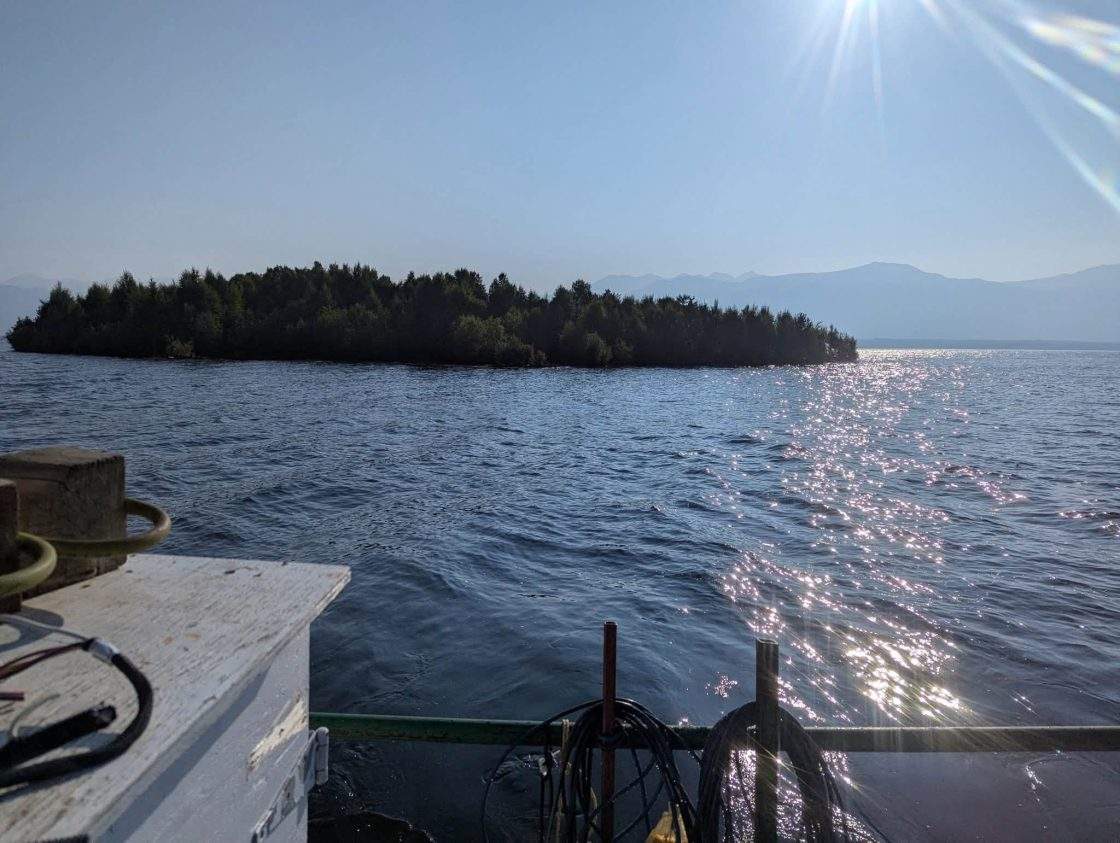
An anthropogenic water body spanning 1,761 square kilometers has produced an anomalous hydrodynamic event: a 140-meter-long, 70-meter-wide forested landmass detached from its shoreline origins and began drifting across Williston Lake in British Columbia. Initially documented via social media and subsequently verified by satellite telemetry, the structure covers approximately 9,800 square metres—roughly the surface area of two football fields—and supports an estimated one hundred mature trees. The disappearance and subsequent relocation of this mass over a span of weeks illustrate complex buoyancy mechanics, shoreline sediment dynamics, and the operational variables of large-scale hydroelectric reservoirs.
The structural integrity of this floating ecosystem relies on a dense, subterranean mat of accumulated woody debris, decayed organic matter, and intertwined root systems. Over decades, trees establish themselves along sheltered bays and inlets where organic material aggregates into thick rafts. Rather than rooting in terrestrial bedrock, these root networks function similarly to hydroponic systems, drawing nutrients from decaying matter while utilizing trapped air pockets and low-density timber logs for positive buoyancy. The buoyancy-to-weight ratio remains precarious; the mass of the mature timber canopy acts as a sail against wind vectors, while the submerged root-and-log matrix dictates draft and lateral stability.
Reservoir hydraulics explain the unmooring event. Water levels within Williston Reservoir reached fourteen-year highs due to heavy winter snowpacks and sustained summer precipitation feeding the Peace River basin. This rapid stage increase altered the hydrostatic pressure and shoreline buoyancy equations. As water levels rose, the marginal tension anchoring the organic mat to the littoral zone was neutralized by upward buoyant force. Once the vertical lift exceeded the frictional and mechanical tethering points on the bank, the multi-acre raft decoupled entirely from the substrate.
The apparent disappearance of the island following its initial July detection near Finlay Bay puzzled local observers, but the mechanism of its loss is governed by simple vector displacement and shoreline topography. A floating mass of this scale does not submerge or dissolve rapidly; rather, prevailing wind patterns and surface currents direct the body toward alternative sheltered shoreline indentations. When the island drifted into a secondary cove or came to rest against a bank along the Ospika Arm, it effectively camouflaged against the heavily forested background of the reservoir perimeter, rendering it invisible to standard satellite resolution and casual spotters until shifting winds drove it back into open water.
Management of the reservoir by BC Hydro highlights the interface between industrial infrastructure and natural anomalies. The W.A.C. Bennett Dam, situated downstream, creates a controlled basin where large debris movements present operational interest. However, hydrodynamic assessments confirm that structural hazards to the dam infrastructure remain negligible due to the vast surface area of the reservoir and the likelihood of the mass breaking apart or anchoring permanently before reaching primary spillways or intakes.
Public safety warnings issued against boarding the island are grounded in strict mechanical realities. The surface canopy of mature trees creates a false sense of geological stability, masking the fact that the underlying foundation consists of unsecured logs and shifting organic slurry. Dynamic wave action causes the entire landmass to flex and undulate, meaning any localized weight addition risks compromising the interstitial friction holding the floating matrix together.
Track the trajectory of the landmass using sequential synthetic aperture radar and multi-spectral satellite imagery to map wind-driven drift coefficients against daily reservoir discharge rates.


