The Strait of Hormuz is the world’s most expensive theater, and everyone is reading the wrong script.
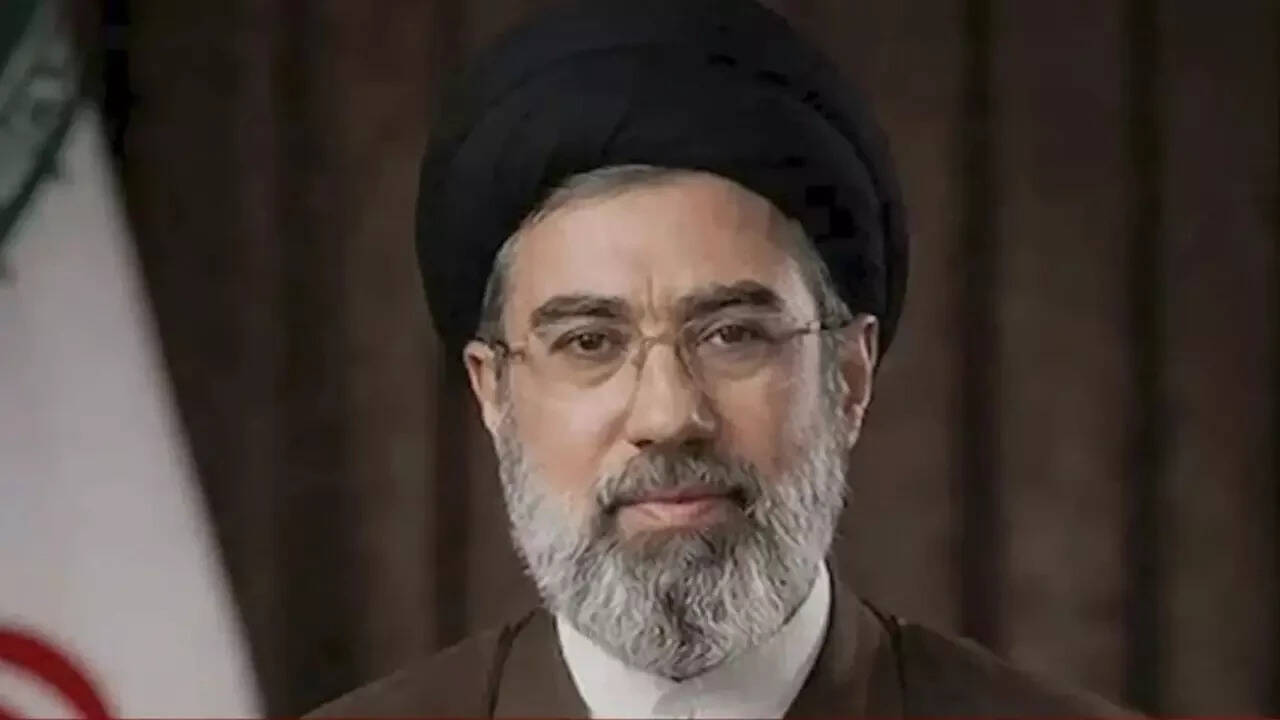
Western analysts are currently hyperventilating over Ayatollah Ali Khamenei’s recent signals regarding a "new stage" of maritime management. They see a strategic pivot. They see a tightening grip. They see a "fragile truce" hanging by a thread. They are wrong.
This isn’t a shift in management; it’s a desperate rebranding of a logistical nightmare. The mainstream media treats the Strait like a simple valve that Iran can turn off at will. In reality, Hormuz is a double-edged sword that has been rusted shut for years. To understand why Tehran’s "new stage" is actually a retreat masked as an offensive, we have to stop looking at the maps and start looking at the math.
The Myth of the Chokehold
The "lazy consensus" dictates that Iran holds the global economy by the throat because 20% of the world’s oil flows through that narrow passage. If they close it, the world burns, right? Wrong.
Closing the Strait of Hormuz would be an act of national suicide for the Islamic Republic, not a tactical win. Iran’s economy—already hollowed out by sanctions and internal mismanagement—relies on the very stability of those waters to move its own "shadow" barrels. You don't blow up the only road you use to sneak groceries into your house.
The "new stage" Khamenei flags isn't about blockade capability. It’s about asymmetric harassment because conventional dominance is off the table. When a regime talks about "advancing management," they are admitting that their previous methods of projection have failed.
Logistics Trumps Ideology
Let’s talk about the physics of a blockade. To truly "manage" the Strait in a new stage, you need more than speedboats and mines. You need sustained air superiority and a blue-water navy that can withstand a carrier strike group’s response. Iran has neither.
Their naval strategy is built on the Jeune École philosophy—the idea that a smaller, weaker force can defeat a larger one through swarm tactics and torpedoes. It sounds great in a revolutionary manifesto. It falls apart the moment a Phalanx CIWS starts tracking targets.
What we are seeing is a shift toward Maritime Grey Zone Warfare. This isn't management; it’s an admission that they cannot win a hot war. They are pivoting to a strategy of "controlled friction." By "advancing management," Khamenei is telling his cadres to find ways to drive up insurance premiums for Western tankers without actually pulling the trigger on a conflict they know they would lose in forty-eight hours.
The China Factor No One Mentions
The biggest hole in the "Iran is taking over the Strait" narrative is Beijing.
Conventional wisdom says China and Iran are a monolithic anti-Western bloc. Look closer. China is the world's largest importer of crude. A significant portion of that crude comes through—you guessed it—the Strait of Hormuz.
If Iran truly "advances its management" to the point of disrupting flow, they aren't just poking the Great Satan. They are biting the hand that feeds them. China’s "Belt and Road" doesn't work if the energy veins are clogged by a chaotic ally.
I’ve watched analysts ignore this tension for a decade. They assume the enemy of my enemy is my friend. In the energy markets, the enemy of my energy security is a liability. Tehran is currently walking a tightrope between showing strength to its domestic hardliners and not offending its only major customer. This "new stage" is a public relations exercise designed to look like a regional hegemony play while being, in fact, a plea for relevance in a world that is slowly moving toward the Red Sea and alternative pipelines.
The Fragile Truce is a Mirage
The media loves the phrase "fragile truce." It implies a balance of power. It suggests two equal forces have agreed to stop swinging.
There is no truce. There is only a Standoff of Exhaustion.
Iran is exhausted by sanctions and internal dissent. The West is exhausted by "forever wars" and is trying to pivot to the Pacific. This isn't a truce; it's a mutual realization that neither side can afford the bill for a total collapse of maritime order.
When Khamenei speaks of a "new stage," he is attempting to reset the price of the standoff. He wants to see if he can extract concessions by threatening the one thing the world fears: a spike in $100-per-barrel oil.
But here’s the counter-intuitive truth: The world is better prepared for a Hormuz disruption than ever before.
- Strategic Reserves: The U.S. and its allies have refined the art of the SPR release.
- Alternative Routes: The East-West Pipeline in Saudi Arabia and the ADCOP in the UAE can bypass the Strait for millions of barrels per day.
- Market Elasticity: Global demand is no longer the monolith it was in the 1970s.
The Intelligence Failure of "Intent"
We spend billions trying to divine the "intent" of the Supreme Leader. It’s a waste of time. Intent is fickle; capability is concrete.
If you look at the actual naval procurement and deployment patterns of the IRGC-N (Islamic Revolutionary Guard Corps Navy), you don't see a fleet preparing for "management." You see a fleet preparing for sabotage.
There is a fundamental difference. Management implies a sovereign control that can be recognized and negotiated with. Sabotage is the tool of the insurgent. By framing this as a "new stage of management," the regime is trying to upgrade its image from a regional irritant to a legitimate maritime authority. We shouldn't let them.
The "People Also Ask" Reality Check
People often ask: "Can Iran actually close the Strait of Hormuz?"
The answer is: Yes, for about three days. Then they would lose their entire navy, their coastal infrastructure, and their ability to export a single drop of oil for a generation. It is the "Sampson Option." It only happens when the regime has already decided it is finished.
People also ask: "Will this lead to higher gas prices?"
Short term? Yes, based on fear. Long term? No. The market hates a vacuum. If Hormuz goes dark, production shifts elsewhere, and the transition to non-OPEC+ sources accelerates. Iran knows this. They don't want to accelerate their own obsolescence.
The Cost of the Bluff
The real danger isn't a "new stage of management." The danger is the miscalculation of the bluff.
When you tell your people and your enemies that you are taking "control," you eventually have to do something to prove it. This is where the risk lies. Not in a strategic plan, but in a mid-level commander taking the "new stage" rhetoric too literally and seizing a tanker that doesn't have the right flag on it.
I have seen regimes play this game before. They use aggressive language to cover for internal weakness. They mistake Western restraint for Western weakness. They think they can "manage" the chaos they create. They can't.
Tehran’s maritime posturing is a classic case of theatrical geopolitics. It’s meant to distract from the fact that their influence in Iraq is waning, their proxy in Yemen is a wild card they can’t fully leash, and their economy is a ticking time bomb.
The Actionable Reality
If you are an investor or a policy maker, don't buy the "New Stage" hype.
- Discount the Rhetoric: Look at the flow of "ghost tankers." As long as Iran is trying to sell oil, the Strait stays open.
- Watch the Insurance: The real metric of Hormuz isn't naval movements; it's the Lloyd’s of London war risk premiums. When those stabilize despite the threats, you know the pros aren't buying the bluff.
- Track the Bypass: The true "new stage" of the Middle East isn't happening in the water; it's happening in the desert, where pipelines are making the Strait of Hormuz increasingly optional.
The Strait of Hormuz is becoming a monument to 20th-century leverage in a 21st-century world. Khamenei isn't flagging a shift; he’s shouting at the tide.
Stop treating the Strait like a geopolitical kill-switch. It’s a toll booth that Iran is desperately trying to convince us they own, even as the world builds a highway around it.
The "new stage" is nothing more than the old stage with louder speakers and a thinner curtain.