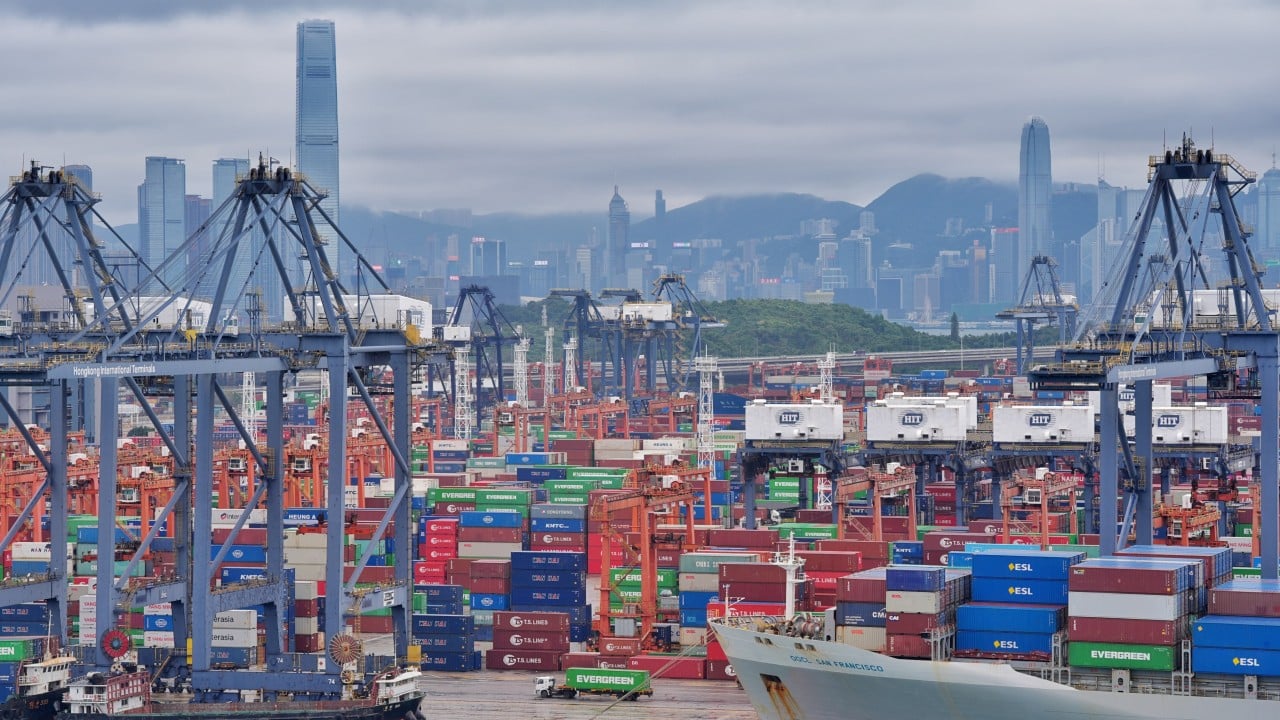
The maritime industry has a dangerous obsession with geography. Whenever a traditional shipping hub faces a structural identity crisis, the immediate reflex is to manufacture a niche. Right now, the favorite talking point among Hong Kong’s maritime boosters is that expanding into war-risk marine insurance will save the city's declining port status and set it apart from Singapore or London.
It is a comforting narrative. It is also completely wrong.
The idea that underwriting hull war risks or cargo terror threats in the South China Sea will magically transform Hong Kong into a resilient global maritime center ignores how specialty insurance actually works. I have spent years watching regional hubs throw millions of dollars at niche insurance products, convinced that supply creates its own demand. It never does.
Specialty marine insurance is not a localized commodity you buy off a shelf because a port happens to be nearby. It is a game of global capital aggregation. By positioning war-risk insurance as a regional savior, local underwriters and policymakers are asking the wrong questions, misjudging their actual competitors, and preparing to underwrite risks they do not understand.
The Flawed Premise of Regional Proximity
The arguments for Hong Kong’s war-risk expansion usually rest on a simple premise: because the city sits at the gateway of the Asia-Pacific region, it is naturally positioned to price and manage the risks of regional choke points like the Taiwan Strait or the Malacca Strait.
This assumes that proximity equals insight. In marine underwriting, the exact opposite is true.
War risk is unique because it is catastrophic, systemic, and highly correlated. Unlike standard hull and machinery (H&M) coverage, which deals with predictable, independent events like collisions or engine failures, war risk deals with geopolitical volatility. When a crisis hits, it hits an entire fleet simultaneously.
If you are underwriting war risks for Asian routes out of a purely Asian capital base, you are violating the first rule of insurance: diversification. London dominates the war-risk market through the Joint War Committee (JWC) not because Lloyd’s underwriters sit near the Red Sea or the Black Sea, but because they can spread that risk across a global portfolio. A loss in the Bab el-Mandeb is offset by premiums collected in the Baltic.
If Hong Kong concentrates its capacity on regional Asian risks, a single localized conflict will wipe out the domestic capital pool. You cannot hedge regional volatility with regional exposure.
The Illusion of the Chinese Fleet Premium
Another common argument is that Hong Kong can leverage its relationship with mainland China to become the default insurer for the massive Chinese merchant fleet. Proponents claim that Chinese state-owned enterprises (SOEs) would prefer to insure their vessels through a domestic, legally distinct hub rather than relying on Western syndicates.
This view completely misunderstands how Chinese shipping giants like COSCO or China Merchants Group actually operate.
These entities do not look for regional affinity; they look for international liquidity and mutual clubs. The vast majority of global deep-sea tonnage—including Chinese-owned vessels—is insured through the 12 P&I Clubs that comprise the International Group of P&I Clubs (IG). This group collectively provides marine liability cover for approximately 90% of the world's ocean-going tonnage.
The Western-dominated IG reinsures its liabilities through a massive, multi-layered structure that relies heavily on the European reinsurance market. No single regional hub, no matter how much state backing it receives, can replicate that structure overnight.
If Hong Kong tries to build a standalone, parallel war-risk market tailored specifically for Chinese tonnage, it creates an echo chamber of risk. If a systemic geopolitical event triggers widespread sanctions or vessel seizures, the entire liabilities chain collapses back onto the region’s own financial system. That is not risk management. That is financial suicide.
Breaking Down the Capital Mechanics
To understand why this strategy fails, you have to look at the cold mechanics of reinsurance. Underwriters do not hold all the risk on their own balance sheets. They pass the vast majority of it up the chain to global reinsurers like Munich Re, Swiss Re, or the specialized syndicates in London and Bermuda.
[Primary Insurer (Hong Kong)]
          │
          ▼ (Passes Risk)
[Global Reinsurance Market (London / Zurich / Bermuda)]
When a Hong Kong-based insurer writes a war-risk policy for a container ship traversing a high-risk zone, that insurer is merely a fronting company. The actual capacity—the financial muscle that pays out when a missile hits a hull—comes from the global reinsurance market.
And where do those global reinsurers price their risk? They use the frameworks, wordings, and listed areas established by the Joint War Committee in London.
Therefore, a policy written in Hong Kong is effectively priced by London data, backed by European or Bermudian capital, and bound by English maritime law precedents. The local hub adds nothing but an administrative layer and a local stamp. It does not control the pricing, it does not control the capital, and it certainly does not control the terms. Calling this "regional differentiation" is a marketing trick disguised as economic strategy.
What People Always Get Wrong About Marine Insurance
When discussing this topic, industry observers frequently ask flawed questions based on outdated assumptions. Let's look at the real reality behind these common misconceptions.
Doesn't a local presence allow for faster, more accurate risk assessment?
No. Geopolitical risk assessment for marine environments is a global intelligence operation. The organizations that excel at this—like Ambrey, Dryad Global, or Control Risks—operate globally. They do not provide better data just because an analyst is sitting in an office in Central instead of the City of London. In fact, being isolated from the dense ecosystem of maritime lawyers, brokers, and loss adjusters clustered in London actually slows down the claims-settlement process when a major incident occurs.Can't Hong Kong undercut Western markets on premium pricing?
They can try, but it is a race to the bottom that ends in insolvency. Marine insurance operates on razor-thin margins. If a hub artificially lowers premiums to attract market share without the underlying diversified capital to support it, they are simply buying market share with unpriced risk. The moment a couple of dual-fuel VLCCs (Very Large Crude Carriers) are damaged or detained in a regional dispute, the losses will dwarf a decade's worth of cheap premiums.Will smart contracts and blockchain fix the efficiency gap?
This is the classic technological distraction. Tech enthusiasts love to argue that automation will allow new hubs to leapfrog traditional ones. But the bottleneck in war-risk insurance isn't the speed of the paperwork; it is the willingness of capital to deploy into volatile environments. A blockchain cannot absorb a $150 million hull loss. Only deep pools of liquid capital can do that.
The Brutal Reality of the Talent Shortage
Even if you ignore the capital constraints and the systemic risk concentration, you cannot ignore the human element. War-risk underwriting is not an algorithmic exercise. It is a highly subjective art form practiced by a very small, tightly knit group of specialists globally.
These underwriters rely on decades of historical precedents, personal networks of intelligence assets, and a deep understanding of maritime law. You cannot build this talent pool by passing a piece of legislation or offering tax incentives.
Currently, the talent pool for specialty marine lines in Asia is dangerously thin. Most regional offices are staffed by general cargo underwriters or business development managers whose primary job is to distribute products designed and priced in Europe. Forcing these teams to suddenly underwrite complex war-risk exposures is a recipe for catastrophic mispricing.
I have seen companies blow millions trying to build specialty lines by hiring expensive expatriate talent, only to realize that those individuals are useless once disconnected from their broader ecosystem of brokers and syndicates back home. You cannot import a market's culture by importing a few resumes.
The Real Cost of Being an Outlier
If a jurisdiction insists on carving out a distinct regional war-risk framework, it risks alienating itself from the international maritime community.
International shipowners value predictability above all else. They want policies that are universally accepted by their financing banks, their charterers, and international regulators. A war-risk policy written under an untested, localized framework with regional capital backing will face immediate scrutiny from international ship financiers based in Oslo, New York, or London.
If the banks refuse to accept the insurance policy as valid collateral security for the ship's mortgage, the shipowner cannot use that insurer. It is that simple. By attempting to set itself apart, a hub risks creating a closed loop that only services secondary or tertiary fleets, leaving the premium, blue-chip global shipping assets to traditional markets.
Stop Chasing the War-Risk Fantasy
The maritime industry needs to stop treating war risk like a flag of convenience that can be flown by any port looking for a new revenue stream. It is a highly volatile, capital-intensive specialty line that requires global diversification, deep institutional memory, and immediate integration into the worldwide reinsurance network.
Trying to build a regional maritime strategy around war-risk insurance is an expensive distraction from the hard, structural reforms needed to remain competitive in logistics, supply chain tech, and standard port efficiencies.
If you want to survive in the modern maritime world, stop trying to insure the flames. Focus on building a port that doesn't catch fire in the first place.