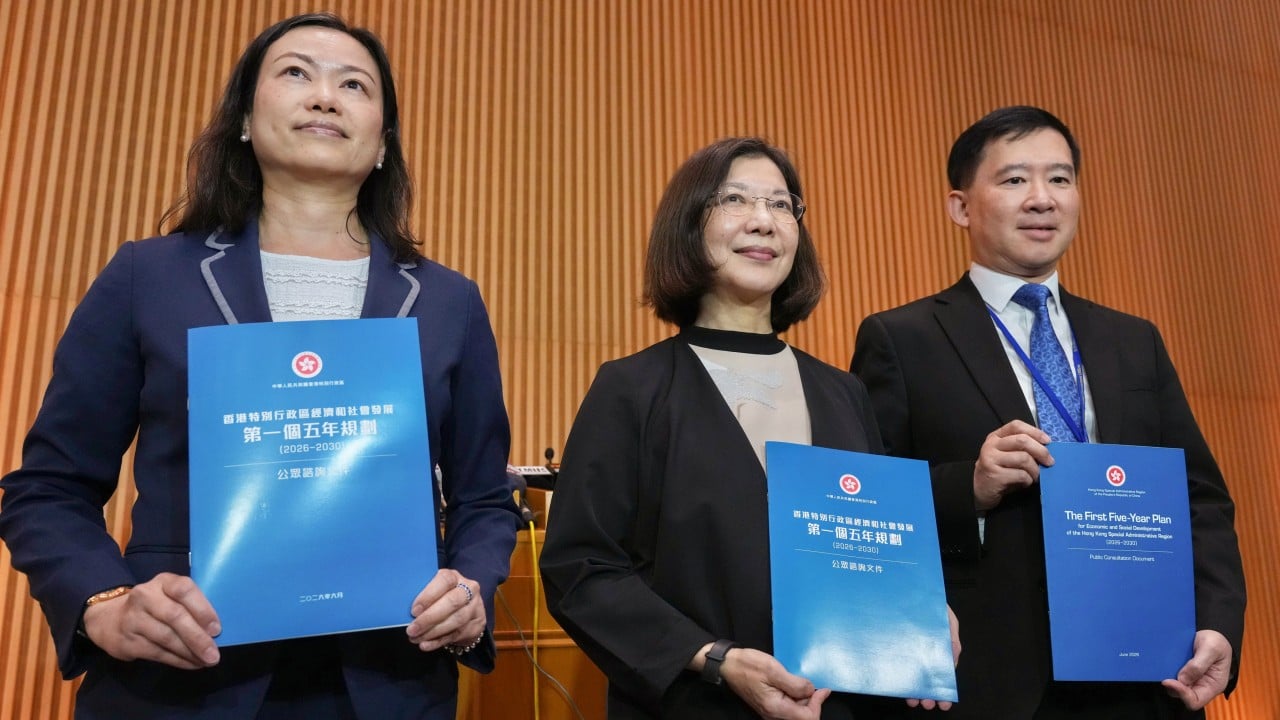
Hong Kong is doing something it hasn't done in its entire modern history. The government just kicked off a two-month public consultation for its first-ever five-year plan, aiming to drop the final document in the third quarter of 2026. For a city built on the bedrock of raw, unadulterated capitalism and minimal state intervention, this is a massive psychological and structural shift.
If you think this means Hong Kong is turning into a carbon copy of a mainland planned economy, you're missing the bigger picture. It isn't about crushing the free market. It's about survival. The old playbook of sitting back and letting the market fix everything doesn't work anymore when you're caught between global geopolitical crosshairs and intense regional competition.
The Death of Just Letting It Happen
For decades, the city's economic mantra was positive non-interventionism. The government built the roads, kept taxes low, and mostly stayed out of the way. That strategy turned Hong Kong into a global financial powerhouse, but it also left the economy highly vulnerable, heavily reliant on real estate and traditional finance while lagging in technology.
This new blueprint, officially named the First Five-Year Plan for Economic and Social Development of the Hong Kong Special Administrative Region (2026-2030), changes the game. It aligns directly with Beijing's 15th National Five-Year Plan. Chief Executive John Lee calls the move historic, and honestly, he's right. The administration wants to combine this long-term strategy with its annual policy addresses and budgets to create a predictable road map for businesses.
Janice Tse, Secretary for Constitutional and Mainland Affairs, explicitly denied that this shift signals the end of the free market. Instead, the administration argues that giving the private sector a clear, transparent strategic vision actually brings stability. Think of it as transitioning from an economy that reacts to global trends to one that actively plans for them.
Betting Big on the Northern Metropolis and AI
The real meat of this plan lies in where the money is going. Vague promises about innovation don't move the needle. Specific targets do. Secretary for Innovation, Technology and Industry Sun Dong made it clear that the upcoming blueprint places the Northern Metropolis at the absolute top of the priority list.
This isn't a small real estate play. It's a massive 30,000-hectare innovation corridor right on the border with Shenzhen. The government is targeting three main sectors to anchor this space:
- Artificial Intelligence
- Life and health technology
- Robotics
To back this up, the government is drastically altering how it measures and funds research. The city plans to aggressively lift its local research and development (R&D) expenditure from a meager 1.13% of GDP to at least 2.7% over the next five years. That puts it right on par with the national mainland average.
They are also forcing traditional industries to upgrade through China's broader AI Plus initiative. This means integrating AI tools into logistics, supply chains, and professional services rather than just treating tech as a siloed industry. Later this year, three new R&D institutes specializing in AI, microelectronics, and life sciences will start operating to jumpstart this effort.
What Most People Get Wrong About the Mainland Integration
The biggest critique from Western analysts is that Hong Kong is losing its distinct edge by binding its economy so tightly to Beijing's national goals. But looking at the actual data shows why local authorities view this as an economic necessity.
Hong Kong can't survive purely as a regional financial hub anymore. Singapore has chipped away at that title, and geopolitical tensions make Western capital flight a constant risk. The city's true value now lies in acting as a highly sophisticated two-way valve. Mainland companies want to go global, but they face intense regulatory scrutiny and cultural barriers overseas. Hong Kong provides the legal framework, international accounting standards, and IP protection they need to make that leap.
Look at the numbers from a Hong Kong Trade Development Council survey conducted earlier this year. A staggering 83% of mainland Chinese firms stated they would choose Hong Kong's professional services to support their international expansion. That's a massive jump from 62% back in 2023. The GoGlobal Task Force, launched recently to capture this specific market, is already seeing massive demand. The five-year plan aims to formalize and accelerate this exact pipeline.
The Real Challenges Ahead
Let's look at this realistically without the official government optimism. It's easy to draft a beautiful document with ambitious percentages. Executing it is another story.
First, there's the talent problem. Hong Kong has five world-class universities, but it historically struggles to keep top-tier tech talent from migrating to Silicon Valley or mainland tech hubs like Shenzhen and Hangzhou. Sun Dong talked about creating a global youth innovation platform in the Northern Metropolis to lure international researchers, but building a culture that risks capital on unproven tech takes years, not months.
Second, the city is trying to raise the contribution of manufacturing and new industrialization to its GDP from 3.8% to 4% or above by the end of next year. That sounds like a small bump, but in a city with some of the most expensive real estate on earth, finding the physical space for advanced manufacturing hubs—even light microelectronics labs—is incredibly difficult and expensive. The newly completed Microelectronics Centre in Yuen Long and the Science Park expansion are steps in the right direction, but space will always be a constraint.
What Businesses Should Do Right Now
If you operate a business in Hong Kong or route capital through the city, you can't afford to ignore this public consultation phase over the next two months. The government is actively seeking feedback from the private sector and the Legislative Council before locking in the final draft this autumn.
Stop viewing Hong Kong through the lens of 1990s laissez-faire economics. It's gone, and it's not coming back. Instead, realign your corporate strategy to match the sectors the government is actively subsidizing. If your business touches AI deployment, biotech, or cross-border logistics for mainland firms expanding overseas, the government is about to lay out massive infrastructure support and funding schemes. Keep a close eye on the policy rollouts in the third quarter of 2026, and start positioning your operations to ride the wave of the Northern Metropolis development.