Western media loves a simple Cold War sequel.
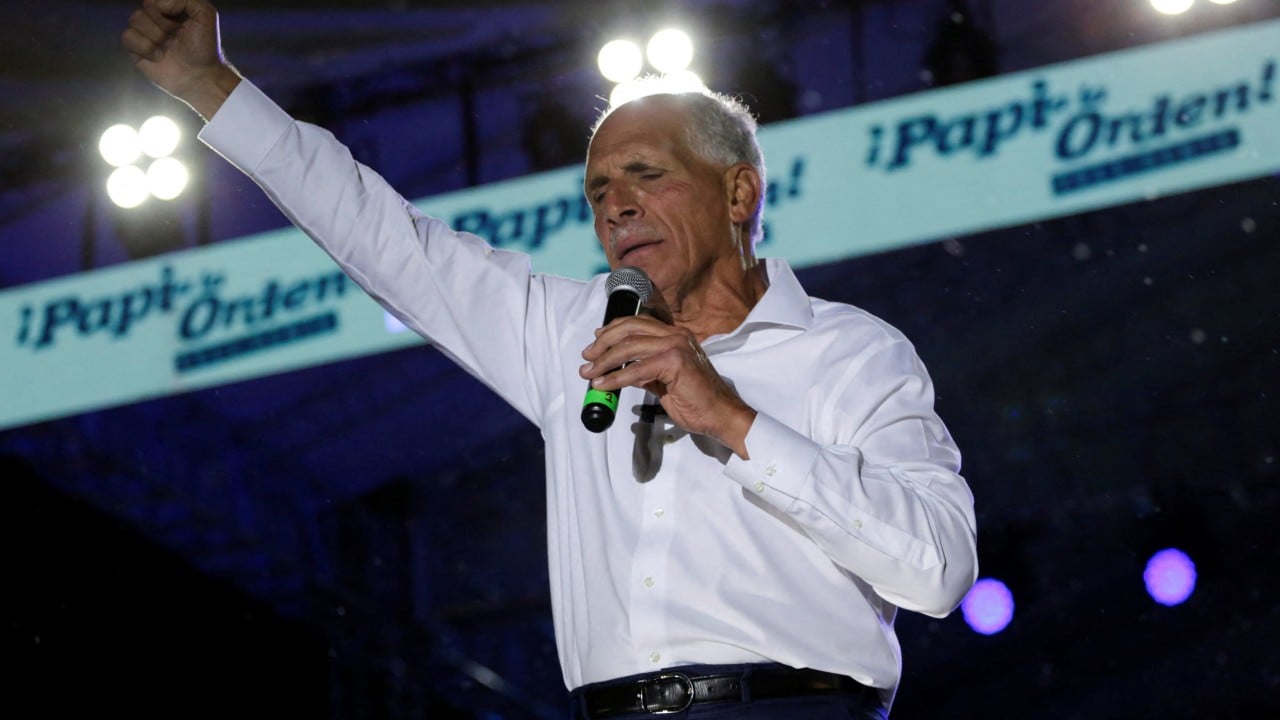
Every time a Central American nation reshuffles its diplomatic cards between Taipei and Beijing, financial pundits dust off the same tired playbook: global superpower influence, debt-trap diplomacy, and systemic ideology shifts. They treat President Nasry Asfura’s balancing act on Taiwan as a profound geopolitical chess move, framing the crackdown on Chinese retail shops and state construction contracts as a calculated diplomatic pivot.
They are completely missing the point.
This is not a high-stakes ideological battle for the soul of Central American foreign policy. It is domestic economic protectionism wearing a diplomatic trench coat. Honduras is not trying to realign global trade axes; its political establishment is attempting to pacify local mercantile elites who are getting systematically crushed by low-margin Chinese retail supply chains. Framing this as a foreign policy crisis completely misreads how local power actually operates in Tegucigalpa.
The Lazy Narrative: Ideology vs. Pragmatism
The standard analysis claims Honduras switched allegiance to Beijing in pursuit of massive foreign direct investment, only to discover that Chinese capital comes with strict conditions, slow execution, and heavy state oversight. Now, under President Asfura, analysts claim the country is reconsidering its stance, dangling its Taiwan pledge as leverage to extract better terms from both sides.
That view is embarrassingly naive.
Foreign diplomacy in small, import-dependent economies is almost always an extension of domestic patronage networks. When Honduran authorities raid low-cost Chinese retail outposts or stall state-backed construction projects, they aren't sending a signal to Xi Jinping. They are throwing a bone to traditional domestic merchant families who built fortunes on 300% retail markups and can no longer compete with direct-to-consumer Asian supply routes.
I have spent years analyzing cross-border trade friction across emerging markets. I watched this exact dynamic play out in West Africa and Southeast Asia throughout the 2010s. When foreign entities strip out inefficiency from a local supply chain, they do not just lower consumer prices—they threaten the political class's primary donor base.
The Real Economics of the Honduran Retail Crackdown
Let’s dismantle the mechanics of what is actually happening on the ground.
Traditional retail distribution in Central America relies on a multi-tiered hierarchy of middlemen:
- Primary importers buy inventory overseas.
- Local logistics syndicates manage transport.
- Regional wholesalers mark up goods.
- Physical storefronts sell to consumers at inflated prices.
Every step in that chain generates a margin that feeds local political campaign funds, real estate trusts, and domestic commercial monopolies.
Enter Chinese storefronts and integrated construction groups. By shipping directly from factories in Zhejiang or Guangdong, bypassing middleman distributors, and operating on ultra-thin margins, these operations instantly undercut local commercial infrastructure. A consumer in San Pedro Sula ends up paying half what they used to for hardware, textiles, and basic household electronics.
For the working-class consumer, this is a massive win in purchasing power. For the traditional domestic business elite, it is an existential threat.
When the Honduran state cracks down on these stores under the banner of "tax compliance," "labor violations," or "revisiting diplomatic pledges," it is executing a classic regulatory capture maneuver. It uses state enforcement mechanisms to artificially raise operating costs for foreign disrupters, protecting inefficient local monopolies that can no longer win on price or speed.
The Taiwan Leverage Myth
The mainstream press assumes the diplomatic relationship with Taiwan is an off-on switch driven by economic aid packages. The logic goes: Beijing offered more money, Honduras switched; Beijing delivered less than promised, Honduras wavers back toward Taipei.
That assumption ignores how international finance actually works.
Taiwan’s historical diplomatic model relies on targeted grants, technical assistance, and direct sovereign credit lines that flow smoothly into local government coffers with minimal operational friction. China’s model, by contrast, relies on massive infrastructure loans tied directly to state-owned enterprises (SOEs). The money rarely settles in local bank accounts; it flows directly from Beijing to state builders who bring in their own machinery, materials, and specialized workforces.
+-----------------------------------------------------------------------+
|                       THE CAPITAL FLOW DIVERGENCE                     |
+-----------------------------------------------------------------------+
|                                                                       |
|  TAIPEI MODEL: Direct Liquidity                                       |
|  [Taiwan Capital] ---> [Honduran State Treasury] ---> [Local Projects & Vendors]
|                                                                       |
|  BEIJING MODEL: Closed-Loop Infrastructure                            |
|  [Chinese Policy Bank] ---> [Chinese State Builder] ---> [Completed Asset]
|                                                                       |
+-----------------------------------------------------------------------+
When Honduran politicians express buyer’s remorse over Beijing, it isn't because the infrastructure isn't getting built. It’s because closed-loop loan structures strip local elites of their traditional cut of procurement contracts.
Holding out a potential return to Taipei isn't a masterclass in grand strategy. It is a desperate liquidity call. Honduran leadership is signaling to Beijing that if state infrastructure loans do not start generating local commercial kickbacks, the political cost of suppressing domestic business outrage becomes unmanageable.
The Trap of Local Economic Protectionism
The short-sighted strategy of targeting foreign retail operators to appease local commercial lords always backfires.
Here is what happens when a government forces low-margin foreign competitors out of the market to protect legacy domestic businesses:
- Artificial Inflation: Without low-cost direct importers keeping prices down, domestic distributors immediately raise prices to defend their legacy profit margins.
- Capital Flight: International investors interpret arbitrary raids on foreign-owned storefronts as high regulatory risk, stalling foreign direct investment outside of natural resources.
- Consumer Smuggling Networks: High demand for cheap consumer goods does not disappear just because physical stores are raided. It moves directly into informal, untaxed gray market channels.
Imagine a scenario where a developing nation successfully drives out all foreign direct-to-consumer discounters. The domestic elite retains its retail monopoly, but national consumer spending collapses under the weight of higher prices. Import tax receipts plummet as commerce migrates to unrecorded border trade. The government ends up with less revenue, higher domestic inflation, and a broke populace.
That is not economic sovereignty. It is self-inflicted stagnation.
Stop Asking if Honduras Will Switch Back
If you are following this story to predict diplomatic allegiance, you are asking the wrong question.
The real metric to track is supply chain efficiency vs. political friction.
Can any sovereign state in Central America permanently insulate its domestic commercial class from direct global trade routes? No. The cost differential between legacy distribution networks and direct global logistics is too wide. A government can deploy tax raids, audit construction contracts, and leverage diplomatic grandstanding to stall the process, but economic gravity always wins.
The Honduran administration faces a stark choice:
- Option A: Modernize domestic commercial infrastructure, cut red tape for local entrepreneurs, and force legacy elites to compete on price and distribution efficiency.
- Option B: Run a perpetual regulatory shakedown against foreign capital to preserve an obsolete middleman economy, risking broader international isolation and rising inflation.
Right now, Tegucigalpa is choosing Option B. They are using state power to protect commercial inefficiencies, dressing it up as diplomatic resolve, and betting that external superpowers will foot the bill.
It’s a bad bet. Beijing isn't going to restructure its global infrastructure financing model over a few retail audits in Tegucigalpa, and Taipei isn't going to write blank checks without structural guarantees.
Honduras isn't executing a geopolitical masterstroke. It's burning its consumer surplus to protect a retail cartel that should have modernized a decade ago.


