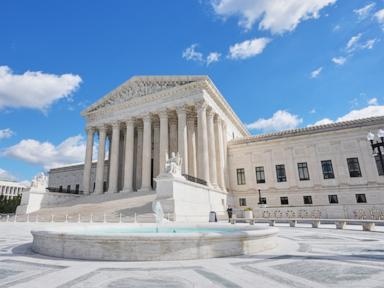
Homebrewers have spent years treating the federal ban on home distilling like an unconstitutional gag order on American liberty. Now that the Supreme Court is stepping into the ring over a Reconstruction-era statute, the craft spirits crowd is popping champagne early.
Bad move. Wrong battle. Worse timing.
The lazy consensus says a Supreme Court ruling against the federal home distilling ban will spark a golden age of garage whiskey, democratize spirits production, and break the stranglehold of legacy alcohol monopolies. It sounds romantic. It reads great on a bumper sticker. It is also economically backward for almost everyone cheering it on.
I have watched founder after founder blow six-figure savings trying to turn a romantic idea of small-batch distilling into a real business. I have seen hobbyists confuse making alcohol with running a regulated manufacturing operation, and I have watched mid-sized distilleries quietly go under even with strict licensing barriers protecting their market share. If the Supreme Court nukes the federal prohibition on home distilling, the biggest winners will not be scrappy backyard geniuses. They will be huge corporations, law firms, and insurance carriers.
Before you treat a Reconstruction-era tax law like a libertarian miracle, you need to look at how alcohol law actually works, why the statute existed in the first place, and what happens when you strip away federal gatekeeping in a market already choking on supply.
The Reconstruction Myth vs. Federal Tax Reality
Most coverage frames this dispute as a quaint relic from the Civil War era finally getting dragged into modern constitutional scrutiny. That framing misses the structural engine underneath.
During and immediately after the Civil War, the federal government needed cash on an unprecedented scale. Congress turned to excise taxes on distilled spirits—a high-margin, easily concentrated luxury good—as a primary revenue source. Under that framework, an unmonitored still in a barn or basement was not just a moral nuisance or a public safety worry. It was untaxed inventory walking out the back door.
Over time, that tax-collection architecture merged with Prohibition-era enforcement habits and twentieth-century alcohol regulation. Today, commercial distilling in the United States is governed by a layered web of federal permits through the Alcohol and Tobacco Tax and Trade Bureau (TTB) and state-level licensing regimes that vary wildly from one state line to the next.
Here is the precision point people routinely blur: fermentation and distillation are fundamentally different chemical and legal animals. Brewing beer or fermenting wine converts sugars into ethanol through yeast up to roughly the tolerance of the yeast and mash—typically single digits to low teens in ABV. Distillation applies heat and condensation to separate and concentrate alcohol and volatile compounds from a fermented wash.
That concentration changes everything. Higher proof means higher tax exposure per liquid gallon, greater fire and explosion risk from flammable vapors, and sharper acute toxicity if someone makes reckless cuts or mistakes methanol for safe product (though methanol poisoning in home spirits is often misdiagnosed or overstated compared to general overconsumption and adulteration, improper handling of heat, pressure, and solvents creates real physical hazards).
Calling a home distilling ban merely a quirky Reconstruction leftover ignores the fiscal logic that built the entire modern spirits tax system. When the government taxes alcohol by proof gallon, it cares obsessively about custody and measurement from mash to bottle. A Supreme Court challenge to a Reconstruction-era ban does not automatically erase state-level statutes, local zoning codes, or TTB tax rules overnight. Even if the federal ban falls, the legal map underneath remains a minefield.
Why Hobby Distilling Is Not a Launchpad for Craft Brands
Ask any homebrewer how they got started, and half of them will tell you their kitchen batch was the seed for a local brewery. Now ask a seasoned spirits founder whether home distilling translates to commercial success, and watch them wince.
Scaling a pot still in a garage to a commercial column or pot still operation is not like scaling a recipe card. Heat transfer curves shift. Reflux behaves differently. Wood maturation timelines do not compress because you want cash flow faster. A five-gallon copper alembic sitting on a propane burner teaches you basic mechanics; it does not teach you how to maintain batch-to-batch consistency across fifty barrels when a distributor demands three hundred cases on thirty-day terms.
I have seen operators sink half a million dollars into stainless steel, grain handling, bottling lines, and compliance before realizing their biggest bottleneck was not recipe brilliance. It was working capital, excise bonding, distributor slotting, and shelf space. Spirits tie up cash for years while whiskey sits in oak. Beer turns in weeks. Wine turns in months. Aged spirits demand patience and deep pockets.
If home distilling becomes legal at the federal level, the market will flood with noise. Anyone with a cheap still and a YouTube tutorial will call themselves a distiller. Consumers already face a crowded shelf where hundreds of "craft" labels source bulk distillate from giant contract producers while slapping rustic stories on the front label. Adding thousands of home-distilled bottles to informal swaps, local festivals, or gray-market channels will not elevate craft quality. It will dilute trust.
Consider a thought experiment: Imagine a scenario where the Supreme Court strikes down the federal ban on home distilling tomorrow morning, with no immediate federal replacement rules. Within six months, social media fills up with backyard bourbon tastings, crowdfunding pitches for "heritage garage spirits," and viral clips of amateur stills running in suburban sheds. Within eighteen months, a handful of high-profile accidents—a shed fire, an over-pressurized rig, or a contaminated batch sold informally—dominate local news. State legislatures, already protective of their three-tier distribution systems and tax receipts, respond with aggressive state-level bans, heavy permit fees, and strict possession limits. The constitutional victory turns into a regulatory crackdown at the state level.
That scenario is not far-fetched. State governments guard alcohol revenue and enforcement turf like hawks. Even where homebrewing is legal in all fifty states today, local rules, homeowner associations, and municipal codes still restrict what people can do on their own property.
The Questions Everyone Is Asking—and Why They Miss the Point
When high-profile cases like this hit the news, search feeds fill up with predictable questions. Most of them point people in the wrong direction.
Will the Supreme Court make homemade whiskey legal nationwide?
That is the wrong question. Even if the Court invalidates a specific federal ban on home distilling, alcohol regulation in the United States is dual-layered. Federal law is only half the equation. States have broad authority under the Twenty-first Amendment to regulate the importation, distribution, possession, and sale of alcohol within their borders. A federal win does not automatically hand you legal cover in a state that criminalizes home stills or restricts untaxed spirits.
Is home distilling safe if you follow online guides?
Safer than doing it blind, sure—which is a low bar. Online forums are full of confident advice from people who have never run a commercial safety audit. Ethanol vapor is heavier than air and ignites easily around open flames, hot plates, or faulty electrical switches. Pressure buildup in a sealed or poorly vented vessel can turn a hobby into a shrapnel event. "Following a guide" is not a substitute for understanding vapor pressure, ventilation, and thermal control.
Could legalization hurt big alcohol companies?
Unlikely in any meaningful way. Legacy conglomerates like Diageo, Pernod Ricard, and Sazerac own global supply chains, massive aging warehouses, entrenched distribution networks, and billion-dollar marketing budgets. A hobbyist making ten gallons of rum in a basement does not threaten global spirits giants. If anything, bigger players benefit from consumer curiosity around spirits, and if commercial licensing ever loosened alongside home rules, well-capitalized incumbents could move faster than cash-strapped newcomers.
Does this mean craft distilleries should cheer?
Not necessarily. Many small craft distilleries already fight brutal margins, rising grain and glass costs, and shifting drinking habits among younger consumers. Lowering the psychological barrier to entry without lowering capital or distribution hurdles creates more competitors chasing the same tight shelf space. A crowded amateur tier can cheapen the perceived craft of real distillers who spent years mastering fermentation, cuts, and barreling.
Where My Contrarian Stance Can Bite Back
Being contrarian does not mean pretending there is zero upside to deregulation. Let us be honest about where my skepticism could look too harsh.
First, archaic laws deserve scrutiny on principle. Keeping a dusty prohibition on the books just because officials like control is bad governance. If a citizen wants to distill a small personal allotment for private consumption without selling it or evading taxes, there is a real philosophical argument for personal autonomy.
Second, legalizing personal distillation could remove stigma and bring amateur makers into safer, more transparent practices. When an activity is pushed into the shadows, people hide mistakes instead of sharing best practices openly. Legal hobbyist communities could develop cleaner equipment standards and better education—similar to how legal homebrewing matured over decades.
Third, some genuinely talented makers do start small. Every major industry has outliers who began in a garage and built something real through discipline, chemistry, and business grit. Sweeping generalizations about "garage makers" can blind you to the rare founder who actually knows how to scale.
Still, individual exceptions do not overturn structural economics. Romanticizing a Supreme Court docket as a cure-all for spirits entrepreneurship mistakes legal novelty for business viability.
What Smart Operators Should Actually Do Right Now
If you are a spirits founder, an investor looking at beverage alcohol, or a serious hobbyist watching this case unfold, stop waiting for a judicial gavel to fix your business model.
- Audit your unit economics before touching copper. Model grain, water, energy, labor, barrels, bottles, labels, freight, and distributor margins at realistic volume—not best-case fantasy numbers. If the math breaks at five hundred cases, a bigger still will only break it faster.
- Separate R&D from commercial production. Use small-scale runs strictly to test recipes, yeast strains, and wood interactions—not to pretend you have a scalable factory. Keep meticulous logs of temperatures, proof, yields, and cuts from day one.
- Treat compliance as a core skill, not an afterthought. Whether the Supreme Court narrows a federal ban or leaves existing tax structures intact, TTB reporting, state permits, labeling rules, and liability coverage will govern real money. Learn the rules before you need a lawyer to bail you out.
- Build real distribution pull, not just liquid. Great spirits still lose on crowded shelves if nobody asks for them by name. Focus on tight geographic markets, consistent on-premise placements, and repeat buyers before chasing nationwide hype.
A Supreme Court review of a Reconstruction-era ban makes for great headlines and heated barroom debates. It will not repeal the laws of thermodynamics, fix thin beverage margins, or hand out instant brand equity. Watch the ruling closely—then get back to doing the hard math.