The warehouse smells of warm grease and dry cardboard.
I know that smell. Anyone who has spent time around military logistics knows it. It is the scent of things waiting to be counted, packed, and shipped into a void. It is the scent of bureaucracy trying to measure an infinite appetite with a very short ruler.
Decades ago, I stood on a concrete loading dock watching wooden crates disappear into the belly of a transport plane. The manifests looked solid. The numbers on the sheets balanced down to the decimal. But the men on the ground knew better. They knew that a ledger entry does not stop a bullet, and an inventory code does not manufacture high explosives out of thin air. You cannot wish artillery shells into existence because a spreadsheet says they ought to be there.
Yet, we keep acting surprised when the math breaks down.
Recent reports out of Washington tell a familiar, terrifying story. American weapons stockpiles are running thin. Decades of foreign aid, continuous regional conflicts, and a defense industrial base that was streamlined for efficiency rather than endurance have left the cupboard remarkably bare. When you empty the pantry to feed every crisis on the globe, you eventually hit the back wooden panels.
Naturally, the political machinery did not panic about the depleted shelves. It panicked about the fact that somebody noticed.
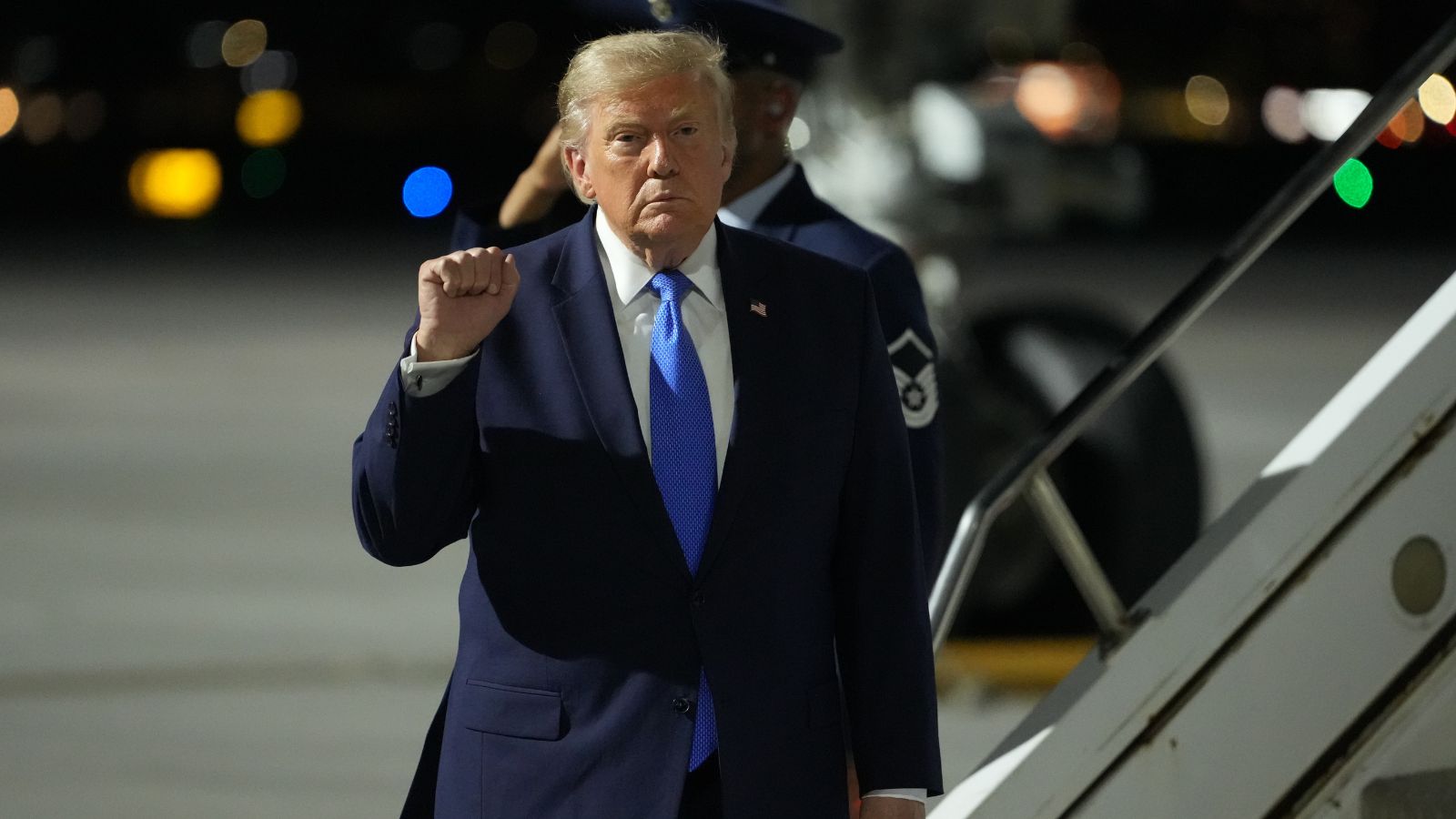
Former President Donald Trump stepped into the fray with a familiar, blunt instrument. He threatened jail time for the leakers. Not for the depletion itself. Not for the structural failure of the supply chain. But for the exposure. The cardinal sin, it turns out, is not running out of the tools of modern war; it is admitting out loud that you are running out of them.
Consider what happens next in a system built on plausible deniability.
An intelligence officer sits under harsh fluorescent lights in a secure facility. On his desk sits a brief detailing 155mm artillery shell reserves. The numbers are red. They have been red for months. Every simulation run in the Pentagon ends the same way: a sudden, catastrophic halt in supply within weeks of a major escalation. He looks at the report. He looks at the public statements coming from podiums a few miles away, where officials smile and promise endless support without limits or expiration dates.
He faces a choice. Keep the secret and watch the illusion hold until it shatters under fire, or let the public know the truth before it is too late to fix it.
Whistleblowing in the national security apparatus has never been about heroism in the storybook sense. It is usually an act of quiet desperation. It is a bureaucrat deciding that the risk of punishment is lower than the moral hazard of complicity. When a leader responds to a leak by threatening prison cells, they are treating the thermometer as if it were the fever.
We have built a defense posture that relies heavily on the mystique of omnipotence. For nearly a century, the American military juggernaut was advertised as an inexhaustible machine. Drop a coin in the slot, and aircraft carriers, missiles, and guidance systems pour out indefinitely. This myth served a purpose. It deterred enemies through sheer psychological weight. Adversaries looked at the theoretical depth of our industrial capacity and calculated that they could never win a war of attrition against an economy that outproduced the rest of the world combined.
But theories do not manufacture gunpowder.
The reality of modern manufacturing is lean, brittle, and hyper-specialized. We no longer maintain massive government arsenals turning out shells twenty-four hours a day 'just in case.' Instead, we rely on a handful of defense contractors operating on precise, just-in-time delivery schedules. When a sudden demand spike hits—whether from Eastern Europe, the Middle East, or domestic replenishment—the system does not bend. It chokes.
The machinery requires rare earth minerals, highly skilled machinists, and chemical precursors that take years to source and process. You cannot scale up a rocket motor production line overnight simply because an executive signs a memo. It takes years of infrastructure investment, environmental permitting, and workforce training.
By threatening the leakers, the political establishment attempts to force the clock to stop. If nobody talks about the empty shelves, perhaps the factories will magically catch up before anyone notices the gap.
It is a comforting fantasy, but the adversary is not fooled. Foreign capitals do not rely on American press reports to gauge logistical depth; they have their own satellites, their own economic intelligence, and their own analysts studying global shipping manifests. They know how many tons of steel cross the ocean. They know how long it takes to cast a barrel for a howitzer. The only people kept in the dark by these threats are the American citizens whose tax dollars fund the enterprise and whose security depends on its functionality.
There is a profound irony in watching a government threaten its own people for revealing a vulnerability that is already obvious to the rest of the world. It is the equivalent of a homeowner smelling smoke, threatening to punish the person who yells fire, and then going back to sleep while the curtains catch.
We are standing at a peculiar historical crossroads. The era of unquestioned American industrial supremacy is gone, replaced by a complex, interconnected global supply chain that is exceptionally vulnerable to shocks. Pretending otherwise is no longer just a political strategy; it is a hazard.
The leaks will continue as long as the gap between official rhetoric and physical reality remains wide. No amount of prosecutorial threat can manufacture explosives out of thin air. No prison sentence can turn a depleted warehouse into a full one.
At some point, the state has to stop policing the mirror and start fixing the room. Until then, we are left waiting in the quiet warehouse, listening to the echo of our own hollow promises, wondering how long the illusion can hold before the floor finally gives way.