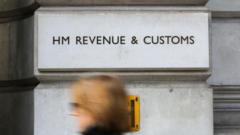
HMRC just handed a multimillion-pound contract to a British tech firm to hunt down tax evaders using artificial intelligence. This isn't just another government IT project that’ll collect dust. It’s a massive shift in how the UK state watches your money. The tax office is tired of playing catch-up with manual audits and clunky spreadsheets. They're bringing in the big guns to scan millions of records in seconds. If you’ve been "creative" with your tax returns, the window for staying under the radar is slamming shut.
The deal involves Quantexa, a London-based unicorn that specializes in what they call "decision intelligence." Basically, they're experts at connecting dots that humans can't see. Most people think tax fraud is about someone hiding a briefcase of cash. In reality, it’s often a web of shell companies, ghost employees, and slightly tweaked numbers across multiple filings. Quantexa’s tech doesn't just look at one form. It looks at the whole world around that form. It checks who you’re doing business with, where your addresses overlap, and whether your lifestyle matches your reported income.
The end of the needle in a haystack approach
The old way of catching fraud was slow. HMRC investigators had to follow hunches. They’d pick a sector, like construction or hospitality, and start digging. It was tedious work. You’d have humans looking for anomalies in VAT returns or PAYE data. It took months to build a case. Now, the AI does the heavy lifting before a human even opens a file.
This new system ingests data from everywhere. We're talking bank records, social media footprints, property registries, and even international data leaks. The AI builds a massive graph of relationships. If a director of a company claiming insolvency suddenly pops up as a consultant for a new firm with the same equipment and staff, the system flags it instantly. It identifies "phoenixing" before the ashes are even cold.
It’s not just about the big fish, though. This tech is surprisingly good at spotting "errors" in standard self-assessment returns. Maybe you forgot to declare a small crypto gain. Or perhaps your business expenses look 15% higher than every other plumber in your postcode. The AI notices that. It doesn't get tired. It doesn't have a bias. It just sees patterns.
Why British tech got the nod
There’s a reason HMRC didn't just go to a Silicon Valley giant for this. Quantexa is local, but more importantly, their tech is built for high-stakes compliance. They already work with massive banks like HSBC and Standard Chartered to stop money laundering. If they can handle the complexity of global banking, the UK tax system is a natural fit.
The government is also under intense pressure to claw back the billions lost to fraud during the pandemic. Between the bounce-back loans and furlough schemes, the UK lost an eye-watering amount of money to opportunistic criminals. The public is angry. HMRC needs results, and they need them fast. Using a homegrown firm also looks good politically. It's a "win-win" for a government trying to prove the UK is a global AI powerhouse.
But let's be real about the risks. AI isn't perfect. We've seen what happens when government algorithms go wrong—think back to the Post Office scandal or the A-level grading fiasco. If the AI flags you by mistake, clearing your name isn't always easy. HMRC says humans will always make the final decision, but we know how "automation bias" works. If a computer says someone is a fraudster, the investigator is already looking at them through a lens of suspicion.
What this means for your next tax return
Don't panic, but do get your house in order. The era of "good enough" bookkeeping is over. If you're a freelancer or a small business owner, you can't afford to be messy with your records. The AI is looking for inconsistencies. If your declared income on your tax return doesn't align with the movements in your business bank account, you’re going to get a letter. It might not be an audit right away, but it’ll be a "nudge."
HMRC loves these nudge letters. They’re cheap and effective. The AI identifies a thousand people with suspicious-looking overseas interest. HMRC sends a thousand letters saying, "We think you might have forgotten something." Most people get scared and pay up. It’s highly efficient. With this new tech, expect those letters to become much more specific and much more frequent.
You also need to think about your digital footprint. If you’re posting photos of a brand-new Porsche on Instagram but telling HMRC you made £20,000 last year, you’re asking for trouble. They are allowed to use publicly available info. The AI makes it easy for them to scrape that data and compare it to your filings. It sounds like sci-fi, but it’s happening right now.
Data privacy and the creepy factor
There's an obvious "Big Brother" element here that makes people uneasy. How much data is too much? HMRC already has vast powers, but this takes it to a new level. The system can essentially create a digital twin of your financial life. It knows who you pay, who pays you, and likely where you spend your weekends.
Quantexa’s platform uses something called "Entity Resolution." It’s a fancy way of saying it can tell that "J. Smith" at 10 Downing Street is the same person as "John Smith" who owns a bakery in Soho and "Jonathan Smith" who has an offshore account in the Caymans. It cleans up messy data to find the truth. While that’s great for catching actual criminals, it feels invasive for the average taxpayer who just wants to be left alone.
The safeguards are supposedly there. HMRC is bound by GDPR and various oversight committees. But the "black box" nature of AI remains a problem. If the system decides you're a high-risk individual based on a complex web of 500 different variables, how do you even begin to challenge that logic? You can't cross-examine an algorithm.
How to stay off the AI hit list
The best way to avoid a headache is to stop treating your tax return like a chore you finish at 11 PM on January 31st. Use proper accounting software. Keep your personal and business finances strictly separate. The more "noise" in your data, the more likely the AI is to flag it as a potential anomaly.
- Reconcile your accounts monthly. If there’s a weird transaction, document it while you still remember what it was for.
- Be honest about crypto. HMRC is getting specific data feeds from exchanges. The AI will find those transactions.
- Check your "connected" parties. If you’re doing business with family members or entities you own, ensure the paperwork is flawless. These "circular" relationships are exactly what the tech is designed to flag.
- Don't ignore the "nudge." If you get a letter asking you to check your return, don't just bin it. It means you're already on their radar.
HMRC isn't going back to the old ways. This contract is a clear signal that the future of tax enforcement is automated, data-driven, and incredibly precise. You can either adapt by becoming more transparent and organized, or you can take your chances against a machine that never sleeps and sees everything.
Get your records digitized and organized today. If your books are a mess, hire an accountant to clean them up before the AI does it for you. The cost of a professional review is nothing compared to the penalties and stress of a full-blown HMRC investigation triggered by a computer algorithm.