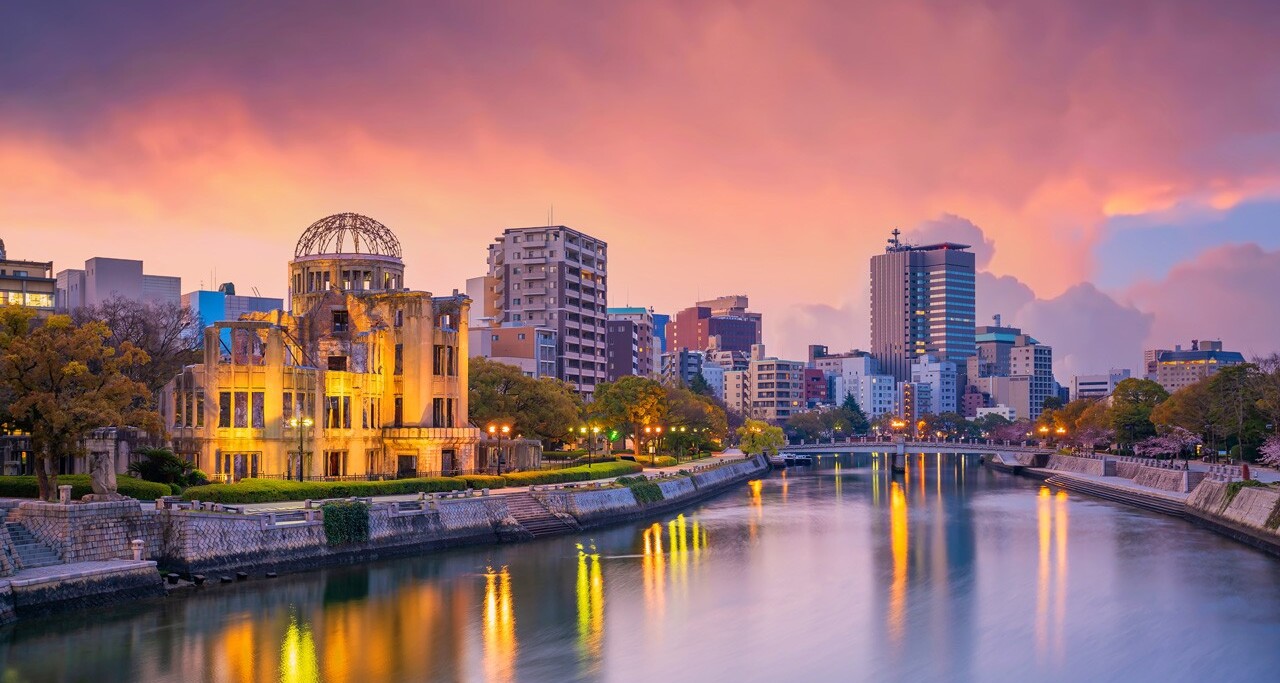
Eighty-one years after a B-29 bomber named the Enola Gay opened the atomic age over Hiroshima, the world remains tethered to the fragile architecture of nuclear deterrence. On August 6, 1945, at 8:15 a.m. local time, an enriched-uranium weapon codenamed Little Boy detonated approximately 600 meters above a bustling Japanese city, instantly rewriting the rules of human conflict and geopolitical survival.
The immediate death toll crossed tens of thousands, swelling to an estimated 140,000 fatalities by the end of that grim year due to horrific thermal burns, blast trauma, and invisible radiation poisoning. Yet, looking back at Hiroshima Day carries a weight far heavier than routine historical remembrance. It forces an unsparing examination of how modern global security structures continue to balance on a knife-edge of absolute annihilation.
The Engineering of Devastation
To understand what happened on that August morning, one must look past the statistics and examine the physical mechanics of the weapon itself. Little Boy was a gun-type fission device, a relatively primitive design by contemporary standards, utilizing a sub-critical mass of uranium-235 forcibly shot down a barrel into another sub-critical target to trigger an uncontrolled chain reaction.
The resulting explosion yielded an energy equivalent of roughly 15 kilotons of TNT. Within milliseconds, a searing fireball reached temperatures matching the interior of the sun. Thermal radiation melted roof tiles, ignited structural fires miles away, and vaporized human bodies within the immediate hypocenter, leaving behind permanent, ghostly shadows scorched onto concrete pavements.
The blast wave followed seconds later, flattening reinforced concrete buildings that engineers had boasted were earthquake-proof. But the most insidious weapon was the fallout—ionizing radiation that penetrated cells, ruptured DNA, and triggered acute radiation syndrome in survivors, known in Japan as hibakusha. These individuals endured decades of chronic illness, societal stigma, and psychological trauma, carrying the physical burden of the war long after the peace treaties were signed.
The Perpetual Debate Over Necessity
Historians have spent more than eight decades dissecting the military rationale behind the decision to drop the bomb. The official narrative maintained for generations insisted that the atomic strikes on Hiroshima and Nagasaki were essential to bypass a bloody mainland invasion of Japan, codenamed Operation Downfall, which military planners estimated could have cost hundreds of thousands of Allied lives and millions of Japanese casualties.
Revisionist historians, however, point to declassified wartime archives to challenge this neat narrative. Archival documents suggest that Japan's military leadership was already staggering under a punishing conventional bombing campaign and the entry of the Soviet Union into the Pacific war. Proponents of this school of thought argue that Tokyo was actively seeking a conditional surrender, primarily centered on preserving the imperial institution, and that the atomic bomb served an aggressive geopolitical signaling purpose directed at Moscow as the Cold War took shape.
Reality likely rests in the gray space between these interpretations. Decision-makers in Washington operated under wartime tunnel vision, driven by a momentum where weapon deployment was treated as an inevitable logistical outcome rather than a discrete moral choice. Once the Manhattan Project expended billions of dollars and years of scientific labor, halting its application was functionally unthinkable to the political leadership of the era.
The Fragile Architecture of Modern Deterrence
Eighty-one years later, the international frameworks built to prevent a recurrence of Hiroshima are fracturing under modern pressures. The global inventory still holds thousands of nuclear warheads, many times more powerful than the weapon that destroyed Hiroshima. Modern thermonuclear weapons leverage multi-stage fusion processes capable of erasing entire metropolitan regions and triggering long-term global climate catastrophes through nuclear winter scenarios.
Bilateral arms control agreements that once provided a degree of predictability between nuclear superpowers have deteriorated. The collapse of key treaties and rising regional tensions from Eastern Europe to the Indo-Pacific have accelerated a quiet, terrifying modernization race among nuclear-armed states. Hypersonic delivery systems, artificial intelligence integration into early-warning networks, and space-based military assets have compressed decision-making windows during crises from hours to mere minutes.
In this environment, deterrence theory relies on the doctrine of Mutually Assured Destruction, an acronym aptly shortened to MAD. It posits that rational actors will never initiate a nuclear exchange because the retaliatory strike guarantees mutual suicide. Critics of this doctrine point out a fundamental flaw. Rationality is rarely a constant in human leadership, and mechanical systems are inherently vulnerable to false alarms and software failures.
The Japanese Paradox
For Japan, the anniversary serves as a profound national paradox. The country maintains its constitutional pacifism under Article 9, anchoring its global identity in its role as the world's foremost moral voice against nuclear proliferation. Annual ceremonies at Hiroshima's Peace Memorial Park feature solemn declarations from civic leaders urging the total abolition of nuclear weapons.
Simultaneously, the stark realities of a deteriorating regional security environment in East Asia have forced Tokyo into a massive, historic defense transformation. Faced with aggressive neighboring postures and shifting strategic balances, Japan has steadily expanded its defense capabilities, reinterpreting constitutional constraints to strengthen interoperability with allies. This creates a tense duality. The state relies firmly on the extended nuclear deterrent umbrella of the United States while officially campaigning for a world free of the very weapons that guarantee its security framework.
The Last Living Witnesses
The most urgent crisis facing the legacy of Hiroshima is human mortality. The hibakusha, who spent decades serving as living testaments to the horrors of atomic warfare, are vanishing from the earth. As their numbers dwindle due to advanced age, the burden of testimony shifts entirely to second-generation descendants, historical archives, and digital preservation efforts.
When eyewitness accounts fade into text on a page, the visceral horror of a nuclear detonation risks transforming into abstract history, divorced from its actual human cost. Collective memory requires active maintenance, particularly in an era where public discourse is easily saturated by digital noise and historical amnesia.
The memorial flames burning in Hiroshima's Peace Park are not mere symbols of past grief. They are active warnings ticking down in real time, reminding humanity that the technical knowledge required to build these weapons cannot be unlearned, and that survival relies entirely on political restraint that grows more precarious with every passing decade


