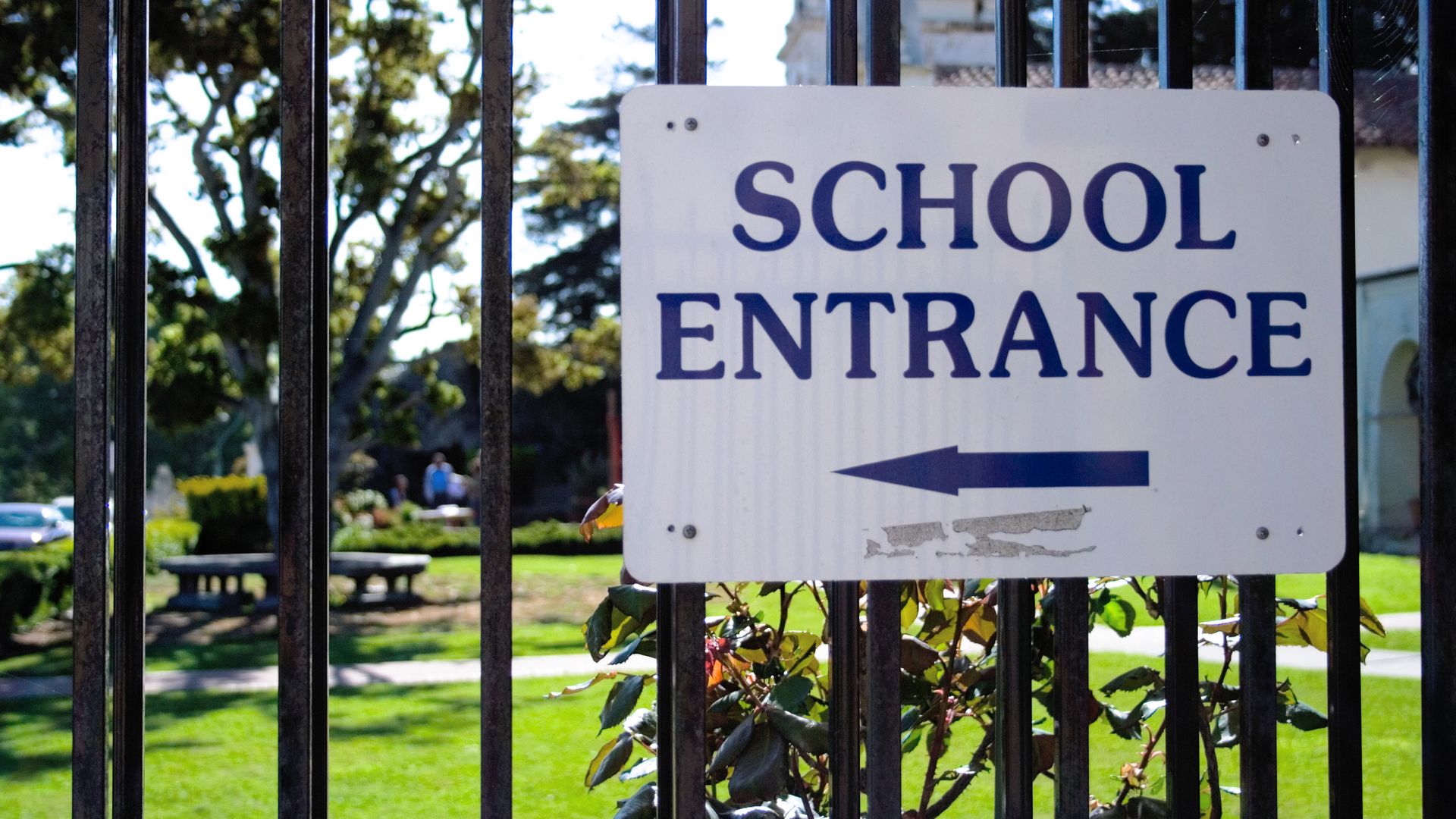
At 8:14 AM on a Tuesday morning, the fluorescent lights in a fourth-grade classroom hum with the ordinary monotony of spelling tests and half-eaten granola bars. Then the tone chimes over the intercom. Not the cheerful chime that precedes morning announcements about taco day, and not the sharp, practiced trill of a scheduled fire drill. It is a flat, mechanical cadence that every public school teacher in the country has been trained to recognize in their bones before their brain even finishes processing the words.
Lockdown.
Imagine, for a moment, a hypothetical teacher named Elena. She is thirty-four, wears sensible loafers because her lower back aches by noon, and keeps a stash of peppermint candies in her top desk drawer for anxious kids. When that tone sounds, Elena does not have the luxury of knowing that three hundred miles away, in a nondescript office building, a police spokesperson is already drafting a press release using the word "hoax." She does not know that the exact same copy-pasted email—a rambling, digitally masked threat promising violence—landed in the inboxes of four hundred other schools across three states at the exact same millisecond.
Elena only knows the sound of twenty-six pairs of sneakers shuffling across linoleum toward the blind spot behind her filing cabinets. She knows the cold metallic click of the deadbolt. She knows the sudden, suffocating silence of nine-year-olds trying not to breathe too loudly while she slides a heavy wooden bookcase across the doorway, tearing her own fingernails in the process.
By noon, the headlines will call it a non-credible threat. Police departments will issue calm, reassuring statements explaining that the mass emails were automated, unsubstantiated, and ultimately harmless. Parents will exhale, pick up their children early, and return to their afternoon meetings. The news cycle will move on by dinner.
We have gotten the story of school bomb threats and mass swatting emails completely backward. When law enforcement labels a wave of threatening emails a hoax, they are speaking a technical truth about physical explosives and armed intruders. They are telling us that no one was actually coming through the front doors. Yet in treating a hoax as a non-event, we miss the quiet, cumulative devastation happening inside those locked rooms. A threat does not need a trigger to leave a wound.
The Anatomy of an Automated Panic
To understand why these mass-emailed threats have become a recurring plague on public education, you have to strip away the Hollywood image of the lone, shadowy mastermind hunched over a glowing keyboard. The reality is far more banal, and somehow more chilling.
Modern school threats rarely originate from a disgruntled student in the back row anymore. Instead, security analysts and federal investigators consistently trace these waves back to coordinated online networks, overseas actors, or automated scripts designed to weaponize emergency response systems at scale. Think of it like a digital wildfire. One person writes a single paragraph of terror, feeds it into a mailing list scraped from public school district websites, and hits send. Within seconds, hundreds of administrative assistants open the same message.
Because no principal can afford to gamble with children's lives on a hunch, the protocol triggers instantly. Even when an email contains broken syntax, bizarre phrasing, or obvious signs of a template, the margin for error in school safety is zero. You cannot look at a message threatening an explosion at 10:30 AM and decide to wait until 10:35 to see if the ceiling holds.
So the machinery grinds into motion. Patrol cars scream down residential streets at eighty miles an hour, risking collisions at every intersection. Bomb-sniffing dogs are pulled from regional transit hubs. Hundreds of officers, dispatchers, and paramedics are diverted from actual emergencies—heart attacks, domestic violence calls, highway crashes—to sweep empty hallways and check ceiling tiles. A single keystroke by an anonymous sender can easily burn through hundreds of thousands of dollars in municipal overtime before lunchtime.
What Happens in the Dark
I have sat on the cold tile floor of a darkened classroom during an unannounced lockdown, listening to a child quietly hyperventilate into their sleeve while whispering asks about whether their little sister down the hall was safe. Once you experience that specific flavor of institutional terror, the word "hoax" feels like an insult.
The human nervous system does not read press releases. When a child sits huddled under a desk for ninety minutes, listening to heavy boots stomp past the door and radios squawk in the corridor, their body floods with cortisol and adrenaline. Their heart rate spikes. Their digestion shuts down. Their brain shifts entirely into survival mode, preparing for a violent encounter that never arrives.
When the all-clear finally sounds, the physical danger evaporates, yet the physiological debt remains unpaid. Teachers report that for weeks after a false alarm, the slightest unexpected noise—a dropped textbook, a slamming locker, a sudden thunderclap—sends visible tremors through a classroom. Attendance drops in the days following a mass threat. Pediatricians see spikes in stomachaches, insomnia, and sudden separation anxiety among kids who were perfectly fine the week before.
Consider what happens next in the faculty lounge. Teachers are expected to absorb the terror of twenty-five or thirty children, project an aura of unshakable calm while barricading doors, and then, once the police clear the building, seamlessly pivot back to teaching fractions. We ask educators to function as unpaid first responders without the decompression protocols, hazard pay, or psychological support that career police officers and firefighters receive after a high-stress deployment. Slow-motion burnout does not always look like dramatic resignation letters; sometimes it looks like a veteran teacher sitting in her parked car in the school lot at 4:00 PM, staring at the steering wheel because she cannot muster the energy to drive home.
The Boy Who Cried Wolf in the Digital Age
There is a second, quieter danger lurking inside this epidemic of fake threats, one that keeps school safety directors awake at night. It is the psychological trap of habituation.
Human beings are remarkably bad at sustaining high alert over long periods. When a community experiences its first lockdown, every procedure is followed to the letter. Doors are locked within seconds, blinds are drawn, phones are silenced, and parents stay away from the perimeter so emergency vehicles can get through.
Now trace what happens when the same district receives three email threats in a single semester, and all three turn out to be overseas hoaxes.
Complacency creeps in like fog. A teacher hesitates for ten seconds before locking the door, wondering if it is just another spam email. A student rolls their eyes and pulls out a phone to record a video instead of hiding. Worse still, hundreds of terrified parents ignore police instructions and speed toward the school, creating gridlock that physically blocks SWAT teams and ambulances from reaching the entrance.
Law enforcement officials walk a razor-thin tightrope every time they address the public after these incidents. If they sound too alarmed, they hand the perpetrators the exact chaos and media spectacle they crave. If they dismiss the emails too casually as mere hoaxes, they risk numbing the public to the day when a threat is tragically real. Transparency becomes a high-stakes balancing act: how do you reassure a traumatized town without breeding dangerous apathy?
Why Catching the Ghost Is So Hard
Whenever hundreds of schools receive identical threats, the immediate, furious question from parents is always the same: Why haven't they arrested the person responsible?
To understand the frustration of investigators, imagine trying to trace a single drop of water back to the exact cloud it fell from after it has already landed in a rushing river. Perpetrators rarely send these emails from a home Wi-Fi network using a personal account. Instead, they bounce their connection through layers of encrypted virtual private networks, compromised servers in countries with no extradition treaties, and disposable email providers designed to wipe user data automatically.
Even when federal agencies like the FBI join local police to subpoena digital records, the trail frequently crosses international borders within seconds. A threat targeting an elementary school in Ohio might be routed through a server in Frankfurt, a proxy in Singapore, and a burner device operated from a basement in Eastern Europe. Legal warrants that take months to process internationally collide with digital footprints that vanish in minutes.
Furthermore, many of these mass campaigns are driven by shifting, decentralized online communities where teenagers and young adults compete for notoriety. In these dark corners of the internet, disrupting an entire American school district is treated like a video game achievement. Some offenders even sell "swatting-as-a-service" for a few dollars in cryptocurrency, allowing anyone with a grudge or a twisted sense of humor to shut down a school without possessing any technical skill of their own.
Reclaiming the Margin of Safety
If we cannot simply arrest our way out of an international, automated problem overnight, how do schools and communities survive without living in perpetual paralysis?
The answer begins with changing how we filter, verify, and communicate before the panic button gets pushed. Across the country, forward-thinking school districts and fusion intelligence centers are quietly rewriting their playbooks. Instead of treating every inbox as an isolated island, districts are deploying advanced email authentication filters and threat-intelligence software capable of flagging identical linguistic patterns across multiple jurisdictions in real time. When a system recognizes that the exact same phrasing hit fifty districts simultaneously, administrators and police commanders receive immediate context alongside the alert.
Context does not mean ignoring a threat; it means calibrating the response. When police know within sixty seconds that an email is part of a broader, known mass-mailing campaign, they can execute rapid, targeted sweeps of a campus without plunging thousands of children into multi-hour, high-trauma lockdowns. Subtle shifts in protocol—moving from a panicked barricade posture to a heightened perimeter watch while officers verify the building—can spare an entire generation from unnecessary psychological scarring while keeping doors securely locked.
Just as vital is how districts talk to families. Silence breeds rumor, and rumor breeds the kind of frantic parental stampedes that clog school driveways. Districts that establish rapid, honest, and plain-spoken communication channels—telling parents clearly what is happening, what police have found so far, and precisely when and where reunification will happen if needed—consistently see calmer communities and safer campuses.
Parents, too, hold a piece of this puzzle. Every time a threatening email circulates, screenshots inevitably leak onto local social media groups within minutes. Sharing unverified screenshots of a bomb threat in a neighborhood Facebook group does not protect children; it acts as a force multiplier for the attacker, spreading panic faster than official updates can travel and clogging emergency phone lines with panicked calls. Pausing before hitting share is a small, unglamorous act of civic defense.
The Weight of an Empty Hallway
Late in the afternoon, long after the police cruisers have pulled away and the yellow tape has been rolled up, the custodians walk the halls of a school that survived a hoax.
On paper, nothing happened there. No windows were broken. No sirens are wailing anymore. The official report will be filed under a sterile administrative code, a footnote in a regional intelligence briefing about unfounded digital harassment.
Yet if you walk into that fourth-grade classroom at dusk, you can still see the faint black scuff marks on the linoleum where a heavy wooden bookcase was dragged across the floor in a frantic rush to block a door. You can see twenty-six half-finished spelling tests sitting on twenty-six small desks, abandoned mid-word when the chime went off. And in the top drawer of the teacher's desk, the peppermint candies are gone.