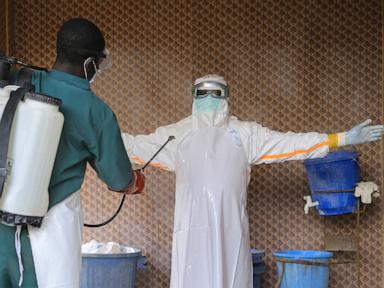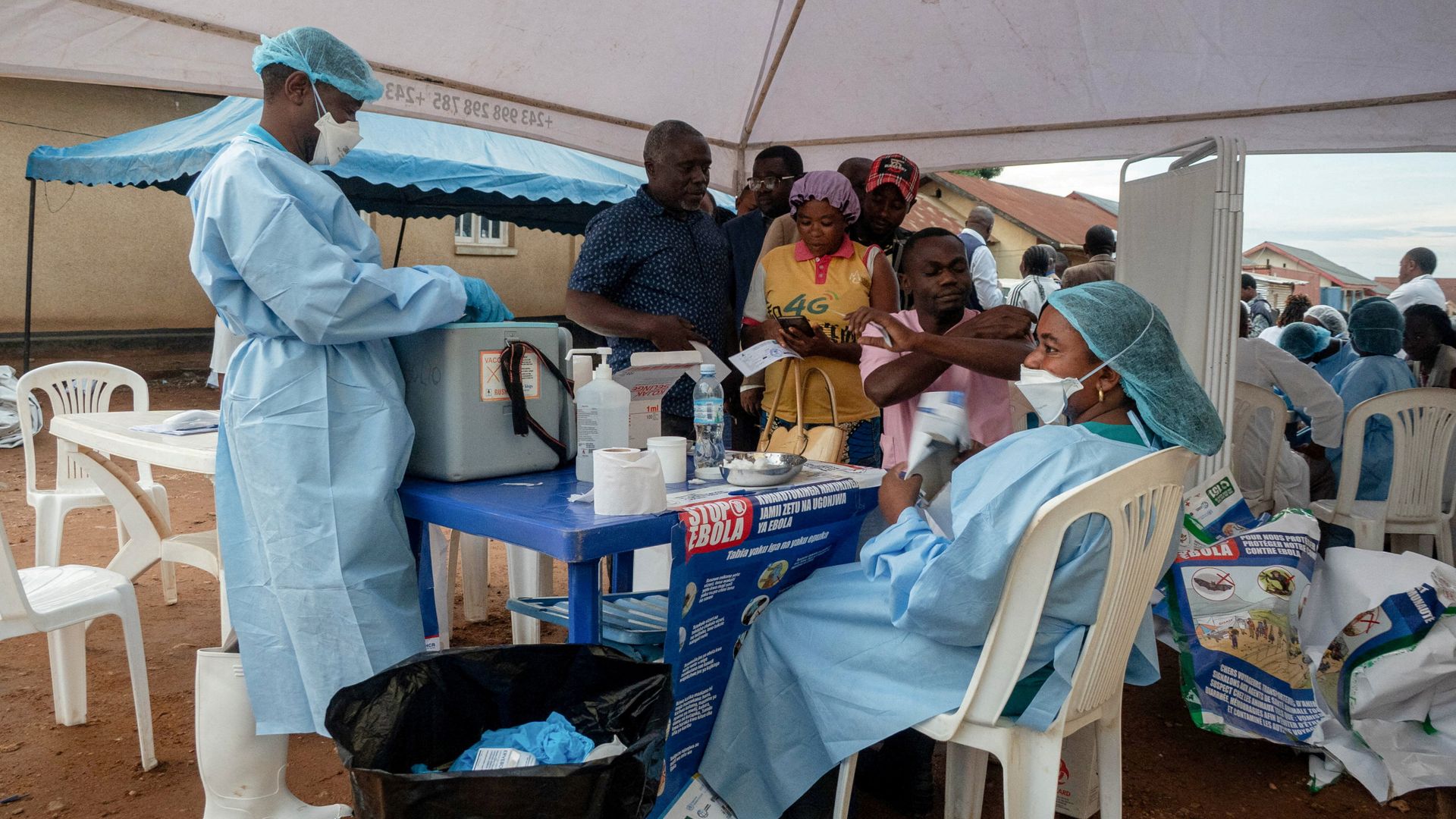
Rubber gloves squeak against plastic. Sweat pools inside a visor until the edges of the room blur into warm, amber water.
That is the sound and sight of care during a viral hemorrhagic outbreak. You cannot touch a feverish forehead with bare skin. You cannot offer the quick, human reassurance of a bare hand clasping another hand across a hospital bed. Everything is mediated by layers of synthetic fabric, goggles, and fear.
Outside the perimeter of a clinic or a rural treatment center, a very different noise often rises through humid air. Shouting. Footsteps pounding red earth. The flat, metallic glint of steel carried by people who do not believe the clinic is saving their neighbors—people who believe the clinic is stealing them, poisoning them, or carrying the sickness in on white coats and clipboards.
When a nurse treating Ebola patients is killed by a machete-wielding mob, headlines tend to freeze the moment into a shock value snapshot. Tragedy. Outrage. A brief spasm of attention before the news cycle moves on.
Tragic. Brutal.
Yet stopping at the shock leaves out the architecture of why that blade was raised in the first place. A mob does not materialize out of thin air in five minutes with a shared grievance. Fear has a history. Rumor has a supply chain. And when an outbreak arrives in a community already worn thin by poverty, colonial memory, opaque quarantine rules, or distant authorities, a health worker standing in protective gear can look less like a savior and more like an invader.
To understand what happened—and why it keeps threatening frontline workers across outbreak zones—we have to look past the headline and trace the collision between a lethal pathogen and human terror.
What Fear Looks Like From Inside the Suit
Picture a hypothetical nurse—let us call her Mariam, a composite drawn from documented accounts of frontline health workers in West and Central Africa rather than any single real individual. This scenario is hypothetical, built to illustrate real operational pressures.
Mariam has worked twelve hours in a red zone where temperatures climb past ninety degrees. Inside a Tyvek suit, a shift feels like standing inside a sealed greenhouse while carrying a sack of wet sand. Her boots are heavy with chlorine spray. Every time she steps out of a patient ward, she has to walk through a decontamination corridor, peel off layer after layer with agonizing precision, and avoid touching her own face or hair. One slip of a gloved finger can mean exposure. Exposure can mean quarantine, isolation from family, or death.
Now imagine Mariam stepping off duty, exhausted, salt crusted along her collar, trying to talk with local elders or families outside the compound.
To Mariam, the rules exist for a simple, urgent reason: Ebola virus disease spreads through direct contact with blood, secretions, organs, or other bodily fluids of infected people, and with surfaces and materials contaminated with these fluids. Case fatality rates in past outbreaks have ranged widely—roughly from twenty-five percent to ninety percent depending on the virus species and the speed and quality of care. Without strict isolation and barrier nursing, one unguarded moment can turn a ward into a cemetery.
To a family standing outside the fence, the rules look different.
A loved one goes inside a tent or a clinic building. Visitors are restricted. Burials—normally sacred, communal gatherings where kin wash, touch, and honor the dead—are altered or conducted by strangers in white suits. Rumors spread fast when information moves slower than anxiety. Maybe people whisper that patients are being harvested for organs. Maybe they hear that the disease is a fabrication meant to attract foreign money or control movement. Maybe a neighbor died shortly after a clinic visit, and grief looks for a face to blame.
When a health worker arrives with a megaphone, a thermometer, or a burial team, they are walking into a powder keg where grief, distrust, and survival instinct have braided together.
Why Rumors Outrun Medicine
Public health textbooks often treat outbreaks as biological events with social complications. Out in the field, it frequently works the other way around. The biology is brutal, yes, yet human behavior decides how fast the chain of transmission breaks—or whether the response collapses altogether.
History gives us uncomfortable proof. During outbreaks in Central and West Africa over the past several decades, responders have repeatedly faced hostility, stone-throwing, threats, and deadly attacks. Health workers, burial teams, and journalists have all been targeted in moments when fear overtook trust. In 2014 in Guinea, for example, a team conducting health outreach and awareness work was attacked by villagers, leaving multiple dead—an event that underscored how fiercely suspicion could erupt when communities felt alienated or misled.
Why does that suspicion take root so reliably?
First, consider power and distance. When an outbreak hits a remote or underserved area, help often arrives late—and when it arrives, it comes with authority. Vehicles with unfamiliar license plates. Foreign experts or distant government officials. Directives handed down from capital cities or international agencies. If local leaders are bypassed early on, communities do not experience the response as their defense; they experience it as something being done to them.
Second, think about how humans process threat. To use a metaphor: fear acts like a lens that magnifies every ambiguity and erases nuance. This is a metaphor for cognitive threat response, not a literal optical effect. When people are terrified of a mysterious, fast-killing illness, silence breeds stories. If officials withhold details out of fear of "causing panic," people fill the vacuum with worse explanations. Rumor is rarely random; it usually latches onto real anxieties—distrust of the state, economic desperation from market closures or travel bans, or past experiences where promises of help went unfulfilled.
Third, there is the sheer strangeness of modern outbreak control. In ordinary life, if your grandmother is sick, you sit beside her, hold her hand, wipe her brow, and stay until the end. Outbreak protocols ask families to step back, watch from a distance, and let strangers handle bodies. Asking grieving people to abandon deep cultural rituals without first building genuine partnership is asking for resistance.
A nurse in full personal protective equipment is caught right in the middle of that friction. She is not the architect of global health policy or national politics. She is the person holding the IV line, changing soaked sheets, comforting someone vomiting or bleeding in isolation, trying to keep a patient hydrated enough to survive.
Yet in the heat of a riot or an ambush, symbols swallow individuals. The nurse becomes the face of the clinic. The clinic becomes the face of fear.
The Invisible Stakes Behind Every Attack
When a nurse is killed by an angry crowd, the immediate loss is human and irredeemable. A family loses a daughter, a partner, a parent. A clinic loses someone who knew how to start a line on a dehydrated patient or spot subtle signs of shock before it was too late.
Then the ripples spread outward, quiet and devastating.
Clinics close or scale back operations. Staff who were already stretched thin have to weigh their duty of care against the risk of being hacked down on the way home or inside a facility. Supply deliveries stall. Contact tracing—the painstaking detective work of finding everyone who had close contact with an infected person before symptoms spiked—becomes nearly impossible when residents hide their sick relatives out of terror of being blamed or attacked.
Every day contact tracing slows down, transmission can slip into the shadows.
Think about what happens next. A patient stays home instead of seeking care early. Supportive treatment—fluid replacement, electrolyte balance, monitoring organ function, treating secondary infections—is delayed. Early supportive care dramatically improves survival odds compared to late presentation, yet fear pushes people away at the exact moment early care matters most.
More people get sick inside households. Caregivers at home become exposed. And when cases rise again, fear spikes once more, feeding the very cycle that sparked the violence.
It is a cruel loop. Violence drives away caregivers; fewer caregivers and delayed care worsen outcomes; worse outcomes deepen suspicion of the response.
Where Conventional Explanations Fall Short
It is tempting to divide the story neatly into heroes and villains: brave nurses on one side, ignorant or bloodthirsty mobs on the other.
Simple. Neat. Wrong.
Calling a community "ignorant" ignores how rational fear can look from the outside of a closed gate. If you have never seen a virus under a microscope, if you have watched neighbors go into a building and not come out, if nobody has sat with you in your own language and explained why things are happening without talking down to you, your skepticism is not madness. It is self-protection mixed with grief.
At the same time, excusing mob violence flattens moral accountability. A machete does not distinguish between a corrupt official, a frightened rumor-monger, and a nurse trying to save lives. Killing a health worker destroys the very people standing between a community and a preventable catastrophe.
The real failure usually happens long before anyone picks up a weapon. It happens in the quiet months and weeks before an outbreak—when trust is thin, local health clinics lack basic supplies and pay, communication channels are weak, and emergency plans treat local residents as obstacles to manage rather than partners to inform.
I am not a doctor standing in a red zone, and I will not pretend to know the exact knot in a nurse's stomach when she hears angry voices gathering outside a fence. What I do know—from studying how crises unfold and how people react under existential threat—is that medicine cannot travel on fear alone. It needs trust as a carrier.
Rebuilding Trust Before the Crisis Boils Over
If fear turns healers into targets, how do you disarm fear without weakening infection control?
There are no neat shortcuts, and anyone promising an easy fix is selling illusion. Still, field experience across outbreaks points to clear shifts that change the temperature on the ground.
1. Start With Listening, Not Lecturing
Showing up with a stack of pamphlets and a stern lecture rarely calms an anxious crowd. Real engagement starts by asking what people are seeing, what they are afraid of, and what stories are circulating in the market or at the mosque or church.
When responders listen first, they discover the specific rumor doing the damage. Is it fear of the chlorine spray? Anger over a locked gate? Worry that a breadwinner quarantined for twenty-one days will leave their children hungry? Once you name the real fear, you can address it directly instead of arguing past it.
2. Put Trusted Local Voices at the Center
Messages carry farther when they come from people who already belong to the community—local nurses, respected elders, religious leaders, youth organizers, survivors who walked out of treatment centers alive.
Survivors, in particular, change the room. Seeing someone who was sick, went in for care, and came back whole punctures conspiracy theories faster than any press release ever could.
3. Protect Both Caregivers and Community Dignity
Infection prevention cannot be compromised; keeping staff safe keeps care running. Yet safety also requires physical security that is proportionate and thoughtful, paired with transparent protocols so families know what happens behind closed doors.
Whenever safe and appropriate, clear communication lines—structured updates, culturally respectful burial practices modified to reduce risk while honoring tradition, practical support for families in quarantine—reduce the feeling that people are being treated like suspects rather than neighbors.
4. Invest in Everyday Care Between Outbreaks
Communities rarely trust a system that only appears during emergencies with sirens, hazmat gear, and restrictions. When local clinics are reliable during ordinary fevers, childbirths, and injuries, people have a reservoir of goodwill when something terrifying arrives.
Stronger everyday healthcare does not just treat routine illness. It builds the human relationship that keeps a clinic standing when tempers flare.
The Weight Left Behind
Night falls quickly in the tropics, folding red dirt roads and corrugated roofs into the same dark silhouette. Somewhere near a clinic or a village square, someone is sitting awake with a memory that will not let go—a nurse's laugh before a shift, a mother waiting for news behind a line of tape, a hand that never got to say goodbye.
A machete leaves a scar on the body. Fear leaves a scar on the mind of a whole town.
Until we treat trust with the same urgency we give to vaccines, protective gear, and containment protocols, every outbreak will carry a second contagion—one made of rumor, grief, and dread—waiting for a spark.
Watch what happens when that spark catches. Listen to the silence that follows when the healers are gone.