Ten thousand cases. That number hits news feeds like a thunderclap, and almost instantly, half the internet starts picturing a global apocalypse while the other half scrolls right past because they've seen scary headlines from Central Africa before. Both reactions are completely wrong.
When a viral headline claims the Congo Ebola outbreak has topped 10,000 confirmed cases, you need to stop and look at what that figure actually represents, how the Democratic Republic of the Congo (DRC) tracks hemorrhagic fevers, and why field epidemiologists care way more about where cases pop up than the raw cumulative tally. If you're reading breaking news about an Ebola surge in the DRC right now, the real story isn't just the case count—it's the collision of conflict zones, funding bottlenecks, and the specific viral strain driving transmission.
Let's break down what's actually happening on the ground when an outbreak reaches this scale, how to separate real epidemiological data from panic-inducing clickbait, and what the global health response looks like in practice.
Understanding the Numbers Behind a Major Congo Ebola Outbreak
First, let's talk about how case counts work in the Democratic Republic of the Congo, because media outlets bungle this constantly.
In public health reporting—specifically the situation reports published by the World Health Organization (WHO) and the DRC Ministry of Health—outbreak numbers are split into confirmed and probable cases. A confirmed case means a laboratory ran a reverse transcription-polymerase chain reaction (RT-PCR) test and detected viral RNA. A probable case means someone died with classic Ebola symptoms and had an epidemiological link to a confirmed patient, yet they were buried before a swab could be taken.
Why does that distinction matter? Because in active conflict zones like North Kivu, Ituri, or Equateur provinces, response teams can't always reach a remote village in time.
Historically, the largest Ebola outbreak ever recorded in the DRC was the 2018–2020 Kivu epidemic, which officially logged 3,470 cases and 2,287 deaths. Before that, the 2014–2016 West Africa outbreak—centered in Guinea, Liberia, and Sierra Leone—hit roughly 28,600 cases. When you see a report claiming an outbreak in Congo has surpassed 10,000 confirmed cases, you're looking at either an unprecedented escalation beyond the 2018 Kivu crisis or a headline conflating multi-year cumulative surveillance totals with a single active flare-up.
Numbers without context are useless. Honestly, they're worse than useless because they distort where emergency money gets sent.
Why Case Counts Lag Reality in Rural Provinces
If you've ever looked at raw epidemiological data coming out of the Congo Basin, you'll notice the daily curve looks jagged. You might see zero cases reported for four days, followed by a sudden spike of forty. That isn't how a virus spreads. That's how logistics fail.
- Sample transport delays: Blood samples from rural clinics often travel by motorbike, dugout canoe, and small charter plane just to reach a regional lab in Goma, Beni, or Kinshasa.
- Community resistance: When outsiders show up in full hazmat gear without explaining who they are through trusted local leaders, families hide sick relatives. You can't count patients you never see.
- Security blackouts: Armed militias operating in eastern DRC routinely force health workers to suspend contact tracing for days or weeks at a time.
When security improves and teams finally get back into a blocked health zone, they uncover weeks of missed transmission all at once. The headline screams "fast-moving surge," when what actually happened is that the data finally caught up to reality.
Which Ebola Strain Is Driving Transmission Matters More Than Raw Totals
People talk about "Ebola" like it's one uniform bug. It isn't. There are six known species within the Orthoebolavirus genus, and four of them cause disease in humans. Knowing which one is circulating changes everything about how doctors fight it.
The Zaire ebolavirus is the heavy hitter. It's the strain responsible for the 2014 West Africa disaster, the 2018–2020 Kivu outbreak, and the 2025 Kasai outbreak. Without treatment, Zaire ebolavirus kills anywhere from 50% to 90% of the people it infects. The good news? We have two FDA-approved monoclonal antibody treatments—Inmazeb and Ebanga—plus the Ervebo (rVSV-ZEBOV) vaccine, all specifically built to stop the Zaire strain cold.
Compare that to Sudan ebolavirus, which has triggered multiple deadly outbreaks in neighboring Uganda. Until recently, Ervebo offered zero cross-protection against the Sudan strain, forcing researchers to scramble with experimental ring-vaccination trials mid-crisis. Then you've got Bundibugyo ebolavirus (roughly 25% to 50% fatality) and Taï Forest ebolavirus (rare, mostly non-fatal in documented human cases).
If an outbreak in the DRC crosses 10,000 cases and it's Zaire ebolavirus, we already have the exact medical toolkit sitting in cold-chain storage to stop it. The bottleneck isn't science. It's delivery.
Why Containment Fails Even When We Have Vaccines
I've spent years studying outbreak logistics, and the biggest myth in global health is that inventing a vaccine solves the problem. A vaccine sitting in a minus-80-degree Celsius freezer in Geneva doesn't save a single life in a Congolese forest village.
The Cold-Chain Nightmare
Ervebo has to be kept at ultra-low temperatures until shortly before use. In provinces where paved roads barely exist and the electrical grid is a rumor, maintaining an unbroken cold chain requires portable Arktek coolers, solar-powered freezers, and constant fuel shipments. One broken generator can ruin thousands of doses.
Ring Vaccination vs. Mass Immunization
You don't vaccinate an entire country of 100 million people for Ebola. Supply doesn't allow it, and the epidemiology doesn't justify it. Instead, teams use ring vaccination—a strategy borrowed from the campaign that eradicated smallpox.
- Identify a confirmed Ebola patient (the index case).
- Track down every single person who had direct contact with that patient or their bodily fluids over the past 21 days.
- Track down the contacts of those contacts.
- Vaccinate the entire ring immediately.
In theory, it's brilliant. In practice, if a single contact hops on a riverboat down the Congo River or takes a moto-taxi into a crowded urban hub like Mbandaka or Goma without telling contact tracers, the ring breaks. Once Ebola enters a dense city with high population mobility, case numbers can explode before tracers even map the first generation of spread.
Healthcare Facilities Acting as Amplifiers
Early Ebola symptoms look identical to malaria, typhoid fever, or routine stomach flu. Fever, fatigue, muscle pain, headache, and vomiting.
Picture a busy local clinic in rural DRC. A patient walks in with a high fever. The nurse assumes it's malaria—which is endemic and kills thousands of kids every year—and inserts an IV line without wearing heavy protective gear. Three days later, the patient starts bleeding and dies. A week after that, the nurse, two orderlies, and three other patients in the same ward develop fevers.
Before anyone realizes Ebola is in the building, the clinic itself has infected dozens of people. When you see massive spikes in confirmed cases, check how many of those patients are healthcare workers. That number tells you instantly whether infection prevention and control (IPC) protocols are holding or collapsing.
The Role of Conflict and Mistrust in Eastern DRC
You can't separate epidemiology from politics in the Democratic Republic of the Congo. In the eastern provinces, decades of armed conflict involving dozens of militia groups have left local populations deeply suspicious of government officials and foreign aid workers.
During previous Kivu outbreaks, Ebola treatment centers were literally burned down by armed attackers. Health workers were assassinated. Why? Because locals watched millions of international dollars pour into Ebola response teams while their own communities lacked basic clean water, malaria meds, and protection from militia massacres. To someone living through that, the sudden arrival of foreigners obsessed with one specific virus looks suspicious—or worse, like a business scheme designed to keep aid money flowing.
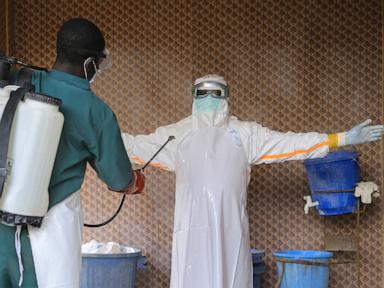
Effective responders learned the hard way that you don't lead with hazmat suits. You lead with local community health workers (relais communautaires), traditional chiefs, church pastors, and survivors who speak the local dialects (like Lingala or Swahili) and live in those neighborhoods permanently. When Ebola survivors work inside treatment units—since they're immune—families are far more willing to bring sick relatives in for early care. And early care is everything. Patients who get monoclonal antibodies within the first 48 hours of symptoms have survival rates above 80%, compared to under 30% for those who wait until late-stage organ failure.
What You Should Actually Watch For Next
If you're tracking a fast-moving Ebola outbreak in the DRC, ignore the sensationalist social media threads predicting airborne mutations (Ebola spreads through direct contact with bodily fluids, not casual airborne droplets like measles or COVID-19). Instead, watch four concrete indicators in official WHO Disease Outbreak News updates to know if the crisis is spinning out of control or turning a corner.
- Geographic spread toward major transit hubs: Cases clustered in isolated villages are manageable. Cases popping up in river ports along the Congo River or border crossings into Uganda, Rwanda, or South Sudan signal high regional export risk.
- Percentage of cases dying outside treatment centers: If most new cases are diagnosed after death in the community, contact tracing is failing and hidden transmission chains are active. If most new cases are already listed as known contacts before they get sick, teams are catching up to the virus.
- Unlinked cases: When epidemiologists can't trace a new patient back to a known transmission chain, it means undetected spread is happening beneath the radar.
- Funding gaps for frontline logistics: Outbreak responses stall fast when donors pledge money on paper that takes months to reach the field. Watch whether the WHO and DRC Ministry of Health report shortages in fuel, personal protective equipment, or hazard pay for local nurses.
Don't fall for raw headline numbers without checking the underlying surveillance breakdown. Go straight to the primary situation reports from the WHO Regional Office for Africa or the Africa Centres for Disease Control and Prevention (Africa CDC), look at the ratio of known-contact cases versus community deaths, and watch where the transmission rings are moving on the map.