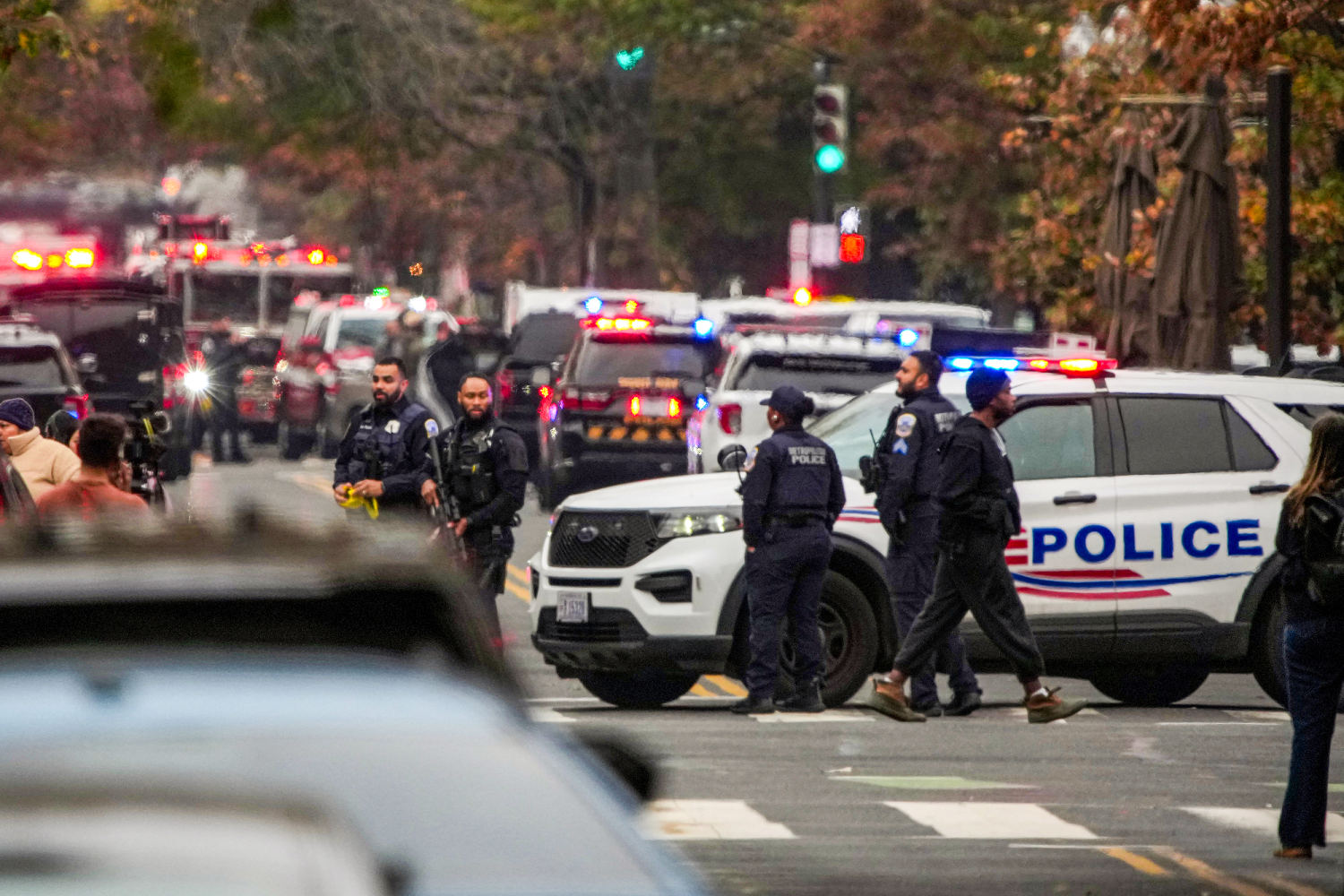
Silence has a weight of its own. You do not hear it so much as feel it pressing against your eardrums after the gunfire stops and the stone dust settles over a southern hill town.
For years, anyone looking at Jordan from the outside saw a quiet oasis in a turbulent region. Bordered by larger powers and older conflicts, the kingdom built a reputation for relative calm, tight security, and a delicate balance between different communities that lived side by side in cities like Amman, Irbid, and Karak. Then came the shock of militant violence striking inside its own borders—an assault on a church and nearby security forces in Karak that shattered the illusion of immunity and left families counting their dead in winter light. Also making waves in related news: Inside the Prison Suneung Battle Nobody Is Talking About.
When courts later hand down death sentences against three men convicted in connection with a deadly church attack, headlines move fast. A number appears on a screen. Three names. A verdict. Most readers skim those lines over morning coffee, register the gravity for ten seconds, and scroll on.
Yet a court verdict is never the end of a story. Often, it is where the hardest questions begin. Further insights into this topic are explored by USA Today.
The Echo Inside a Quiet Sanctuary
To understand why a courtroom ruling in Jordan reverberates far beyond a single docket number, you have to step back from the legal brief and look at the human geography of the place.
Karak sits high on a rocky ridge overlooking deep valleys, crowned by a massive crusader fortress that has watched armies march and retreat for centuries. In towns like this, neighbors know each other's family trees, shop at the same bakeries, and share the same narrow streets. When violence hits a place of worship, the wound is double. A church is meant to be a threshold of refuge, a space set apart from noise and hostility. When gunshots pierce that threshold, fear stops being abstract. It attaches itself to Sunday mornings, to locked doors, to the walk home at dusk.
Consider a hypothetical family—let us call them the Haddads—living a few streets away from the commotion. (This family is a composite invented to illustrate how ordinary households experience public shocks, not a specific real household.) In a hypothetical scenario like theirs, the immediate terror gives way to a slower, heavier ache. Father checks the lock twice. Mother watches the news with her hands folded tightly in her lap. Teenagers ask questions that adults struggle to answer without sounding either naive or bitter.
Even when a state moves swiftly to arrest suspects, prosecute cases, and impose capital punishment, grief does not run on a judicial timetable. A sentence on paper cannot bring back someone whose chair at the dinner table is empty. Nor does a courtroom gavel automatically erase the suspicion that can quietly seep between neighbors when extremists try to turn faith against faith.
I have stood in rooms after public tragedies where people spoke in low voices, careful not to sound angry, careful not to sound afraid, yet carrying both emotions under their coats. You smell cold tea that nobody finished. You hear clocks ticking louder than usual. That physical stillness stays with you long after the television crews pack their cables and leave town.
Why Capital Punishment Divides Even the Grieving
A death sentence is the sharpest instrument a legal system holds. Once carried out, there is no appeal to history, no correction if new evidence surfaces, no step backward.
In Jordan, capital punishment exists in law, though executions have historically been rare or periodic rather than routine daily occurrences. When three men are sentenced to death over a deadly church attack, the decision sits at the intersection of competing moral duties.
On one side stands the demand for retributive justice. Imagine a heavy scale hanging from a steel beam. When an atrocity takes innocent lives in a house of prayer, victims' families and outraged citizens look at that scale and feel it has been violently tilted toward cruelty. For many people, a death sentence is an attempt to force the scale back toward balance—a declaration from the state that premeditated mass violence carries the ultimate price.
On the other side stands a different set of convictions. Human rights advocates, legal scholars, and citizens who oppose the death penalty argue that taking a life—even the life of someone convicted of heinous crimes—does not restore the dead and risks turning the state into a mirror of the violence it condemns. Others raise practical questions about deterrence. Does the threat of execution stop radicalized militants who already view themselves as martyrs or soldiers in a warped cause?
Neither position is easy to hold without tension. I will admit openly that thinking through capital punishment leaves me wrestling with contradictions I cannot neatly resolve. If someone you loved were killed in a targeted attack, your instinct for absolute accountability would roar louder than any abstract legal theory. Yet if you look at decades of global justice systems, you also see how irreversible punishments operate inside imperfect human institutions.
A metaphor helps clarify the strain on the system itself. Think of a justice system as a suspension bridge built to carry heavy trucks during a storm. Every cable—investigation, fair trial rules, witness protection, appeals, public trust—has to hold tension evenly. If one cable frays, the whole span sways. High-stakes terrorism trials test every single cable at once because emotions run hot, public pressure is intense, and the stakes involve national security as well as individual guilt.
The Invisible Stakes Beneath the Headline
Standard news reports focus on what happened in the courtroom and what the law prescribes. That is essential reporting. Without accurate facts, public debate floats away into rumor.
Still, three quieter stakes sit right underneath the headline.
Protecting Social Cohesion Under Pressure
Extremists rarely attack just one building or one group of people. Their broader goal is fracture. By striking a church or targeting security personnel, violent actors try to make citizens doubt one another and doubt the state's ability to protect them.
Jordan has long emphasized themes of coexistence, moderate religious messaging, and shared national identity among its diverse population. When a deadly attack occurs, the state's response is watched closely not only in the capital, but in every town and village. Firm prosecution signals that attacks on places of worship will be met with the full weight of the law. At the same time, leaders and community elders face the ongoing task of making sure anger against perpetrators does not curdle into collective blame against entire neighborhoods or beliefs.
Deterring Future Plots Without Feeding Grievance
Security forces across the region deal with threats that cross borders, move through encrypted chats, and exploit economic frustration or ideological manipulation. Courts play a central role in dismantling networks and holding operatives accountable.
Yet security experts often note a paradox. Harsh sentences satisfy an immediate demand for punishment, while long-term prevention depends on intelligence work, community trust, local policing, and addressing the recruitment pipelines that turn alienated young men into violent actors. Punishing those found guilty is necessary; assuming punishment alone cures extremism is wishful thinking.
Honoring Victims Without Reducing Them to Statistics
In major security cases, victims' names sometimes blur into casualty counts—so many dead, so many injured, three men sentenced to death. Behind every statistic is a person with a laugh, a favorite song, a routine Tuesday morning, a family left behind to navigate holidays and anniversaries.
When coverage reduces tragedy purely to legal outcomes, something vital gets lost. Justice is supposed to answer for real lives harmed, not merely check off a statutory penalty.
What People Actually Ask When Verdicts Like This Break
When news breaks that Jordan has sentenced three men to death over a deadly church attack, readers usually have practical questions that quick summaries skip over.
Why does a case like this draw international attention? Because Jordan plays a strategic and symbolic role in the Middle East. Any major security incident inside the country raises questions about regional stability, counterterrorism pressures, and how the state balances tough security measures with legal and human rights norms.
How does the legal process work after a death sentence is handed down? In Jordan's judicial system, a death sentence is not the final word on the day it is announced. Cases go through appellate review, and execution requires formal ratification steps under state law rather than happening automatically overnight. Legal procedures exist specifically to scrutinize evidence, procedure, and guilt before an irreversible act occurs.
Could a verdict like this spark immediate unrest? Usually, formal court rulings in high-profile security cases are met with tight security precautions rather than street celebrations or riots, though emotions among affected families and communities remain raw. The deeper test is quiet and long-term: whether communities feel safer, heard, and united over time.
Living With the Aftermath
Time does not heal every wound cleanly. Sometimes it simply teaches people how to carry a heavier pack without breaking stride.
In a town like Karak, life goes on. Shops roll up their shutters at dawn. Students walk to school carrying backpacks. Bells ring or calls to prayer rise across stone rooftops, weaving familiar rhythms back into days that once felt knocked off their axis.
A courtroom sentence can mark a formal chapter of accountability. It cannot write the next chapter of peace on its own. That work belongs to everyday choices—how neighbors treat one another when rumors fly, how institutions guard fairness alongside firmness, and how a society remembers its dead without surrendering its soul to hatred.
Outside, late afternoon light slants across dry hills and ancient stone walls, turning dust to gold for a few brief minutes before dusk settles over the valley once more.