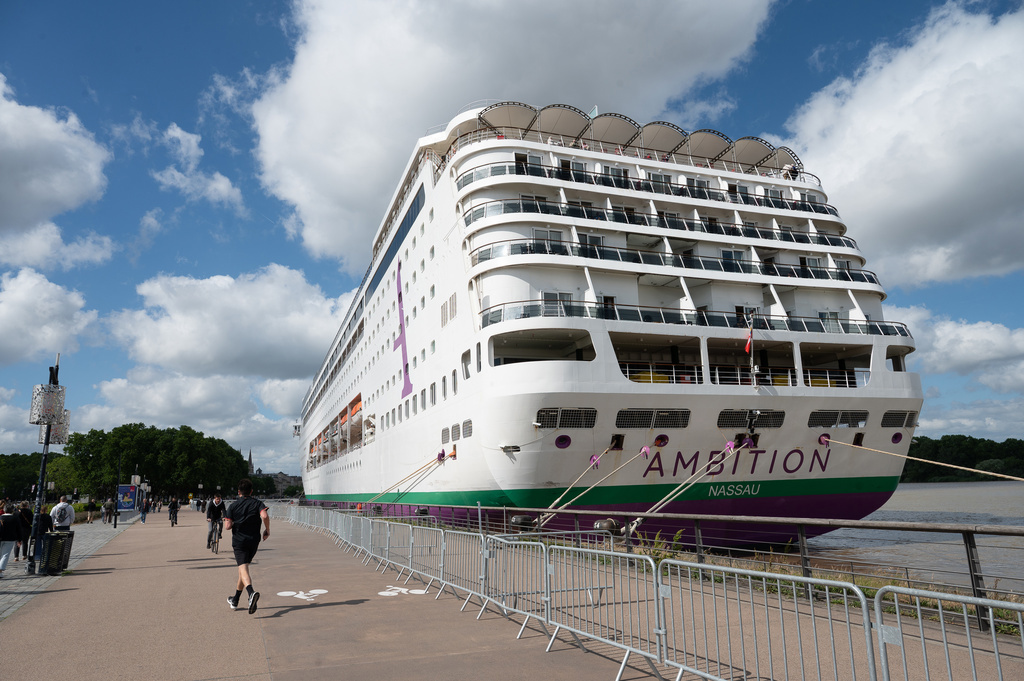
The cruise industry is currently grappling with a public health crisis that challenges its very foundation of passenger safety. Following reports of a hantavirus outbreak on a commercial vessel, the operator remains in a defensive crouch, claiming a need for more information before deciding the fate of upcoming voyages. This delay is more than a logistical hiccup. It represents a systemic failure to address a pathogen that, while rare at sea, carries a high mortality rate and demands an immediate, aggressive response rather than corporate hesitation.
Hantavirus is not the flu. It is not the Norovirus that seasoned cruisers have come to expect as an occasional, unpleasant guest. It is a severe respiratory disease primarily transmitted through contact with the urine, droppings, or saliva of infected rodents. When a ship—a closed environment with complex ventilation systems and countless hidden conduits—becomes a host for such a virus, the window for containment is incredibly narrow. The operator’s current "wait and see" approach risks turning a localized incident into a full-scale health disaster.
The Hidden Vector Problem
Ships are steel islands. They are also, unfortunately, ideal environments for pests if oversight slips for even a few days during port operations or supply loading. While the maritime industry focuses heavily on "clean ship" certifications, the reality of global logistics means that rodents can board a vessel via mooring lines or hidden within palletized food shipments.
Once on board, a single infected rodent can contaminate storage areas, galleys, and even the air supply. Hantavirus Pulmonary Syndrome (HPS) occurs when a person breathes in "aerosolized" virus—essentially dust contaminated with rodent waste. In the tight quarters of a ship's lower decks or crew quarters, the risk of inhalation increases.
The operator’s insistence on gathering more data suggests a search for a loophole. They are likely looking for proof that the infection was an isolated event or contracted shoreside. However, the incubation period for hantavirus ranges from one to eight weeks. By the time a passenger or crew member shows symptoms, the trail has gone cold, and the virus may have already spread through the vessel’s ductwork. Waiting for definitive "proof" is a luxury the passengers cannot afford.
Why the Industry Standard for Cleaning is Failing
Most cruise lines rely on a standard suite of disinfectants and cleaning protocols designed to kill bacteria and common viruses like influenza. These protocols are often performative, involving "fogging" sessions that look impressive but rarely penetrate the deep recesses behind bulkheads where rodents actually nest.
To truly clear a ship of hantavirus, the operator must commit to a total mechanical overhaul of the pest control systems and a deep cleaning of the HVAC units. This is expensive. It requires taking the ship out of service for weeks, canceling thousands of bookings, and issuing massive refunds.
The financial pressure to keep the propellers turning often outweighs the cautious medical advice. We have seen this pattern before. During the early days of the 2020 pandemic, ships continued to sail even as reports of "flu-like symptoms" mounted. The current hantavirus situation feels like a grim echo of that era. The business logic says "don't panic the markets," while the biological reality says "stop the ship."
The Liability Gap
From a legal standpoint, cruise lines are protected by complex maritime laws and the fine print on the back of every ticket. Proving exactly where a passenger contracted hantavirus is a Herculean task for a plaintiff’s lawyer. This legal shield gives operators a perverse incentive to delay action. If they cancel a cruise now, they lose revenue immediately. If they sail and someone gets sick, they can fight the claim in a friendly jurisdiction years down the road.
This calculation ignores the human cost. HPS has a case fatality rate of nearly 40 percent. It is a brutal, fast-acting illness that fills the lungs with fluid. When an operator says they are "awaiting more information," they are effectively gambling with a 40 percent mortality rate.
The Myth of Isolated Incidents
The maritime industry loves the term "isolated incident." It suggests a one-off stroke of bad luck. In the context of viral pathogens, however, an isolated incident is almost always a red flag for a larger, underlying problem. Rodents do not travel alone, and they certainly do not stay in one place on a ship.
If one area of the vessel is "hantavirus-hit," the entire ecosystem of that ship is compromised. The droppings in a dry storage room in the galley can be disturbed by a cleaning crew, sent into the ventilation, and delivered to a luxury suite six decks up.
Operators often point to their "stringent" pest management programs. These programs usually consist of bait stations and periodic inspections. They are reactive. A truly proactive approach would involve infrared scanning of voids and DNA testing of waste found during turn-around days. Few, if any, lines are willing to invest in that level of scrutiny because they are afraid of what they might find.
Transparency as a Radical Act
What we are seeing now is a masterclass in corporate obfuscation. The statements released by the ship's operator are carefully scrubbed of clinical detail. They mention "illness" but avoid the word "death." They mention "monitoring" but avoid the word "quarantine."
Real leadership in this sector would look like an immediate suspension of service and an invitation to independent health auditors to inspect the vessel from stem to stern. Instead, the industry relies on its own internal reporting mechanisms. This is the equivalent of the fox guarding the henhouse, or in this case, the rat guarding the galley.
Public health agencies like the CDC provide Vessel Sanitation Program (VSP) scores, but these are snapshots in time. A ship can pass an inspection on Monday and be infested by Friday if a contaminated shipment of grain or produce is brought aboard in a tropical port. The "information" the operator is waiting for is already available in the medical literature: hantavirus is deadly, it is airborne in tight spaces, and it is carried by pests that are notoriously difficult to eradicate from large ships.
The Logistics of a Real Cleanup
If the operator decides to move forward with a cleaning, it cannot be a standard turnover. It requires specialized hazardous materials teams.
- PPE Requirements: Workers must wear powered air-purifying respirators (PAPRs) to avoid inhaling the virus while cleaning.
- Wet Mopping Only: Using a vacuum or a broom on rodent droppings just kicks the virus into the air. Everything must be soaked in bleach or a heavy-duty disinfectant before being moved.
- HVAC Sterilization: The entire air handling system must be disinfected. This is a massive undertaking on a ship with thousands of rooms.
The operator knows this. They also know that announcing such a cleanup would be a public relations nightmare. It would be a tacit admission that the ship was, for a time, a floating biohazard. So they wait. They hope the news cycle moves on. They hope the next batch of passengers doesn't read the papers.
The Consumer Choice
Passengers currently booked on the affected vessel find themselves in a difficult position. Most travel insurance policies do not cover "fear of a virus" as a valid reason for a full refund unless the cruise line itself cancels the trip. This forces families to choose between losing thousands of dollars or boarding a ship that might be harboring a lethal pathogen.
The operator is using this financial pressure as a shield. By not canceling the cruises immediately, they shift the burden of risk onto the customer. If you show up, you accept the risk. If you stay home, you lose your money. It is a predatory dynamic that characterizes the worst parts of the travel industry's "recovery" era.
The Failure of Oversight
Where are the regulators? International maritime authorities are often slow to act on health issues unless there is a massive loss of life. Flag states—often countries like Panama or the Bahamas—lack the resources or the political will to ground a major revenue-generating vessel over a few "suspected" cases.
This leaves the public relying on the integrity of a corporation whose primary goal is to protect its share price. History shows that when health and profit collide on the high seas, profit usually wins the first few rounds. It is only when the body count becomes impossible to ignore that real change happens.
The "information" the operator is waiting for is likely a legal assessment of their exposure. They are not waiting for a lab result; they are waiting for a PR strategy. Every hour the ship remains in a state of limbo is an hour where the risk to the public grows. If the industry wants to be taken seriously as a safe mode of travel, it must stop treating viral outbreaks as PR hurdles and start treating them as the life-or-death emergencies they are.
The vessel must be emptied. The vents must be stripped. The rodents must be found. Anything less is a calculated gamble with human lives.
The reality of modern cruising is that we have built massive, complex environments that are incredibly difficult to sanitize. We have prioritized scale over safety, and the hantavirus incident is the inevitable result of that trade-off. The operator's hesitation is a signal to every traveler: your safety is a secondary concern to the schedule.
Demand a refund. Demand a cancelation. Do not board a ship that is "awaiting more information" about a virus that kills four out of every ten people it infects.