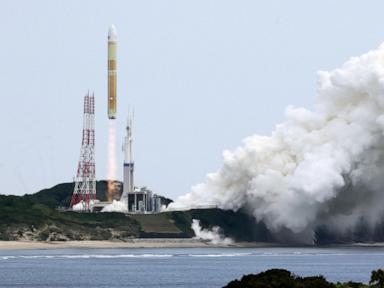
The aerospace press is currently tripping over itself to celebrate Mitsubishi Heavy Industries and JAXA. The narrative is comforting: after a disastrous inaugural failure in 2023, Japan’s H3 rocket has stabilized, returned to flight, and successfully debuted its "low-cost" variant. The consensus view is that Japan has finally built a lean, commercial competitor capable of taking on SpaceX's Falcon 9 and capturing a slice of the global satellite launch market.
This narrative is completely wrong.
The celebration of a "cheap" H3 variant reveals a fundamental misunderstanding of modern space economics. Price is not cost. Savings on paper do not equal market competitiveness. By focusing on slashing the manufacturing costs of an expendable booster, Japan is running a race that ended a decade ago. They aren't catching up to the global market leader; they are perfecting a legacy framework right as the rest of the world abandons it.
I have spent years analyzing the unit economics of aerospace procurement, watching legacy defense contractors and national space agencies torch billions on the altar of "affordability initiatives." The result is always the same: a vehicle that is slightly cheaper to manufacture but completely unviable in a market driven by operational cadence and reusable hardware.
The H3 is not Japan's ticket to commercial space dominance. It is a financial anchor dragging down their domestic industrial base.
The Fatal Flaw of the 50 Percent Discount
The central argument for the H3 is its price tag. JAXA loudly proclaimed a goal to cut launch costs in half compared to the older H-IIA, targeting roughly 5 billion yen (around $33 million to $35 million depending on exchange rates) for the base configuration.
To achieve this, engineers did something that sounds brilliant to an accountant but terrifying to a launch strategist: they integrated automotive-grade electronic components and stripped down the propulsion system. The newly minted minimal variant flies without solid rocket boosters, relying entirely on the core liquid-hydrogen and liquid-oxygen LE-9 engines.
This sounds like a masterclass in lean manufacturing. It isn't. It is an engineering compromise masquerading as a business strategy.
When you strip a rocket down to its bare essentials to lower the price, you don't just cut cost. You gut performance. The boosterless H3 variant severely limits the payload capacity to Sun-synchronous orbit (SSO) and geostationary transfer orbit (GTO).
Space economics is governed by a brutal, immutable metric: cost-per-kilogram to orbit.
$$Cost\ per\ Kilogram = \frac{Total\ Launch\ Cost}{Payload\ Mass}$$
If you cut your launch cost by 50% but your payload capacity drops by 60%, your cost-per-kilogram actually increases. The market does not care about the sticker price of the rocket; commercial satellite operators care about the efficiency of the ride. A cheap rocket that carries significantly less weight is an expensive luxury nobody can afford.
The Reusability Lie: Why Fixed Costs Eat "Cheap" Rockets Alive
The media loves to compare the H3's projected $35 million price tag to the Falcon 9’s commercial list price of roughly $67 million. On paper, Japan looks like a bargain.
In reality, this is an apples-to-oranges comparison that ignores the mechanics of launch vehicle amortization.
SpaceX does not price the Falcon 9 based on what it costs to build a new rocket every time. They price it based on the fact that the first stage can fly 20 times or more. The marginal cost of a reused Falcon 9 launch is estimated to be under $15 million. The rest is pure profit margin and a buffer to fund Starship development. If a price war erupts, SpaceX can instantly drop their prices to a level that would bankrupt JAXA and Mitsubishi Heavy Industries (MHI) on a single launch.
An expendable rocket, no matter how clever its manufacturing process, throws its engines into the ocean every single time it flies. The LE-9 engine is an open-expand-cycle marvel of engineering, but it is still an incredibly complex piece of machinery machined from high-strength alloys. Throwing it away after 8 minutes of use is financial madness.
Furthermore, an expendable launch cadence is structurally limited by factory output. You can only fly as fast as you can build. A reusable fleet is limited only by refurbishment turnaround time.
Consider the operational math:
| Metric | Expendable H3 Strategy | Reusable Competitor Strategy |
|---|---|---|
| Hardware Fate | Atlantic/Pacific Ocean | Landing Pad / Refurbishment Bay |
| Fleet Scaling | Linear (1 Rocket = 1 Flight) | Exponential (1 Rocket = 20+ Flights) |
| Fixed Cost Absorption | Spread across ~5-10 launches/year | Spread across 100+ launches/year |
| Price Flexibility | Zero (Bound by raw material costs) | Massive (Marginal cost is just fuel and inspection) |
When your national launch infrastructure is locked into an expendable architecture, your fixed overhead—the launch pads, the tracking stations, the standing army of technicians—must be paid for by a tiny handful of annual launches. This keeps the true operational cost of the H3 hidden behind government subsidies. The advertised commercial price is a mirage.
Dismantling the "People Also Ask" Delusions
When analyzing the H3's position in the global landscape, the public and casual observers frequently ask variants of the same defensive questions. Let's address them with zero corporate spin.
Isn't automotive-grade component use a revolutionary way to cut costs?
No, it is a desperate measure that shifts risk onto the payload. The automotive supply chain is optimized for high volume and thermal cycles on Earth, not the acoustic vibration, vacuum, and radiation environments of space. While commercial off-the-shelf (COTS) components are widely used in modern aerospace, using them in critical, single-failure-point systems on an expendable heavy-lift vehicle introduces a statistical risk profile that commercial insurance markets will punish. The savings realized by using a cheaper chip are quickly erased when the insurance premium for a $200 million communications satellite doubles because the launch vehicle lacks traditional space-grade redundancy.
Doesn't Japan need sovereign launch capability regardless of commercial viability?
This is the "national security" shield that legacy aerospace companies hide behind whenever their products fail to compete in the open market. Yes, Japan requires assured access to space for its reconnaissance and navigation satellites. But wrapping a national security requirement in the marketing clothes of a "commercial launch vehicle" is intellectually dishonest. If the H3 exists solely to fly four to six Japanese government payloads a year, call it what it is: a state-funded utility. Do not pitch it as a commercial disruptor. By trying to serve two masters—government reliability and commercial low cost—the H3 satisfies neither.
Can't the H3 capture the rideshare and constellation market?
The constellation market (think OneWeb, Kuiper, or various Earth-observation networks) demands massive volume and rapid deployment schedules. Constellation operators do not buy single launches; they buy orbital deployment campaigns. They need launch providers that can guarantee multiple launches per month to deploy hundreds of satellites before the early batches degrade or reach obsolescence. With a projected maximum cadence of a few launches per year, the H3 cannot physically support the deployment velocity required by modern mega-constellations. It is structurally excluded from the fastest-growing sector of the space economy.
The Real Cost of Complacency
The true tragedy of the H3 program is the opportunity cost inflicted on Japan’s brilliant engineering community.
Japan possesses some of the most advanced material science, robotics, and precision manufacturing capabilities on Earth. The engineers at MHI and JAXA are fully capable of developing a world-class, reusable, methane-powered vertical-takeoff-vertical-landing (VTVL) booster.
Instead, the institutional leadership directed those minds to spend a decade figuring out how to make a 1990s-architecture expendable rocket slightly cheaper to build.
This is a classic symptom of the innovator's dilemma inside state-backed agencies. Risk aversion creates a culture where a predictable, low-performance success is preferred over a risky, high-performance leap forward. The initial 2023 failure of the H3 caused immense institutional trauma. The reaction was not to innovate faster, but to double down on simplifying the system to ensure basic mission success.
The result is a vehicle that functions perfectly as a political tool to prove Japan can still reach orbit, but fails completely as a commercial product.
The Actionable Pivot for Japanese Aerospace
Stop trying to market the H3 to the international commercial sector. It cannot compete, and every dollar spent trying to discount its launch price to attract foreign satellite operators is a subsidy paid by Japanese taxpayers to foreign corporations.
Accept that the H3 is a bridge vehicle, not a destination.
JAXA must immediately shift its primary funding toward the next-generation reusable architecture, leapfrogging the current generation of liquid-hydrogen systems in favor of high-pressure liquid-methane engines. They must leverage Japan's unparalleled robotics expertise to automate the refurbishment and inspection processes that make reusability economically viable.
Treat the H3 as a developmental laboratory. Use its remaining operational lifecycle to test autonomous return-to-launch-site algorithms, experimental heat shielding, and grid-fin aerodynamics. If an H3 core stage must be expended, use its final minutes of flight to gather data on supersonic retro-propulsion over the Pacific Ocean.
Competing in the modern space sector requires more than just building a functioning rocket. It requires a total rejection of the expendable paradigm. Until Japan stops celebrating the debut of a stripped-down, throwaway booster and starts building reusable infrastructure, its aerospace sector will remain a regional utility disguised as a global competitor.