You don't build a modern aerospace industry out of thin air. It takes a specific kind of obsession, the kind that forces a man to tape pieces of wool to a prototype jet and fly close enough to touch death just to see why the wings are shaking.
Gu Songfen, the mastermind behind China's first home-grown supersonic fighter jets, died in Beijing on Sunday night at the age of 96. The Aviation Industry Corporation of China (AVIC) confirmed his passing, marking the end of an era for the country’s military aviation. Most people look at China's current stealth fighters and assume the technology just materialized through heavy funding. It didn't. Gu was the guy who laid the foundation when the country lacked basic wind tunnels, computers, or even enough data to know if their designs would stay in the air.
The Childhood Terror That Sparked the J-8 Interceptor
Gu was born into a family of scholars in Suzhou, Jiangsu province, in February 1930. His father, Gu Tinglong, was a massive figure in Chinese classical studies. Usually, a family like that produces writers, historians, or philosophers. Everything changed in 1937 when Japanese warplanes bombed their neighborhood.
The explosions literally shook the family home. Gu recalled hiding under a dining table, watching bombs fall from the sky through the windows. That specific moment of terror didn't break him. It made him furious. He realized right then that a nation without its own teeth is always at the mercy of someone else’s air force.
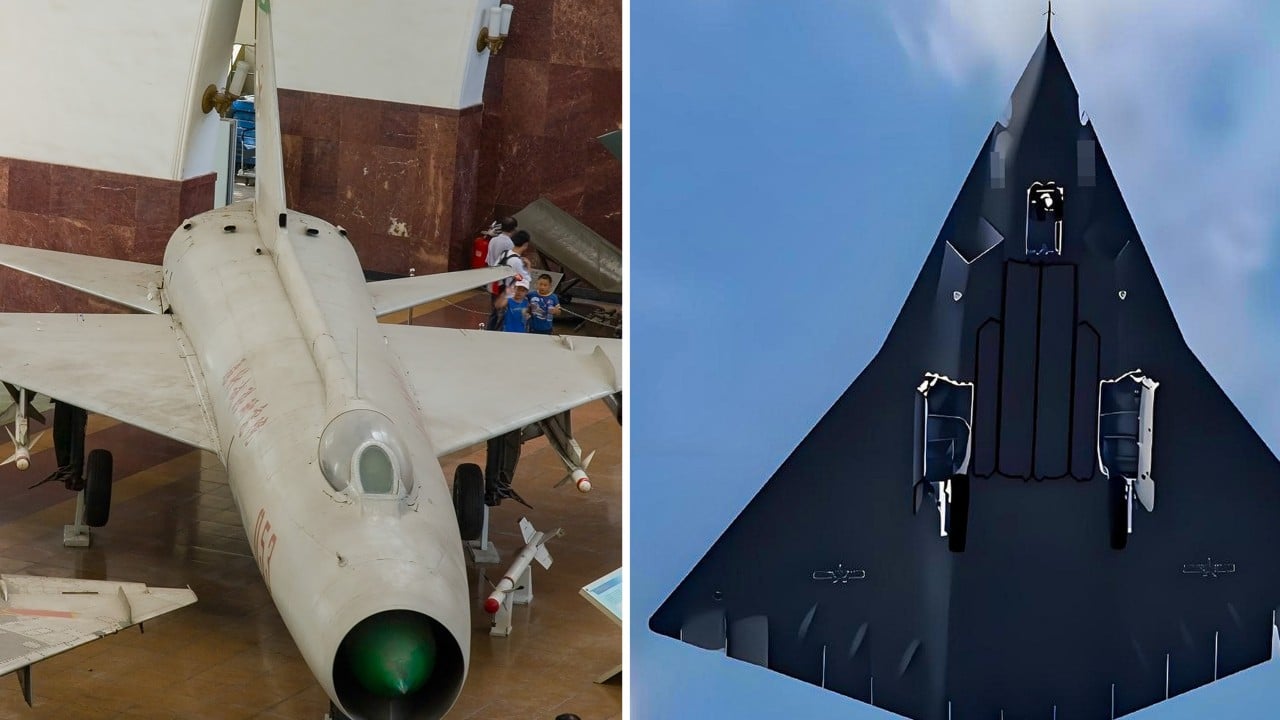
He went to Chiao Tung University, graduated in 1951, and immediately threw himself into aircraft design. At the time, China relied entirely on Soviet hand-me-downs. When Beijing decided it needed to build its own high-altitude, high-speed interceptor to counter American reconnaissance planes, Gu got the call. That project became the Shenyang J-8.
Flying Five Meters From Disaster
Designing a supersonic jet in the 1960s with minimal technology is hard enough. It gets worse when your team leader dies mid-project. Huang Zhiqian, the original chief designer of the J-8 and Gu’s brother-in-law, died in a plane crash during an overseas mission in 1965. Gu took the reins of the project under immense emotional and political pressure.
The J-8 took its maiden flight on July 5, 1969. It was a milestone, but the real nightmare started during subsequent test flights. The plane experienced severe, violent vibrations at high speeds. Test pilots came back saying the ride felt like driving a broken bus down a completely ruined dirt road.
Without advanced digital sensors or cameras to track airflow, Gu did something insane. He glued lines of knitting wool all over the rear fuselage and tail wing of the fighter jet. Then, despite having promised his wife he'd never fly again after her brother’s fatal crash, he climbed into the back seat of a trainer plane.
To actually see how the wool moved in the slipstream, Gu’s pilot had to fly just five meters away from the vibrating prototype at near-supersonic speeds. One wrong twitch of the joystick meant a mid-air collision. He did this three times. The risky move worked. He pinpointed the aerodynamic flaw, fixed the vibration issue, and saved the program.
Moving From Ink Drawings to General Upgrades
The J-8 and its follow-up, the J-8II, weren't just individual planes. They were the training grounds for an entire generation of engineers. Gu didn't just hand over blueprints; he established the country's entire aerodynamic design system.
By the time he was elected as an academician to both the Chinese Academy of Sciences and the Chinese Academy of Engineering in the early 1990s, the design paradigm had completely shifted. He moved the industry away from copying Soviet reverse-engineered parts toward native development. Later in life, he shifted his focus to civil aviation, providing critical technical backing for China’s large passenger aircraft initiatives.
In 2020, he received the State Pre-eminent Science and Technology Award. It is China’s highest scientific honor, complete with a cash prize that rivals the Nobel Prize.
What Modern Aerospace Engineers Need to Learn From Gu
If you are working in engineering, software development, or hardware design today, it's easy to get bogged down in simulation data. Gu’s career proves that data is only as good as your willingness to validate it in the real world.
Stop relying solely on automated testing and perfect laboratory environments. Look at your product under actual stress conditions. When your project hits a wall, don't wait for a new piece of software or an external consultant to solve it. Get your hands dirty, look at the raw mechanics of the problem, and take measured risks to find the point of failure.
A farewell ceremony for Gu Songfen is scheduled for Saturday in Beijing. The best way to respect that legacy isn't through ceremonial speeches. It’s by adopting that same stubborn refusal to let a design fail, even if you have to tape wool to the wings to figure it out.