Step onto the burning concrete of any city sidewalk this July, and you will witness a silent, fabric-bound negotiation. On one side stands Sarah, sweating through her dark denim. On the other is Marcus, parading down the street in shorts so wide they catch the wind like sails. We are living through a collective identity crisis, and it is playing out entirely below our waists.
Summer fashion used to be a solved equation. The temperature climbed, the pants shrank, and everyone agreed on a standard, mid-thigh compromise. Not anymore. The summer of 2026 has fractured the uniform. We are no longer just trying to stay cool; we are using a few yards of cotton and denim to argue about who we are, which decade we belong to, and how much of our shins we are willing to reveal to a judgmental public.
The stakes feel oddly high. To walk outside in the wrong silhouette right now is to signal that you missed the cultural memo entirely.
The Rebirth of the In-Between
Consider the sudden, polarizing return of the capri pant. For nearly two decades, the mid-calf crop was relegated to the back of suburban closets, dismissed as an awkward relic of the early 2000s. It was the pant that couldn’t make up its mind. Too short to be trousers, too long to be shorts.
But fashion thrives on the resurrected dead.
When Sarah pulled a sleek, black pair of capris out of a vintage shop rack last month, she wasn't just buying clothes. She was opting into a specific kind of urban armor. Capris in 2026 aren't the pedal-pushers of the past; they are styled with sharp blazers and kitten heels. They offer a strange, contradictory comfort. They hug the leg tightly, providing a sense of structure and security in a world that feels increasingly chaotic, yet they leave the ankle bare to catch the breeze.
The sensory reality of wearing them is a balancing act. The fabric grips your calves as you sit. It forces a certain posture. It demands that you move with intent. In a sea of baggy sweatpants and mindless athleisure, the capri is a deliberate choice to look put together, even when the humidity hits ninety percent. It is nostalgia weaponized for the modern sidewalk.
The Heavy Metal Shift
Walk a few blocks further, and the narrative flips entirely. The tight, tailored lines of the calf-crop give way to something massive, heavy, and unapologetically loud.
Enter the jort.
To call the current iteration of denim shorts "jorts" feels like an understatement. These are not the frayed, cut-off Daisy Dukes of yesteryear. They are sprawling, knee-grazing monuments to nineties skate culture. They are rigid. They are wide.
When Marcus walks down the street, his jorts make a distinct, heavy swish-swish sound. They hit right below the kneecap, a length that spent years being mocked as the ultimate dad-at-a-barbecue look. Now, it is the height of streetstyle currency.
The weight of these shorts is the real surprise. Pick up a pair of the oversized denim shorts dominating the market today, and they feel heavy enough to anchor a small boat. There is an undeniable irony here. We are wearing thick, unyielding, heavy-ounce denim in the dead of summer to stay cool. Or rather, to look cool.
The heat inside those wide denim tunnels is real. But the trade-off is a feeling of absolute invulnerability. You can sit on dirty park benches, lean against dusty brick walls, and skate down concrete banks without a care. The jort is utilitarian drag. It borrows the aesthetic of hard manual labor and repackages it for teenagers drinking iced matcha lattes.
The Hidden Anxiety of the Thigh
Why are we swinging so wildly between the hyper-fitted capri and the cavernous jort? The answer lies in our collective discomfort with our own bodies.
For years, summer meant exposure. The cultural mandate was simple: less clothing equaled more confidence. But the cultural mood has shifted toward concealment. We are hiding in plain sight. Both the capri and the jort offer a way out of the traditional summer body anxieties, but they approach the problem from opposite directions.
One hugs the frame to create a sharp, intentional line; the other swallows the frame entirely to erase it.
This isn't just about aesthetics; it is about control. In a landscape where public spaces feel increasingly intense and personal privacy feels entirely eroded, our clothes are expanding to create a physical buffer zone. The wide-leg short is a movable fortress. It says, keep your distance. ## The Death of the Middle Ground
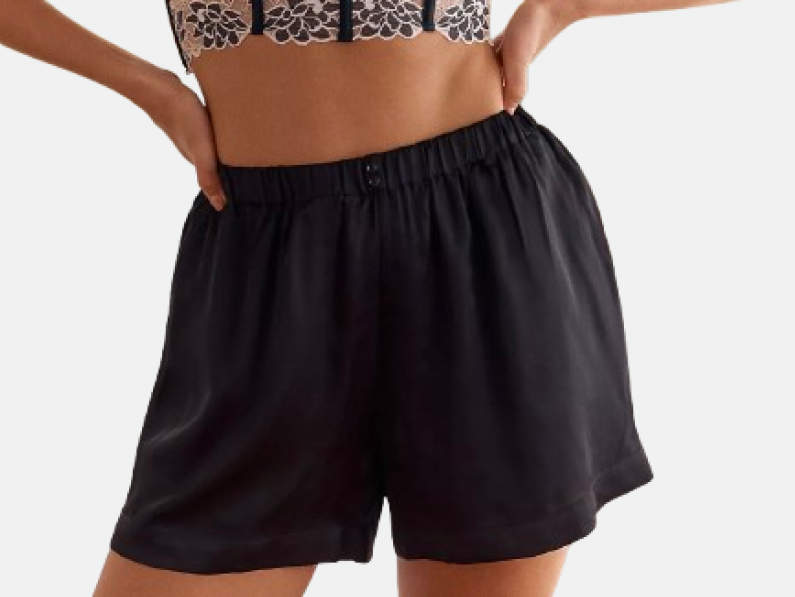
What is completely missing from the streets this year is the ordinary. The five-inch inseam chino short—the reliable, preppy staple of the 2010s—has become a ghost. To wear a standard, regular-fit short right now is to look invisible.
We have lost the appetite for moderation. Every outfit must be a statement, an exaggeration, a hyper-specific reference to a subculture or a micro-trend validated by an algorithm. The middle ground has been evacuated because the middle ground is boring, and in the current cultural economy, boring is the ultimate sin.
This leaves the average person in a predicament. Standing in front of the closet at eight in the morning, the thermometer already ticking upward, the choice feels exhausting. Do you want to be a sleek, turn-of-the-century minimalist in capris, or a baggy, nostalgic contrarian in giant denim?
There is a vulnerability in admitting that neither feels entirely natural. Sometimes you just want to walk to the grocery store without participating in a sartorial discourse.
The Rhythm of the Sidewalk
As the sun begins to set, the heat radiating off the brick walls doesn't die down; it just turns into a heavy, humid weight. The light softens, turning the city golden, and the distinction between the different style tribes starts to blur.
Under the neon lights of a corner bodega, Sarah in her tight capris and Marcus in his giant jorts are waiting in the same line for the same cold drink.
Seen from the outside, the fashion war looks absurd. We are agonizing over inches of fabric, debating hemlines as if they carry weight of geopolitical importance. We spin narratives around denim and cotton to convince ourselves that our shopping choices mean something profound.
Perhaps they don't. Or perhaps they mean everything.
In the heat of July, when the air is thick enough to breathe and the asphalt threatens to melt the soles of your shoes, clothing is the only agency we have left. We choose how we present our bodies to the heat, how we navigate the crowd, and how we protect ourselves from the glare of the sun.
Marcus steps out of the bodega, his oversized jorts swaying with his stride, catching the late-evening breeze in their massive leg openings. A few paces behind him, Sarah moves with a sharp, rhythmic click of her heels, her capris silhouetted against the fading light. They move past each other without a word, two entirely different eras occupying the exact same sidewalk, both just trying to make it home before the sweat starts to ruin the illusion.