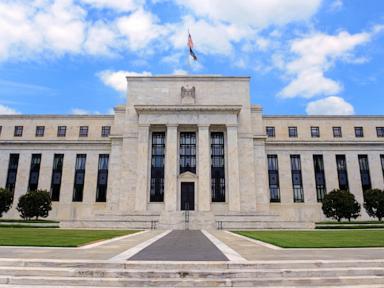
Markets do not break in a single cataclysmic shock. They fracture slowly, worn down by persistent policy inertia, legislative dysfunction, and the quiet exhaustion of the end consumer. Observers watching daily financial tickers often miss the structural rot beneath the surface. Three distinct pressure points recently converged to expose the fragility running through the American economy. Central bank rate posture, congressional failure on digital asset market structure, and pricing ceilings at legacy automotive manufacturers are not isolated anomalies. They are symptoms of a broader systemic friction that corporate boardrooms refuse to acknowledge publicly.
Capital has a price again. That simple mechanical reality took years for investors to digest after a prolonged era of artificially suppressed interest rates. When the central bank adjusts its benchmark targets or signals a prolonged plateau, it sends shockwaves through every layer of corporate borrowing. Yet analysts frequently treat monetary policy announcements as academic exercises rather than heavy machinery crushing profit margins. Every incremental basis point matters when corporate debt needs refinancing in an unforgiving credit market.
Debt maturity walls loom larger for mid-tier enterprises and capital-intensive heavy industries. CFOs who locked in ultra-low yields years ago face painful refinancing realities. Cash flows that once support aggressive expansion now service basic debt obligations. This dynamic breeds corporate conservatism. Expansion plans stall. Hiring freezes spread quietly. The central bank's reluctance to ease monetary conditions quickly enough creates a quiet liquidity squeeze that corporate quarterly reports paper over until they cannot.
The Cost of Central Bank Inertia
Central banks operate under the weight of historical ghosts. Policymakers remember the runaway inflation spikes of past decades and fear easing monetary policy too quickly. Yet maintaining a restrictive stance for extended periods inflicts cumulative damage on capital-intensive sectors. Real estate developers, heavy equipment manufacturers, and commercial logistics operators bear the brunt of this caution. The cure threatens to become more damaging than the disease.
Real borrowing costs dictate whether factories expand or mothball production lines. When credit remains expensive, corporate capital expenditure budgets shrink to maintenance levels only. Long-term productivity suffers because companies refuse to invest in next-generation tooling or efficiency upgrades. Wall Street models future earnings on linear assumptions of recovery, ignoring the corrosive effect of sustained high borrowing costs on smaller suppliers who lack access to deep public debt markets.
Consider the hypothetical example of a mid-sized regional supplier to the automotive sector. This firm borrowed aggressively during the zero-percent interest rate era to modernize its stamping equipment. Today, its floating-rate debt instruments face punitive interest expenses. At the same time, its primary automotive OEM customer demands price concessions due to slumping retail truck demand. Simultaneously, the firm's treasury department holds corporate cash reserves that earn interest, yet cannot invest safely in digital treasury rails because regulatory clarity remains blocked in Congress. Every door closes at once.
Legislative Vacuum in the Senate
Simultaneously, legislative paralysis in Washington leaves vital sectors adrift in regulatory ambiguity. Consider the fate of digital asset market structure legislation, such as the stalled Clarity Act attempts in the Senate. When lawmakers fail to establish clear statutory boundaries between regulatory jurisdictions, capital flees or goes underground. Financial technology innovation requires predictable rules of the road. Without them, institutional investors hesitate, compliance costs skyrocket, and illicit actors exploit the gray zones.
Lawmakers prefer grandstanding to detailed legislative craftsmanship. Committee rooms become stages for partisan theater while foundational market plumbing rots. The failure to pass comprehensive crypto market structure bills illustrates a deeper congressional incapacity to govern complex technological transitions. Financial innovation moves at fiber-optic speed while legislative bodies operate at the pace of an eighteenth-century carriage. This mismatch guarantees continuous regulatory enforcement through litigation rather than statutory clarity, injecting chronic uncertainty into markets that demand stability.
When lawmakers abandon their duty to write clear laws, administrative agencies and federal courts fill the vacuum. Regulation by enforcement creates compliance nightmares. Chief compliance officers advise boards to pause innovative projects entirely rather than risk retroactive legal targeting. Innovation migrates overseas to jurisdictions with coherent regulatory frameworks, leaving domestic markets with diminished competitive vigor. The cost of this dysfunction is immeasurable, measured in lost entrepreneurial energy and billions of dollars spent on legal defense rather than research and development.
The Breaking Point on Detroit Assembly Lines
Down on the industrial assembly line, the strain manifests as severe consumer resistance. Legacy automakers like Ford confront an unforgiving pricing ceiling. For years, automotive executives relied on soaring sticker prices and lucrative full-size truck margins to offset supply chain bottlenecks and inflationary labor costs. Dealership lots filled with high-trim pickups priced well past seventy thousand dollars. Consumers absorbed these price tags initially, fueled by pandemic savings and cheap credit cushions.
Those financial cushions vanished. High borrowing costs turned monthly vehicle payments into financial burdens for middle-class households. Dealership inventories swelled as lot times lengthened. When manufacturers attempt to push prices higher to protect operating margins, demand evaporates. Ford and its competitors find themselves trapped in a classic margin-versus-volume trap. Discounts and promotional financing eat into profitability, while holding steady on price crushes unit sales.
Automotive manufacturing is a heavy, unforgiving business model. Fixed costs for tooling, plant maintenance, and unionized labor do not scale down easily when production lines slow. Executives face an impossible arithmetic problem. Lower prices destroy earnings per share. Higher prices destroy sales volume. The era of unchecked pricing power for Detroit manufacturers has officially collided with economic reality.
Unions secured significant wage increases during recent contract negotiations. Raw material costs remain elevated compared to pre-pandemic baselines. These structural costs cannot simply be wished away. If truck prices drop too far, operating margins vanish. If prices stay high, lots remain full.
The Mechanics of Margin Compression
Connecting these threads reveals a unified narrative of adjustment fatigue. The central bank squeezes liquidity. Congress fails to provide legislative certainty for modern financial markets. Consumers reject inflated price tags on durable goods like trucks. Each pressure point feeds the others. High interest rates make auto loans prohibitive, depressing vehicle sales. Sluggish legislative progress creates risk premiums that deter capital investment. Monetary tightening restricts the credit required to bridge industrial transitions.
Markets operate on confidence and clarity. When both erode simultaneously, decision-making turns defensive. Chief executive officers hoard cash rather than investing in productivity enhancements or greenfield projects. Venture capital tightens disbursement criteria. Retail investors retreat from speculative assets toward Treasury yields. The entire economic engine decelerates not because of a sudden external shock, but because the friction within the system has reached unsustainable levels.
This microeconomic squeeze repeats across thousands of industrial supply chains. Corporations survive by cutting overhead, trimming headcount, and delaying capital expenditures. These defensive moves protect short-term earnings statements but starve long-term productivity. An economy that stops investing in its industrial capacity eventually stalls.
Financial journalism often treats each morning's news cycle as a disjointed mosaic. One headline discusses monetary policy minutes. The next covers a stalled Senate committee vote. Another analyzes quarterly automotive delivery numbers. Treating these events as separate phenomena obscures the macro trend. American commerce is paying the piper for a decade of financial engineering and legislative neglect.
Surviving the Structural Transition
The resolution to these imbalances will not arrive via a single dramatic market correction. Instead, expect a protracted period of margin compression, corporate consolidation, and strategic retrenchment. Companies with pristine balance sheets and minimal debt exposure will weather the storm and acquire weaker competitors at distressed valuations. Debt-heavy firms with bloated cost structures will face painful restructurings.
Economic systems possess incredible shock-absorbing capacity, but every mechanism has elastic limits. When monetary authorities maintain restrictive postures, lawmakers fail to update foundational financial statutes, and legacy industrial giants lose pricing sovereignty, the entire apparatus strains. Ignoring these interconnected pressures in favor of optimistic quarterly earnings forecasts is institutional self-deception. The structural adjustments happening across boardrooms, legislative cloakrooms, and dealership lots will define the economic baseline for the coming decade. Do not expect policymakers to save the day. The burden rests entirely on operational discipline.