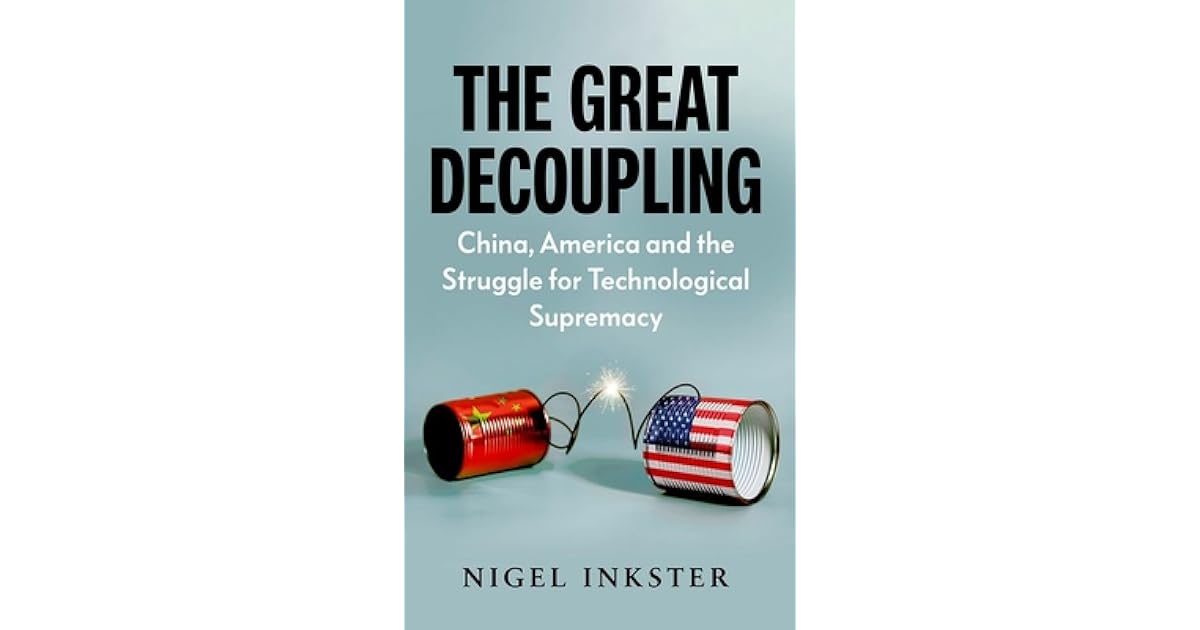
The sight of Air Force One touching down on the tarmac in Beijing carries a weight that far exceeds the typical pageantry of a state visit. While casual observers focus on the handshakes and the lavish banquets within the Forbidden City, the reality of this two-day summit between Donald Trump and Xi Jinping is far grittier. This is not a meeting of friends. It is a high-stakes negotiation between two incompatible economic visions. The primary objective is to address a trade deficit that has become a political lightning rod in Washington, but beneath the surface, the core of the friction is a fight for global technological supremacy.
The world’s two largest economies have reached a point of unavoidable friction. For decades, the relationship was built on a simple trade-off: American capital and innovation in exchange for Chinese labor and manufacturing scale. That era is over. China no longer wants to be the world’s factory; it wants to be the world’s laboratory and its boardroom. Trump’s arrival signals a direct challenge to the "Made in China 2025" initiative, a plan he views as a roadmap for the systematic erosion of American industrial dominance.
The Mirage of the Multi Billion Dollar Deal
Expect the headlines to be filled with massive numbers. $250 billion. Maybe more. These are the "memorandums of understanding" that both sides use to signal success to their domestic audiences. However, veteran analysts know that these figures are often inflated by long-standing agreements or non-binding pledges that may never materialize.
China has mastered the art of the "shopping trip" diplomacy. By offering to buy massive quantities of American soybeans, beef, and Boeing aircraft, Beijing hopes to quiet the administration’s complaints about structural issues like intellectual property theft and forced technology transfers. It is a temporary fix for a terminal problem. Buying more gas and grain does nothing to stop the practice of requiring American firms to hand over their source code in exchange for market access.
The trade deficit, currently sitting at roughly $347 billion, is a symptom, not the disease. The disease is a fundamental disagreement on how a global economy should function. The U.S. insists on a market-driven approach, while China utilizes state-led capitalism to pick winners and losers. No amount of soybean purchases can bridge that ideological chasm.
Security Behind the Silk Curtain
While trade dominates the public discourse, the quietest rooms in Beijing are likely hosting intense debates over North Korea. The geopolitical reality is that Trump needs Xi’s cooperation to squeeze the Kim Jong-un regime, but Xi views a stable, North Korean buffer state as more important than total denuclearization.
Trump’s strategy hinges on "maximum pressure," a policy that only works if the border at Dandong is truly closed. China has tightened the screws on coal imports and banking, but they are playing a delicate game. They want to do just enough to keep the U.S. from launching a unilateral strike or secondary sanctions on Chinese banks, but not so much that the North Korean government collapses, sending millions of refugees streaming across the Yalu River.
This creates a transactional loop. Beijing uses its influence over Pyongyang as a bargaining chip in trade negotiations. Washington uses the threat of tariffs to demand more action on North Korea. It is a circular, exhausting exercise in brinkmanship where neither side truly trusts the other’s ultimate intentions.
The Intellectual Property Battleground
The real war is being fought in the silicon and the software. For years, American CEOs have grumbled privately about the cost of doing business in China. To enter the market, they often must form joint ventures with local competitors, effectively training their future replacements.
The U.S. Trade Representative’s Section 301 investigation is the hammer Trump intends to use. This isn't about steel or aluminum anymore. It’s about artificial intelligence, 5G telecommunications, and robotics. If the U.S. loses its edge in these sectors, the economic consequences will last for generations.
China’s defense is that their laws are transparent and that American companies enter these agreements voluntarily. It is a technically true statement that ignores the coercive nature of the world’s largest consumer market. You can keep your secrets, but you can’t sell to 1.4 billion people. For most boards of directors, that isn't a choice at all. It’s an ultimatum.
Sovereignty and the South China Sea
Beyond the counting of dollars and cents, there is the matter of the map. China’s "Nine-Dash Line" claim in the South China Sea remains a point of intense military friction. The construction of artificial islands and the deployment of surface-to-air missiles in disputed waters have rattled regional allies like Japan and the Philippines.
Trump’s "Free and Open Indo-Pacific" rhetoric is a direct counter to Xi’s "One Belt, One Road" initiative. One is a maritime security framework; the other is a massive infrastructure project designed to put Beijing at the center of global trade routes. They are two different ways of looking at the same piece of geography, and they cannot both be true at the same time.
During this summit, expect these tensions to be handled with extreme care. Neither leader wants a military "accident" while they are sitting across from each other. But the lack of a public flare-up should not be mistaken for a resolution. The naval presence of both nations in the region continues to grow, and the margin for error is shrinking.
The Personalities at the Table
The "bromance" often cited by the media is a tactical tool. Trump respects strength and views Xi as a powerful peer, a leader who has consolidated more power than any Chinese figure since Mao Zedong. Xi, in turn, sees Trump as a transactional leader who might be willing to trade long-term strategic advantages for short-term "wins" he can tweet about.
Xi Jinping is playing the long game. He doesn't have to worry about an election in four years. He is focused on the "Great Rejuvenation of the Chinese Nation" by 2049. Trump is focused on the immediate. This temporal mismatch gives China a distinct advantage in negotiations. They can wait out a presidency; the U.S. cannot wait out a Communist Party dynasty.
The Manufacturing Myth
A central theme of the Trump presidency has been the return of manufacturing jobs to the American heartland. It is a powerful narrative, but it ignores the reality of modern automation. Even if factories leave China, they aren't necessarily coming back to Ohio or Pennsylvania. They are moving to Vietnam, India, or Mexico—or they are being replaced by robots that don't care about trade deals.
China knows this. They are already pivoting their economy toward domestic consumption and high-tech services. They are no longer content to be the world's low-cost labor provider. The threat of tariffs might push some assembly lines out of Guangdong, but the intellectual capital and the supply chain ecosystems that China has built over thirty years are not easily moved.
The Currency Question
For years, the accusation of currency manipulation was the go-to weapon for U.S. politicians. Trump campaigned on the promise to label China a manipulator on "day one." He hasn't done it. The reason is simple: currently, China is actually working to keep the Yuan from falling too far, which would actually make their exports even cheaper and more competitive.
Economics has a way of complicating simple political slogans. If the U.S. pushes too hard and triggers a financial crisis in China, the contagion will hit Wall Street within minutes. We are locked in a "financial suicide pact" where both sides have the power to destroy the other’s economy, but only at the cost of their own.
Why This Summit Matters More Than the Last
When the two leaders met at Mar-a-Lago, the atmosphere was introductory. This time, the gloves are off. The U.S. has seen that China will not be "reformed" into a Western-style liberal economy through engagement. China has seen that the U.S. is no longer willing to manage its own decline gracefully.
The outcome of these two days will determine the trajectory of the 21st century. We are witnessing the end of the unipolar world. Whether this transition results in a "Cold Peace" or a series of escalating trade wars depends on the specific, unvarnished conversations happening right now behind the heavy doors of the Great Hall of the People.
The era of easy growth through global integration is over, and the era of strategic competition has officially begun. The "win-win" cooperation frequently touted by Beijing is being replaced by a zero-sum reality where one side’s gain is viewed as the other’s existential loss. If you want to understand where the world is headed, stop looking at the signatures on the trade deals and start looking at the maps and the patent filings. That is where the real power is being brokered.
History is rarely made in the public statements; it is made in the concessions that neither leader is yet willing to admit they are making.
The American delegation will eventually fly home, and the red carpets will be rolled up. But the fundamental friction between a rising power and an established one remains. The "Thucydides Trap"—the idea that a rising power's challenge to an established one often ends in conflict—is no longer a theoretical exercise for historians. It is the daily reality of the U.S.-China relationship. This summit is not the end of the tension; it is the formal opening of a new, more dangerous chapter in global affairs.
Watch the technology exports. Watch the naval maneuvers in the Pacific. Everything else is just theatre.