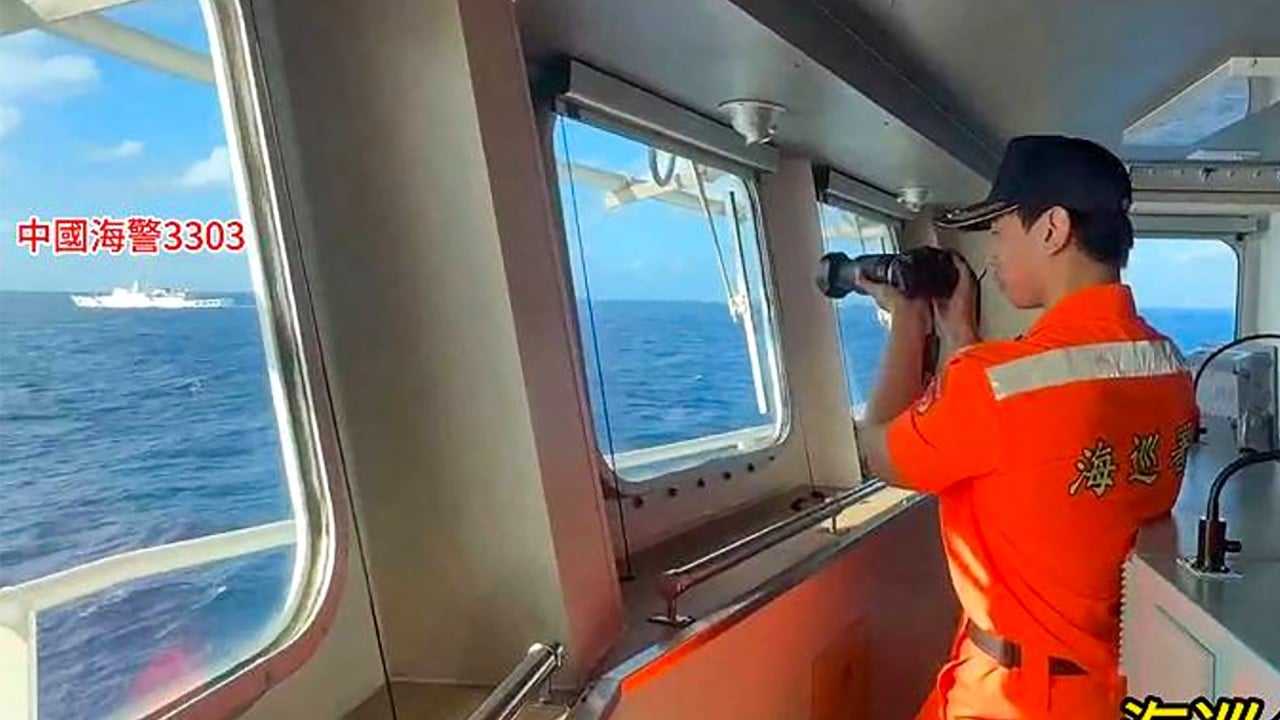
Counting sixteen mainland vessels shadowed by Taiwan's coastguard tells you almost nothing about whether the balance of power in the Taiwan Strait shifted. Headlines built around single-day vessel tallies treat maritime coercion like a scoreboard, obscuring the real contest over operational tempo, patrol endurance, and legal jurisdiction. A rigorous analysis of gray zone maritime pressure requires separating raw vessel presence from four analytical pillars: the Escalation Ladder of Maritime Coercion, the Patrol Endurance and Cost Function, Jurisdictional Ambiguity as a Strategic Asset, and Asymmetric Counter-Coercion Mechanics. By mapping how Beijing turns routine or semi-official maritime activity into persistent strain—and how Taipei's coastguard absorbs that pressure without triggering kinetic escalation—this breakdown lays out the structural trade-offs driving cross-strait friction and the operational limits of both sides' playbooks.
The Escalation Ladder of Maritime Coercion
Standard news reporting often collapses distinct maritime actors into a single threat label, blurring the line between civilian commerce, state-backed militia, law enforcement, and naval forces. In strategic terms, gray zone coercion operates across a spectrum designed to stay below the threshold of armed conflict while imposing continuous political and operational costs. Each rung on this ladder alters the legal rules of engagement and the defender's response calculus. Expanding on this theme, you can find more in: Why Everything You Know About Alberta Independence Is a Myth.
- Commercial and research vessels: Merchant ships, dredgers, and survey vessels that test baseline traffic patterns, bathymetry, or cable routes under the cover of routine economic activity.
- Maritime militia: Vessels formally or informally linked to state-directed fishing fleets that provide mass, presence, and deniability without carrying naval commission markings.
- Coastguard and law enforcement hulls: White-hulled state vessels equipped with water cannons, boarding gear, and communications suites that project administrative authority and conduct inspections or escorts.
- Naval combatants: Gray-hulled surface warships, submarines, and amphibious assets that backstop lower-tier vessels and signal readiness to escalate if challenged.
A crucial cause-and-effect relationship missing from headline summaries is how mixing lower rungs with higher rungs distorts deterrence. When coastguard cutters operate alongside or just ahead of militia or survey ships, the defender faces a dilemma: respond with equivalent law-enforcement hulls and risk being numerically outmatched, or bring in naval warships and hand the initiator an escalation narrative. In the Taiwan Strait, where contested waters, outlying islands, and restricted or prohibited zones sit in close proximity, this layering converts a simple headcount of sixteen ships into a multi-tiered signaling problem.
Consider a conceptual example along an outer island transit lane. Suppose a cluster of mainland vessels enters waters adjacent to a restricted zone while a coastguard cutter or naval support ship remains over the horizon. Even if no shots are fired and no boarding occurs, the presence of multiple hulls forces Taipei to track, shadow, and deconflict every contact simultaneously. The coercive effect comes not from a single dramatic move, but from normalizing routine intrusion so that each subsequent deployment draws less international outrage while conditioning local crews to constant alert. Experts at Reuters have also weighed in on this matter.
Known Facts Versus Educated Hypotheses in Strait Reporting
When evaluating reports about Taiwan's coastguard warding off mainland ships, analysts must separate verifiable operational realities from inference. Exact tactical details—such as real-time radio directives, fuel burn rates on specific patrols, or classified command-and-control triggers—are rarely public in full. Treating educated hypotheses as established facts weakens strategic judgment just as much as ignoring the event altogether.
Known facts center on the structural roles and observable mechanics of the forces involved. Taiwan's Coast Guard Administration (CGA) is tasked with maritime law enforcement, search and rescue, and frontline patrol duties in waters around Taiwan and its outlying islands, operating alongside the Ministry of National Defense's naval forces during higher-end contingencies. Mainland maritime pressure frequently relies on persistent presence, shadowing, and boundary testing using state and quasi-state vessels to assert influence without crossing into outright military attack. Furthermore, public reporting on vessel counts typically reflects snapshots or multi-vessel clusters observed during specific windows rather than a complete accounting of every hull in the wider theater.
Educated hypotheses come into play when inferring intent, readiness, or long-term trajectory from a single numerical report. Analysts can reasonably hypothesize that a sixteen-ship cluster is calibrated to test coastguard reaction times, exercise command coordination across multiple hulls, or generate domestic and external political signals around a diplomatic or military event. Yet without corroborating telemetry, route histories, and force-disposition data, claiming a specific tactical objective—such as testing a blockade block or probing a particular sensor blind spot—remains an inference rather than a proven fact.
Conflating the two categories creates two predictable analytical errors. The first is over-reading noise: assuming every uptick in vessel count signals an imminent amphibious or quarantine operation. The second is under-reading signal: dismissing a recurring cluster as "just another patrol" when its timing, formation, or proximity to critical infrastructure reveals a deliberate shift in pattern.
The Patrol Endurance and Cost Function
Why does shadowing sixteen ships matter over weeks or months even when every single encounter ends peacefully? The answer lies in the patrol endurance and cost function. Maritime presence is not free; it is constrained by hull availability, crew fatigue, fuel consumption, transit distance, maintenance intervals, and replenishment cycles.
For Taiwan's coastguard, each vessel deployed to shadow an intruding ship incurs direct operational costs. A cutter on continuous shadowing duty burns fuel, accumulates engine hours, and wears down hull systems and deck gear. Crews face rotation limits and cognitive fatigue during prolonged close-quarters monitoring, especially in rough sea states or congested commercial shipping lanes. Because coastguard hulls are smaller and carry lighter logistics reserves than major ocean-going combatants, sustaining high-tempo shadowing across multiple sectors simultaneously can stretch available patrol days.
Beijing's cost function looks different, though it is far from frictionless. Mainland authorities draw on a much larger combined pool of coastguard, militia, and auxiliary hulls, and their major staging ports sit directly across the strait or along adjacent mainland coasts. That geographic proximity shortens transit legs for many deployments. Still, operating large numbers of vessels continuously carries its own constraints: weather windows in the strait, maintenance backlogs across aging hulls, fuel budgets, and the opportunity cost of tying up vessels needed for other maritime claims in the East or South China Seas.
| Analytical Dimension | Mainland Coercive Deployment | Taiwan Coastguard Shadowing |
|---|---|---|
| Primary Operational Goal | Normalize presence, test boundaries, impose strain | Maintain situational awareness, deter boarding, avoid escalation |
| Scale Advantage | Larger aggregate hull pool and shorter cross-strait transit | Local familiarity, rapid close-in response, legal authority |
| Key Bottleneck | Weather, maintenance cycles, cross-theater demand | Hull endurance, crew rotation, sustained tempo limits |
| Escalation Posture | Calibrated below kinetic threshold with plausible framing | Strict de-escalation discipline backed by naval support |
The hidden cause-and-effect dynamic here is asymmetric attrition of readiness. Even if Taiwan successfully "wards off" or shadows every intruding vessel without losing ground, high-frequency shadowing forces Taipei to spend scarce operational hours reacting to Beijing's schedule. Coercion succeeds on this axis when the defender's maintenance and crew-rest curves tighten faster than the initiator's willingness to keep sending hulls across the line.
Jurisdictional Ambiguity as a Strategic Asset
Maritime pressure around Taiwan is amplified by overlapping legal claims and contested definitions of internal waters, territorial seas, contiguous zones, and exclusive economic zones. Unlike a clear-cut land border marked by physical barriers, the sea is fluid, and legal status often hinges on baselines, historic claims, and unilateral administrative declarations.
Beijing exploits this ambiguity by treating waters around Taiwan and its outlying islands as areas subject to mainland jurisdiction or routine law enforcement oversight. When coastguard or state-linked ships operate near restricted or prohibited zones, they challenge the practical enforcement of Taiwan's administrative rules without firing a weapon. If Taipei's coastguard hails, escorts, or blocks them, Beijing can frame the interaction as routine maritime governance or complain of interference by local authorities.
This legal grayness complicates third-party responses as well. Outside observers and shipping operators watch how encounters are handled to judge whether freedom of navigation or commercial transit is actually disrupted. As long as intrusions stop short of seizing vessels, halting trade, or using lethal force, external capitals often treat the episodes as recurring tension rather than a crisis requiring dramatic intervention. That ambiguity gives the initiating side room to push incrementally—testing how far a patrol can go before drawing a firm physical or diplomatic pushback.
Asymmetric Counter-Coercion Mechanics
Defending against gray zone maritime pressure requires a different toolkit than fighting a conventional sea battle. A coastguard cannot solve a structural endurance or mass problem solely by pushing harder on every single hull. Instead, effective counter-coercion relies on operational mechanisms that raise the initiator's friction while protecting the defender's sustainability.
- Prioritized contact triage: Allocate close-in shadowing assets based on vessel type, behavior, and proximity to sensitive zones rather than treating every hull as equal. A survey ship, dredger, or aggressive coastguard cutter warrants tighter monitoring than a loitering vessel outside critical lanes.
- Layered sensor-to-shooter and sensor-to-cutter cuing: Use shore radar, coastal electro-optical systems, aerial patrols, and automated tracking data to maintain continuous awareness so surface cutters do not have to burn fuel searching or holding tight station when remote sensors can track movement.
- Disciplined non-provocative interception: Maintain clear, recorded communication, steady positioning, and predictable maneuvers to deny the other side a staged collision or a pretext for escalation while visibly asserting Taiwan's presence.
- Dynamic force rotation and surge reserve: Structure patrol schedules with dedicated surge capacity and rapid turnaround maintenance so routine shadowing does not hollow out readiness for sudden spikes in activity.
- Transparent reporting and public attribution: Document patterns, tracks, and behaviors clearly so allied partners and commercial actors see the true nature of the activity rather than viewing each incident in isolation.
Imagine two different responses to a sixteen-ship surge. In a reactive posture, every available cutter is rushed to match hull-for-hull across wide sectors, exhausting crews by day four and leaving little margin if a second wave arrives elsewhere. In a calibrated counter-coercion posture, command pairs persistent shore and air tracking with targeted surface shadowing on the highest-risk hulls, rotates crews on fixed intervals, and keeps naval units in clear supporting overwatch without taking the bait on low-level provocations.
Strategic Limitations and Where Counter-Coercion Breaks Down
No counter-coercion framework is a cure-all, and analysts who treat operational craft as a complete solution miss critical vulnerabilities. First, asymmetric discipline has a ceiling when hull numbers are heavily lopsided. If pressure escalates from sixteen vessels to dozens across multiple approaches simultaneously, even smart triage cannot prevent localized gaps or heavier strain on aging ships.
Second, legal restraint carries political and tactical costs. Staying strictly below the escalation threshold protects Taiwan from being blamed for starting a crisis, yet it can also leave the defender absorbing repeated boundary tests that erode the practical meaning of a line on a map over time. Third, commercial and infrastructure risks—such as subsea cable damage, deliberate grounding, or sudden blockade rehearsals—can shift the problem from routine friction to acute disruption faster than peacetime coastguard procedures can adapt.
Finally, information lag and miscalculation remain constant hazards. Close-quarters maneuvers at sea leave little room for error; a steering failure, misheard radio call, or overly aggressive block by either side can turn a controlled gray zone test into an unintended incident. Recognizing these limits keeps strategy grounded in reality rather than wishful thinking.
The Strategic Play for Maritime Resilience
Treat every vessel count report around Taiwan as a measure of operational tempo and endurance strain, not a standalone indicator of imminent war—and build patrol doctrine around sustainable attrition resistance rather than hull-for-hull parity. Taipei and its security partners should lock in automated multi-sensor maritime tracking fused with disciplined coastguard triage, pair transparent public documentation of gray zone patterns with predictable overwatch from naval forces, and invest ahead of time in hull maintenance throughput, crew rotation depth, and subsea infrastructure protection so Beijing cannot win through sheer fatigue.