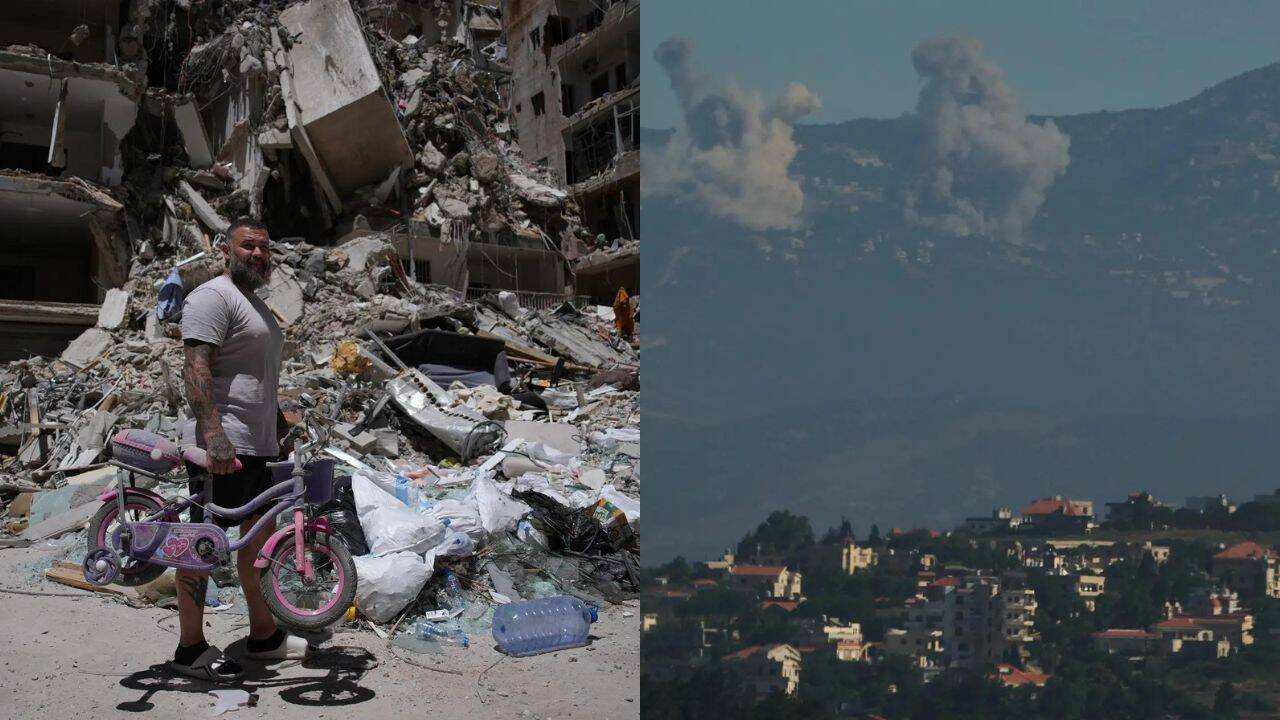
High-level diplomacy often falls apart because grand strategy ignores local realities. When news broke that cross-border strikes in Lebanon claimed five lives despite an active ceasefire, Washington’s broader ambitions for a sweeping regional realignment suffered a immediate, predictable blow. The premise driving Western diplomatic corridors has long been that localized conflicts can be walled off from grand bargains. They cannot. Every missile crossing the Lebanese border directly threatens the viability of broader international understandings, proving that regional stability cannot be built on theoretical truces that lack ground-level enforcement mechanisms.
The core tension lies between the strategic objectives of sovereign nations and the tactical imperatives of forces on the ground. For months, diplomats have quietly worked toward reducing friction between major Western powers and regional adversaries. Yet, these efforts remain fundamentally detached from the immediate security calculations driving actions along the Blue Line.
The Illusion of Separable Conflicts
International mediators frequently treat regional flashpoints as independent variables on a spreadsheet. They operate under the assumption that an agreement in one theater can be sustained even as violence flares in another. This approach ignores the interconnected nature of modern proxy warfare.
When a strike occurs in southern Lebanon, it does not happen in a vacuum. It reverberates through political offices across the region, forcing leadership structures to react to preserve their domestic credibility. A ceasefire that exists only on paper, violated at will by advanced air power or retaliatory rocket fire, quickly becomes worse than no agreement at all. It creates a false sense of security while allowing underlying tensions to simmer to a boiling point.
The breakdown of localized truces exposes a deeper structural flaw in modern statecraft. Diplomatic capital is repeatedly spent on achieving short-term pauses in hostility without addressing the underlying hardware of the conflict. The presence of armed factions operating outside state control ensures that any cessation of hostilities remains highly volatile. Without a verifiable mechanism to disarm border zones or enforce compliance through an impartial third party, tactical friction will inevitably escalate into strategic failure.
The Enforcement Gap on the Ground
The primary vulnerability of any modern ceasefire agreement is the absence of credible enforcement. International observer forces often find themselves restricted by narrow mandates and a lack of physical authority to prevent violations. They document infractions rather than preventing them.
Consider the mechanics of a typical border violation. A military command identifies a perceived threat or a movement of assets across a demarcation line. The decision to strike is made within minutes, prioritized over long-term diplomatic arrangements that may have taken months to negotiate. For the state executing the strike, immediate defensive or preemptive metrics will always override the abstract benefits of a distant diplomatic roadmap.
Diplomatic Agreement (Washington/Tehran)
       │
       ▼ (Fails to constrain)
Local Kinetic Actors (Israel/Hezbollah)
       │
       ▼ (Triggers)
Ground-Level Violations ──► Total Ceasefire Collapse
This creates an environment where tactical commanders effectively dictate international foreign policy. A single drone strike or a localized mortar barrage can derail multi-lateral negotiations occurring thousands of miles away. The parties involved in high-level talks are forced to defend their positions, harden their rhetoric, and pause negotiations to appease internal constituencies demanding retaliation.
Why Strategic Autonomy Trumps Diplomatic Pressure
Major global powers often overestimate their leverage over regional partners. While financial assistance, intelligence sharing, and military hardware provide significant influence, they do not grant absolute veto power over a nation's core security decisions. When a state perceives an existential or persistent threat on its immediate border, it will act independently, regardless of the diplomatic discomfort it causes its global patrons.
This friction becomes particularly acute during periods of transition or intense diplomatic sensitivity. When rumors of wider regional understandings circulate, local actors often accelerate kinetic operations to establish a more favorable reality on the ground before any agreement hardens into international law. The rush to secure high-value targets or push adversarial forces back from border positions frequently leads to the precise escalations that destroy the broader diplomatic framework.
Furthermore, the domestic political survival of regional leaders is tied directly to their perceived strength. A leadership cadre that appears to compromise national security under pressure from foreign capitals risks losing domestic legitimacy. Consequently, showing defiance through targeted military operations becomes a tool for maintaining internal political cohesion, even if it complicates global diplomatic initiatives.
The Failed Metrics of Containment
For decades, the prevailing doctrine in international relations has been containment. The idea was simple: isolate violence to specific geographic zones while maintaining diplomatic dialogue through secondary channels. This doctrine is obsolete.
Modern warfare relies on highly mobile assets, asymmetric strategies, and real-time information dissemination. A strike in a Lebanese village is broadcast globally within minutes, sparking political fallout across multiple capitals before formal diplomatic protests can even be drafted. The speed of information has collapsed the time lag that historically allowed diplomats to manage crises and prevent escalation.
The reality is that containment fails because it treats the symptoms of instability rather than the structural causes. As long as non-state actors maintain significant military capabilities near international borders, and as long as sovereign states feel compelled to use preemptive force to neutralize those capabilities, ceasefires will remain temporary pauses rather than permanent solutions. The cycle of strike, retaliation, and diplomatic scrambling will continue until international statecraft shifts its focus from empty pronouncements to hard, enforceable guarantees on the ground.