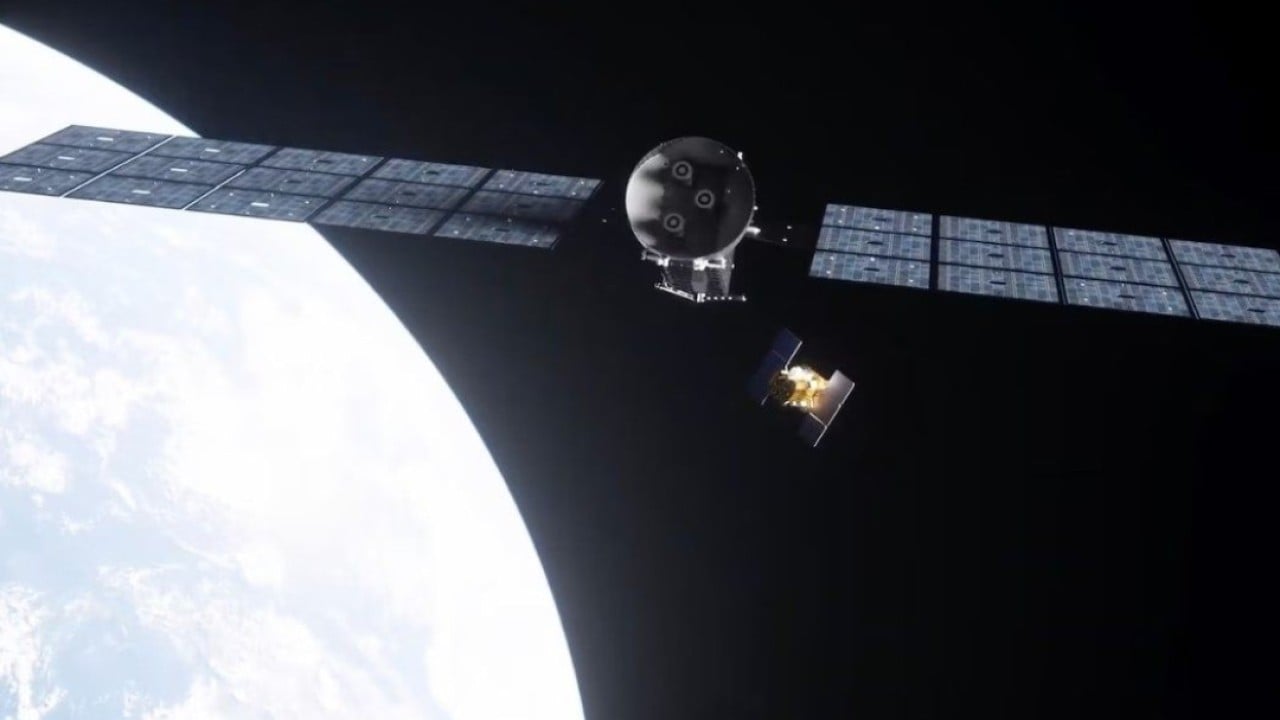
Every defense analyst in Washington is currently hyperventilating over a magic bubble. The standard narrative claims that if America just pours enough billions into a multi-layered missile defense shield—the metaphorical Golden Dome—we can intercept every incoming hypersonic glide vehicle, intercontinental ballistic missile, and cruise missile fired by Beijing or Moscow.
It is a comforting bedtime story. It is also a dangerous delusion.
I have spent years watching defense contractors and procurement bureaucrats fleece taxpayers for systems that solve yesterday's war while ignoring tomorrow's physics. The lazy consensus in defense journalism argues that we just need more interceptors, better radar tracking, and higher budgets to achieve absolute security. That premise is fundamentally broken.
Trying to stop a saturation strike with kinetic interceptors is like trying to empty the ocean with a teaspoon. Mathematics is undefeated, and the math of modern ballistic warfare completely breaks the economics of missile defense.
The Cost Curve Fallacy
Let us look at the basic economics of modern defense, because nobody in the mainstream media wants to do basic arithmetic.
A standard long-range interceptor missile costs anywhere from ten million to thirty million dollars. A mass-produced hypersonic maneuvering warhead or a cheap cluster of decoys costs a tiny fraction of that. When a competitor can manufacture offensive vectors at a ten-to-one or fifty-to-one cost advantage, defense acquisition becomes an exercise in national bankruptcy.
Building a thick defensive shield assumes your adversary plays by your rules. They do not. They play a game of economic attrition. If Beijing floods the theater with low-cost decoys, active radar spoofing, and hypersonic projectiles that skip across the upper atmosphere, your multi-billion-dollar dome will run out of ammunition before the enemy runs out of targets.
We saw this exact dynamic play out in miniature regional conflicts over the last few years. Firing a million-dollar missile to intercept a low-tech drone or a cheap projectile is a slow-motion financial suicide pact. Scale that up to a superpower conflict involving thousands of strategic assets, and the Golden Dome turns into a golden financial drain.
Physics Does Not Care About Your Budget
The obsession with interception ignores the brutal reality of flight mechanics. Hypersonic weapons travel at Mach 5 and above, executing unpredictable trajectory adjustments inside the atmosphere.
Current tracking architecture relies on legacy infrared sensors and ground-based radar arrays that suffer from horizon limitations and thermal clutter. Even with constellations of low-Earth-orbit tracking satellites, the sensor-to-shooter loop is agonizingly tight. By the time the system calculates an intercept vector, the target has shifted its vector again.
Imagine a scenario where an incoming volley arrives with active electronic jamming blinding your X-band radars, accompanied by decoys that mimic the radar cross-section of the actual warhead down to the millimeter. Your interceptor does not miss because it is slow; it misses because it is targeting a ghost.
We love to talk about technological superiority as if it were a permanent state of being rather than a fleeting advantage. Russian and Chinese aerospace engineering caught up to the structural limitations of American defense design years ago. They stopped trying to build better bombers and started building systems specifically engineered to make interception mathematically improbable.
The Alternative Nobody Wants to Talk About
If active defense is a losing game, what do we do? Stop trying to catch bullets out of the air.
True deterrence has never relied on catching incoming strikes; it relies on making the cost of launch absolute annihilation. We need to shift capital away from fragile, stationary shield infrastructure and redirect it toward asymmetric offensive survivability, advanced cyber dominance, deep-magazine conventional strike capabilities, and hardened decentralized logistics.
If an adversary knows their command nodes, industrial base, and satellite constellations will be instantly degraded within seconds of a launch, they will not pull the trigger. Deterrence is psychological and structural, not a titanium umbrella.
Defense insiders love the Golden Dome concept because it feeds thousands of sub-contractors across fifty congressional districts for decades. It is a jobs program disguised as national security.
Stop buying the shield. Start weaponizing resilience.