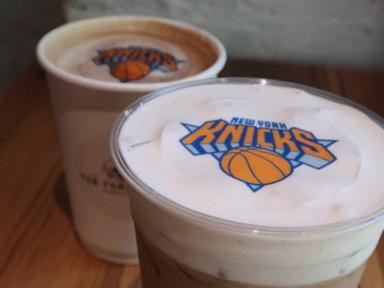
The local media is at it again, falling all over itself to celebrate a New York espresso bar that dressed its baristas in orange and blue, slapped some blue foam on a latte, and watched the TikTok views roll in. The narrative is as predictable as it is lazy: local business rides the wave of hometown sports nostalgia, captures the internet’s fleeting attention span, and secures its financial future through pure, unadulterated hype.
It is a beautiful story. It is also completely wrong.
Having spent fifteen years advising hospitality brands and analyzing retail foot traffic data, I have watched this exact playbook play out dozens of times. The local coffee shop that goes viral for a sports stunt is not winning. It is cannibalizing its long-term viability for a 48-hour dopamine hit. The mainstream coverage looks at the line wrapping around the block and sees a thriving enterprise. Look closer, and you will see a business in the middle of a structural collapse.
The Illusion of the High-Volume Pivot
When a neighborhood cafe transforms into a temporary shrine for a sports team, it fundamentally alters its operational model overnight. It shifts from a high-margin, predictable-volume business to a low-margin, high-stress novelty factory.
Standard coffee shop economics rely heavily on the lifetime value (LTV) of the daily commuter. A customer who buys a $5 Americano five days a week, fifty weeks a year, is worth $1,250 annually. They order in ten seconds, know the staff, and occupy exactly zero square feet of seating space because they grab their cup and walk out.
Compare that to the viral tourist drawn in by a TikTok video of a Knicks-themed specialty drink.
| Metric | The Daily Regular | The Viral Sports Tourist |
|---|---|---|
| Transaction Time | 30–45 seconds | 3–5 minutes (including photos) |
| Order Complexity | Low (Standard espresso/drip) | High (Custom syrups, colored foam, modifiers) |
| Retention Rate | 80–90% month-over-month | Near 0% |
| Ticket Size | Consistent ($5–$8) | High once ($12–$15), then never again |
The viral crowd does not want coffee; they want a prop. They order complex, labor-intensive drinks that bottleneck the espresso machine. They take three times longer to order because they are filming the transaction. They occupy tables for an hour to edit their videos, clogging the physical space of the shop.
Worst of all, they displace the actual economic engine of the business: the locals.
How Hype Evaporates Your Margin
Imagine a scenario where your local coffee shop suddenly receives a 400% spike in foot traffic on a Tuesday morning because a clip of your blue-dyed cold foam hits the Instagram Explore page.
To handle the surge, you have to bring on extra staff. You pay overtime. You rush-order specialized ingredients—like food coloring and custom merchandise—at a premium because your standard supply chain cannot scale overnight.
Then, the team loses in the playoffs. Or the internet simply moves on to the next shiny object.
The crowd vanishes as fast as it arrived. But your operational costs do not reset instantly. You are left holding excess inventory of perishable goods and a staff that you overscheduled. More dangerously, your core customer base—the people who actually paid your rent in October and November—have already built new habits.
When a regular encounters a line out the door full of teenagers holding phones on tripods, they do not wait. They walk two blocks over to a boring, unpretentious cafe that respects their time. Loyalty in the coffee industry is incredibly fragile. Once a customer breaks their daily ritual and finds an alternative, winning them back costs five times more than retaining them. You swapped a recurring revenue stream for a one-time spike. That is bad math.
The Myth of "Free Publicity"
Marketing agencies love to talk about earned media value as if you can pay your landlord with impressions. They point to the local news broadcast featuring the shop's owner smiling next to a cardboard cutout of a star point guard and call it a win.
Let us break down the brutal honesty of what that publicity actually yields.
Local news coverage and viral social media algorithms do not target your specific geographic customer profile. If a video gets two million views, but 98% of those viewers live outside your delivery or walking radius, that reach is functionally useless. You are optimizing your business operations for an audience that will never physically touch your register.
Furthermore, sports fandom is inherently polarizing. For every passionate fan who walks in because of your decor, there is a casual consumer or a rival fan who quietly decides to go elsewhere because they do not want a side of sports tribalism with their morning caffeine. You are actively shrinking your addressable market in exchange for loud, temporary engagement from a fickle demographic.
Dismantling the "Community Hub" Fallacy
People often ask: But doesn't this foster a sense of community and bring the neighborhood together?
This question stems from a deeply flawed premise about what a retail community actually is. True community is built on consistency, quiet reliability, and shared space over time. A viral influx of sports fans turns a community asset into a tourist attraction. It shifts the energy of the room from a workspace or a quiet meeting spot into a chaotic, loud, and transactional environment.
Look at the data from the restaurant industry during major sporting events. Establishments that lean entirely into sports branding see massive spikes during the game, followed by deep valleys immediately after. For a sports bar structured around high-volume alcohol sales, that model works. For an independent coffee shop with limited square footage and an average transaction size under $10, it is a recipe for operational burnout.
If you want to build a resilient hospitality brand, you must resist the temptation to chase the cultural zeitgeist. The most profitable independent coffee shops in the world are intentionally boring. They focus on micro-efficiencies:
- Optimizing milk texturing to save four seconds per drink.
- Building flawless, predictable bean-sourcing pipelines.
- Training staff on customer recognition rather than social media performance.
The Playbook for Sustainable Retail Longevity
If you find your business suddenly catching the tailwinds of a viral moment, the solution is not to lean into it. The solution is to actively throttle it to protect your core infrastructure.
Do not create the gimmick drink. Do not buy the team flags. Instead, use the temporary visibility to showcase your standard, high-margin products. If a crowd forms, prioritize your mobile orders and your regular subscription customers through a dedicated fast-lane. Signal to your daily patrons that their loyalty matters more than the temporary circus outside.
The ultimate trap of modern retail is believing that attention is the same thing as revenue. It isn't. Attention is highly volatile, expensive to maintain, and completely indifferent to your profit and loss statement.
Stop trying to turn your retail shop into a content studio. Turn off the game, wipe the blue dye off the menu, and focus on pulling a perfect shot of espresso for the person who actually lives next door.
:max_bytes(150000):strip_icc():focal(685x379:687x381)/pamela-anderson-tommy-lee-121322-24ed1d7370864dbbb054858cbd2a3443.jpg)