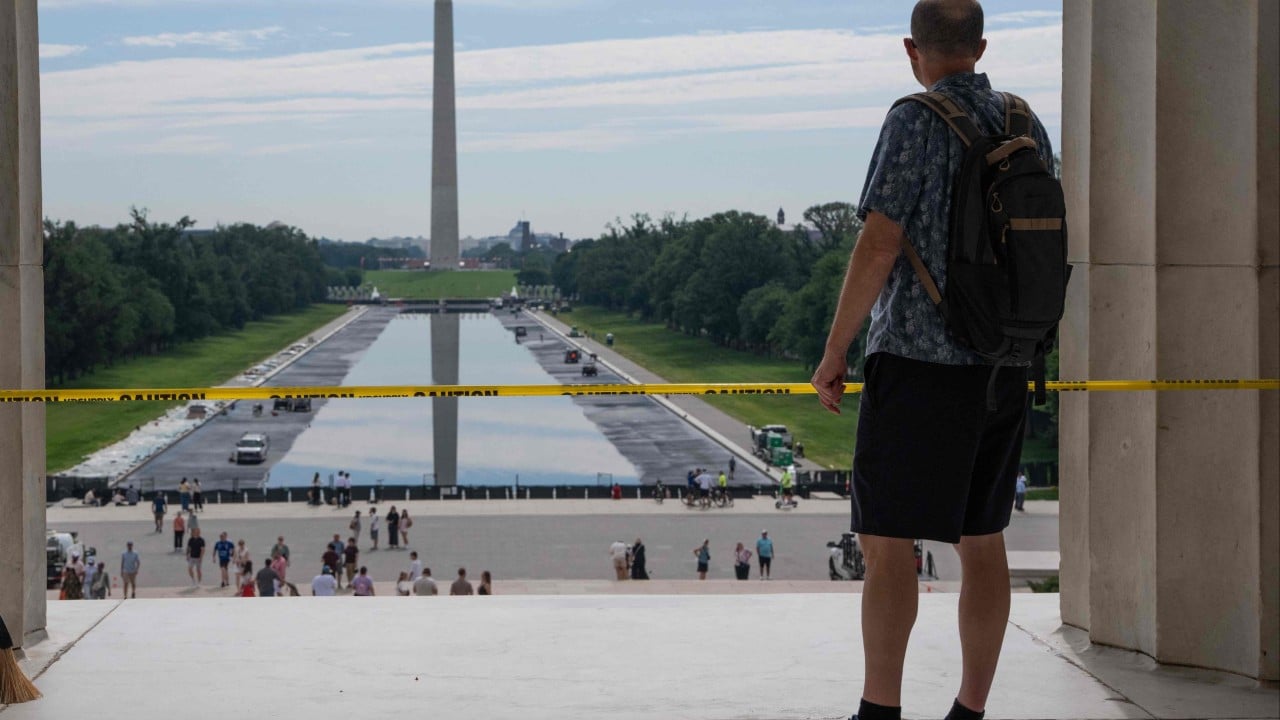
Walk down Market Street in Philadelphia on a humid July morning, and you can almost hear the echoes of 1776. The brickwork of Independence Hall still radiates that old, stubborn optimism. In July 2026, this city, alongside the rest of the United States, will throw itself a massive party. It is the Semiquincentennial. Two hundred and fifty years of an experiment in self-governance. There will be tall ships, massive fireworks displays, historic reenactments, and a flood of commemorative merchandise.
But if you look closely at the faces in the crowd, past the plastic flags and the red-white-and-blue bunting, you might notice something else. An underlying anxiety. A collective holding of the breath.
The stage is set for a birthday bash, but the guest of honor feels profoundly tired.
We love milestones because they force us to look in the mirror. When the United States celebrated its Bicentennial in 1976, the country was reeling from Vietnam and Watergate. Yet, there was still a forward-looking momentum, a sense that the wounds could heal. Today, the fractures run deeper, carved into the very infrastructure of daily life and civic trust. The upcoming celebrations are not just a party; they are a high-stakes stress test of the American psyche, putting a nation's tangible decline on a brightly lit global stage.
The View from the Commuter Rail
To understand where the rust has settled, you have to leave the pristine historic parks and step into the reality of modern American infrastructure. Consider a hypothetical commuter named Marcus. Marcus lives in a suburb of New Jersey and works in Manhattan. Every day, his life depends on a rail tunnel under the Hudson River that was built during the presidency of William Howard Taft.
When Marcus gets delayed because a century-old electrical grid fails, he isn't thinking about grand geopolitical shifts. He is thinking about his daughter’s daycare pickup fees.
This is where the grand narrative of a superpower collides with the friction of reality. The American Society of Civil Engineers consistently grades the nation’s infrastructure poorly, pointing to trillions of dollars in backlogged repairs. Roads are pitted with potholes, water systems are leaking, and the electrical grid groans under the weight of extreme weather.
As billions of dollars are funneled into synchronized drone light shows and parade floats for 2026, Marcus will still be sitting on a delayed train, staring at a cracked phone screen. The contrast is jarring. It raises a uncomfortable question: Can a society truly celebrate its historical greatness when it struggles to maintain the basic foundations of its present?
The problem extends far beyond concrete and steel. It is a question of priorities, a visible gap between the myth of endless progress and the daily grind of survival.
The Cost of the Ticket
Step inside a diner just a few miles away from the birthplace of the Constitution. The conversations over coffee rarely touch on the philosophy of Thomas Jefferson. Instead, they center on the price of eggs, the impossibility of buying a first home, and the looming shadow of healthcare debt.
The economic narrative of the United States has shifted from a story of upward mobility to a game of musical chairs.
Statistically, the country boasts impressive GDP numbers and low unemployment figures. Economists point to these metrics with pride. But wealth inequality has stretched to levels not seen since the Gilded Age. The middle class, long the stabilizing anchor of the American experiment, feels like it is walking a tightrope over a canyon.
When a society commemorates a revolution built on the promise of life, liberty, and the pursuit of happiness, the current economic reality creates a profound cognitive dissonance. For millions of people, happiness feels less like a pursuit and more like a luxury item they can no longer afford. The grand speeches about freedom ring hollow when a single medical emergency can wipe out a family's life savings.
The upcoming celebration risks highlighting this divide, turning the anniversary into a reminder of what has been lost rather than what has been achieved.
A House Dividing Along New Lines
It is impossible to talk about this milestone without addressing the elephant in the room: the sheer, exhausting polarization of the American public. Trust in institutions—Congress, the judiciary, the media, even public health officials—has cratered to historic lows.
We no longer just disagree on policy; we disagree on reality.
Imagine a Thanksgiving dinner table where half the family views the nation's history as an unblemished triumph of liberty, while the other half sees it as an unbroken chain of systemic injustice. There is no middle ground, no shared vocabulary. The Semiquincentennial was originally envisioned as a moment of national unity, a chance to rally around a shared heritage. Instead, it has become another battleground.
Different states and cities are planning vastly different iterations of the celebration. Some focus heavily on traditional patriotism, while others emphasize a critical reexamination of the nation's flaws. This fragmentation means there will be no single, unifying American story told in 2026. Instead, there will be a cacophony of competing narratives, each side using the anniversary to validate its own grievances.
The celebration will act as a magnifying glass, exposing the depth of the internal estrangement.
The Rest of the World is Watching
For a long time, the United States operated as the undisputed director of the global stage. Its cultural exports, economic might, and democratic ideals served as a blueprint for nations emerging from the shadow of authoritarianism.
But foreign observers are no longer just looking at America's ideals; they are watching its execution.
From Brussels to Tokyo, allies and adversaries alike are monitoring the domestic turmoil. The political instability, the gridlock in Washington, and the volatility of American foreign policy have chipped away at the nation's credibility. When the United States hosts world leaders and international tourists for its 250th anniversary, it will not be doing so from a position of unchallenged authority.
Instead, the world will see a superpower wrestling with its own ghost. The event will serve as a showcase of a nation in transition, struggling to define its role in a multipolar world where other powers are rapidly gaining ground.
The Light on the Horizon
It is easy to fall into absolute cynicism. The cracks are deep, the problems are systemic, and the solutions are agonizingly slow. But to look only at the decline is to miss the true nature of the American story.
The country was never a finished product. It was designed as an ongoing argument.
The very documents written in Philadelphia 250 years ago provided the tools for their own correction. The abolitionists, the suffragettes, the civil rights workers—they didn't reject the American founding; they demanded that the nation live up to its explicit promises. The current friction, as painful and destructive as it feels, is also a sign of a society that refuses to sit still.
The messiness of 2026 is the sound of a democracy grinding through a profound midlife crisis. It is ugly, loud, and deeply uncertain.
As the fireworks explode over the Ben Franklin Bridge, painting the night sky in brilliant, fleeting bursts of color, the smoke will eventually clear. The crowds will walk back to their cars, passing the aging infrastructure, stepping onto the crowded trains, and returning to the quiet anxieties of their daily lives. The party will be over, but the country will remain. Its future won't be decided by the grandeur of its celebrations, but by its willingness to look at the rust, acknowledge the rot, and begin the hard, unglamorous work of rebuilding the house from the inside out.