At 6:14 AM on a humid Friday in July, Marcus stood at the counter of a fluorescent-lit coffee shop in downtown Chicago, holding a lukewarm cup of dark roast and staring at a plastic rectangle that had suddenly turned into a paperweight.
To be clear, Marcus is a composite character, a hypothetical stand-in for millions of ordinary people whose mornings unraveled on July 19, 2024. The scenario, however, is painfully real. The card reader on the counter blinked a dull, indifferent red. Behind him, a line of commuters shifted their weight from foot to foot, checking their watches, refreshing banking apps that refused to load, and murmuring with that specific brand of low-grade panic reserved for moments when the invisible machinery of modern life grinds to a halt.
Across town at O’Hare International Airport, thousands of travelers were already sitting on the carpeted floors of Terminal 2, staring up at departure boards washed entirely in red. Hospitals were canceling elective surgeries. Emergency dispatchers in multiple states were reaching for ballpoint pens and legal pads.
And it had all started with a single, routine software update pushed out by a cybersecurity firm most consumers had never heard of.
Silence.
That is what systemic failure actually sounds like. Not an explosion, not a Hollywood villain typing furiously in a dark room, and not a dramatic collapse of brick-and-mortar vaults. It sounds like a dead card reader. It sounds like a dial tone. It sounds like the quiet hum of eight and a half million Windows machines simultaneously turning blue.
When the CrowdStrike outage struck in the summer of 2024, the headlines quickly moved from the initial chaos at Microsoft, through the grounded fleets of Delta, American, and United Airlines, and straight into the beating heart of the United States financial system. Wall Street trading desks froze. Mortgage closings stalled mid-signature. Payrolls vanished into digital limbo on a Friday morning—the exact day millions of hourly workers rely on direct deposits to clear before the weekend rent or grocery run.
We tend to think of our money as solid, guarded by thick steel doors and federal regulators. We imagine the financial system as a series of independent fortresses, each bank holding its own reserves behind its own walls.
That picture is a comforting lie.
The Illusion of the Vault
If you walk into a local bank branch today, you will still see the heavy architecture designed to make you feel safe. Thick marble counters. Bulletproof glass. Maybe an old, decorative vault door left open in the back to remind you of a time when wealth was physical, heavy, and kept right there on the premises.
In reality, a modern bank is little more than a software company with a federal charter.
To understand why a glitch in a security program could kneecap major financial institutions from New York to San Francisco, you have to understand how deeply entangled our infrastructure has become. Think of the global financial network not as a fleet of separate ships sailing the ocean, where one vessel sinking leaves the others untouched, but as a single, sprawling suspension bridge. Every cable is tensioned against every other cable. Every bolt relies on the integrity of the steel next to it.
For the past twenty years, banks, airlines, healthcare networks, and government agencies have been racing toward efficiency. Running proprietary, isolated computer systems is expensive. Maintaining local servers requires armies of engineers and warehouses full of hardware. So, institutions did what made complete financial sense on a quarterly spreadsheet: they consolidated. They moved their operations to the cloud. They standardized on the same operating systems—chiefly Microsoft Windows—and layered the exact same third-party security tools on top of them to fend off hackers.
I remember sitting in a cramped operations room during a regional payment-network outage a few years back, watching seasoned engineers stare helplessly at monitors that showed zero errors on their end. Their own servers were healthy. Their code was clean. Yet no money could move. The bottleneck belonged to a third-party cloud vendor three states away, a company whose name never appeared on a single customer statement. The frustration in that room wasn't anger; it was a cold, creeping realization that nobody in the building actually held the keys to the front door.
When every major institution buys its digital locks from the same locksmith, a single faulty key jams every door on the block at the exact same second.
A Cascade in Real Time
Consider what happens next when that key breaks on a Friday morning.
In the case of the July 2024 disruption, the culprit wasn't a foreign cyberattack. That is the detail that should keep regulators awake at night. No nation-state actor spent months breaching firewalls. CrowdStrike, a legitimate and widely trusted endpoint security provider, released a flawed configuration update—specifically a faulty file designed to help its Falcon sensor monitor Windows systems for threats.
Because security software requires deep, privileged access to the core of an operating system to stop malware, an error at that level doesn't just crash an app. It triggers the infamous Blue Screen of Death, forcing the computer into an endless reboot loop.
And because the fix required an administrator to manually boot each affected machine into Safe Mode and delete a specific system file, automation—the very thing that makes modern banking possible—became useless. You cannot remotely patch a computer that refuses to boot onto the network.
Let us trace the dominoes as they fell across the American financial sector that morning.
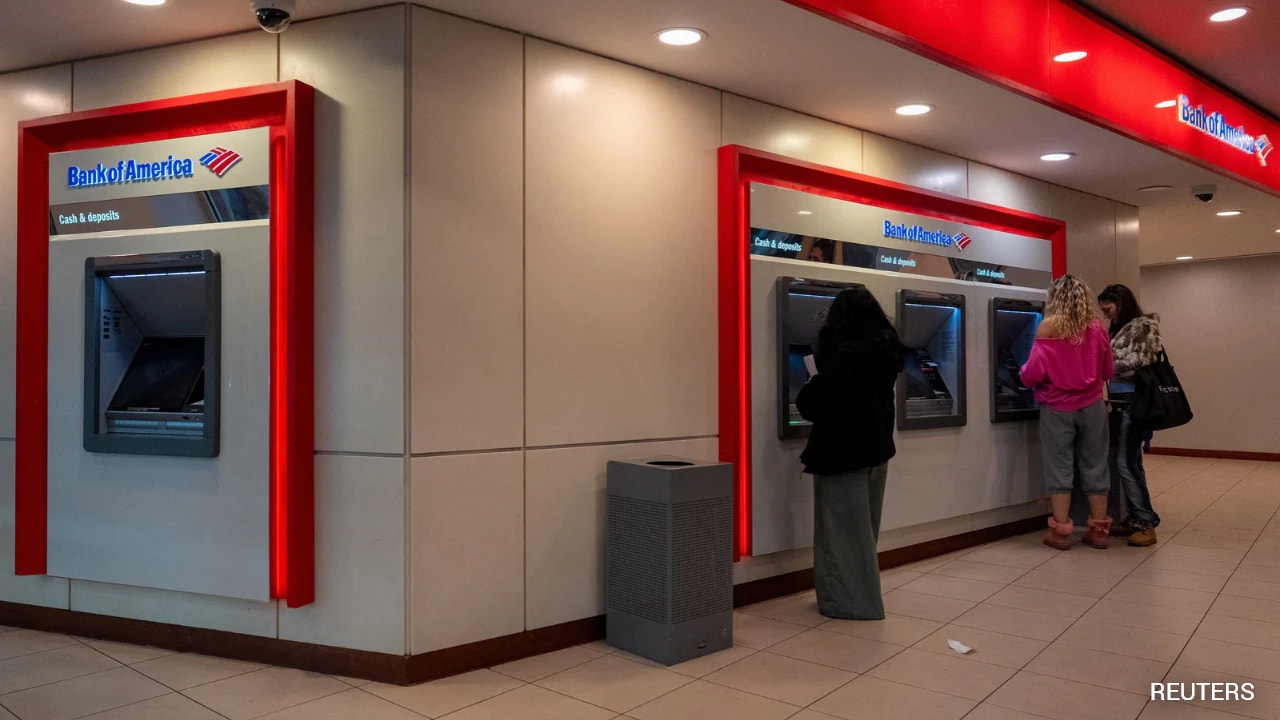
First came the retail freeze. Major banks including JPMorgan Chase, Bank of America, and Wells Fargo reported widespread disruptions. Customers woke up to find mobile apps unresponsive and online portals timing out. For small business owners, point-of-sale terminals lost their handshake with payment processors. If you owned a bakery in Austin or a dry cleaner in Ohio, your cash register was suddenly disconnected from the banking grid.
Second came the institutional logjam. Behind the consumer-facing apps sits the plumbing of global finance: clearinghouses, wire transfer networks, and trading terminals. According to data from the London Stock Exchange Group and major Wall Street desks, pricing feeds stalled, bond trading slowed to a crawl, and foreign exchange transactions hit severe delays. When traders cannot see accurate prices or confirm that a counterparty's cash has actually moved, they do the only rational thing: they stop trading. Liquidity evaporates in minutes.
Third—and most painfully—came the human toll on the margins.
In high finance, a six-hour delay is an annoyance measured in basis points and frantic phone calls. For a family living paycheck to paycheck, a six-hour delay on a Friday morning is an emergency. Automated Clearing House networks, the digital rails that carry direct deposits from employers to workers, hit bottlenecks as originating banks struggled to process batch files. Automatic bill payments bounced. Overdraft fees threatened to trigger automatically before human managers could intervene to waive them.
The system didn't collapse entirely, largely because core mainframe systems—ironically, the decades-old IBM machines running COBOL that critics constantly mock as outdated—kept humming along untouched by the Windows update. The ancient concrete foundation held, even as the glass skyscraper built on top of it shattered.
Why Efficiency Became Our Greatest Vulnerability
People often ask a fair, obvious question when events like this dominate the news: why don't banks just build backup systems so this never happens?
The honest, slightly unsettling answer is that they do—and those backups often fail for the exact same reason the primary systems do.
In banking jargon, institutions spend billions on "redundancy." If a data center in New Jersey loses power, traffic automatically routes to a mirror data center in Texas. If a fiber-optic cable is severed by a backhoe in Virginia, data packets find another path in milliseconds.
What traditional disaster planning failed to account for is monoculture risk.
In agriculture, planting a single genetic strain of corn across millions of acres produces phenomenal yields—until a single fungus evolves to attack that exact strain, wiping out an entire harvest in weeks. Digital infrastructure has fallen into the same trap. When a bank's primary servers in New Jersey and its backup servers in Texas both run the exact same Windows operating system, protected by the exact same third-party security agent, they are not truly independent. They are identical twins sharing the same genetic vulnerability.
Furthermore, modern financial services no longer live inside a single company. Today's banking ecosystem is a sprawling web of fourth-party and fifth-party dependencies. Your bank relies on a core banking software vendor, which hosts its code on Amazon Web Services or Microsoft Azure, which relies on third-party identity verification tools, which in turn rely on external cybersecurity sensors.
Even the most diligent bank executive often cannot draw a complete map of every software vendor sitting inside their own supply chain. It is an admission that makes people uncomfortable, yet any honest chief information security officer will tell you the same thing off the record: the complexity of the stack has outgrown the ability of any single human team to fully see it.
We traded resilience for speed. We traded isolation for convenience. And for years, the bet paid off handsomely. Sending money across the country became free and instantaneous. Checking a balance took a thumbprint on a glass screen.
Until one Friday in July, when the bill for all that convenience came due.
The Myth of the Invincible Grid
Look closely at the pattern across industries, and a troubling picture emerges.
First, big tech platforms stumbled under the weight of centralized cloud dependencies. Then, aviation—an industry famous for obsessive safety checklists and triple-redundant flight controls—was brought to its knees because crew-scheduling and baggage-handling software couldn't survive a broken security patch. Delta Air Lines alone canceled over five thousand flights across several days, absorbing a financial hit estimated at roughly half a billion dollars while thousands of passengers slept on terminal floors.
Now, banking sits squarely in the crosshairs of the exact same structural flaw.
In fact, the financial sector carries an even higher psychological burden than aviation. If an airline grounds its fleet, you can see the planes sitting motionless at the gate. You can look out the terminal window, verify the physical reality, and wait for a mechanic to clear the runway.
Money has no physical weight anymore. When your bank's ledger goes dark, there is nothing to look at except a spinning loading wheel on a six-inch screen. Trust is the only currency that actually backs the American financial system, and trust is remarkably fragile when the screen goes blank.
Regulators in Washington and across Europe saw the warning signs immediately. The Federal Reserve, the Treasury Department, and the Securities and Exchange Commission have spent years gaming out scenarios involving malicious ransomware gangs attacking major clearing banks. What caught them off guard was realizing that a well-intentioned software update from a trusted vendor could inflict the exact same operational paralysis—no malice required.
Building Firebreaks in a Connected World
So where does that leave us? If we cannot turn back the clock to paper ledgers and physical passbooks, how do we keep a single software bug from freezing the nation's cash flow?
The answer isn't abandoning technology; it is reintroducing friction where friction saves lives.
In forest management, firefighters deliberately clear wide strips of earth—firebreaks—stripped of trees and brush. Those empty strips look wasteful during a wet spring, sacrificing usable land for nothing at all. Yet when a crown fire roars through the canopy in August, those bare strips of dirt are the only thing standing between a contained burn and an entire mountain range turning to ash.
Financial technology needs digital firebreaks.
First, regulators and bank boards are beginning to enforce staggered deployment mandates. Pushing a kernel-level software update to millions of critical machines simultaneously is the digital equivalent of testing a new jet engine on every commercial flight in the sky at the exact same minute. Critical infrastructure demands phased rollouts: test on one percent of non-essential systems, wait twenty-four hours, monitor for anomalies, and only then expand outward. Speed is an asset in consumer apps; in core banking, speed without verification is recklessness.
Second, institutions are being forced to rethink true architectural diversity. Relying on a single cloud provider or a single operating environment across both primary and recovery systems is no longer acceptable for systemically important banks. True resilience means maintaining fallback payment rails—isolated, stripped-down systems capable of processing basic debits, payrolls, and emergency liquidity even if the primary Windows or cloud layer goes completely dark.
Third, the human element is making a quiet, vital comeback. During the height of the 2024 outage, the institutions that recovered fastest weren't the ones with the flashiest artificial intelligence dashboards. They were the ones that still employed veteran systems engineers who knew how to walk into a server room, plug in a physical keyboard, and manually rebuild a boot sequence from memory. You cannot automate your way out of an automation failure.
None of these fixes are glamorous. None of them will make a quarterly earnings call sound exciting. They require spending money on quiet, redundant infrastructure that sits idle ninety-nine percent of the time.
The Weight of a Plastic Card
Think back to Marcus standing at that coffee shop counter in Chicago, holding his lukewarm cup while the line behind him grew restless.
Later that afternoon, the card readers flickered back to life. By Monday morning, the Wall Street tickers were scrolling smoothly again, the airline departure boards had turned back to calm shades of blue and white, and the headlines had already begun drifting toward the next news cycle. The crisis was officially declared over.
Yet if you watched closely over the weeks that followed, something subtle had shifted in the way ordinary people carried themselves at checkout counters and airport gates. Suddenly, people began tucking a folded twenty-dollar bill behind their driver's license again. Travelers started printing paper copies of their boarding passes and hotel confirmations just in case.
We live inside a miracle of invisible engineering—a global nervous system that moves trillions of dollars across continents before you finish exhaling a breath. Most days, it works so quietly that we forget it exists at all.
We just shouldn't confuse quietness with permanence. Every time you tap a piece of plastic against a glowing glass terminal and watch the word Approved appear in a fraction of a second, you are witnessing millions of lines of fragile code, buried beneath oceans and routed through distant server farms, holding hands in the dark so you can buy a cup of coffee.