Cold.
That is the first thing the ocean takes from you—not your breath, not your bearings, just the warmth from your fingertips, creeping inward like a slow tide until your own hands feel like driftwood belonging to someone else.
Anyone who has ever slipped off a boat in open water at night knows the particular terror of the horizon vanishing. There is no up. There is no down. There is only the black ceiling of the sky pressing down onto the black floor of the sea, and the sudden, suffocating realization that the human body was never engineered for this environment. We are heavy, fragile creatures of dry land, built to walk on solid ground and breathe air that does not try to drown us every time we open our mouths.
Now imagine being twelve years old. Imagine barely knowing how to swim.
On the night of June 29, 2009, Bahia Bakari boarded Yemenia Flight 626 with her mother, Aziza Aboudou, bound for the Comoros—a volcanic archipelago scattered like stepping stones between Mozambique and Madagascar in the warm, treacherous waters of the Indian Ocean. For Bahia, a quiet French-Comorian girl growing up in the suburbs of Marseille, this was not a routine commute. It was a summer pilgrimage to see family, a trip measured in excitement, packed suitcases, and the ordinary impatience of a child waiting for a long flight to end.
They never landed.
The Architecture of a Fall
To understand what happened in the final minutes of Flight 626, you have to understand how an airplane stays in the sky in the first place. Think of a commercial airliner as a high-wire walker balancing on a knife-edge of speed and air pressure. As long as the wings slice forward through the atmosphere fast enough, air rushes over their curved upper surfaces, creating lift—an invisible hand holding hundreds of tons of aluminum and fuel aloft.
Slow down too much, or tilt the nose up too sharply, and that invisible hand vanishes. Pilots call it an aerodynamic stall. To a passenger in the cabin, it does not feel like a gentle glide downward; it feels like the floor has been yanked out from beneath your feet while an invisible giant shakes the fuselage violently from side to side.
At 1:51 a.m. local time on June 30, 2009, the Airbus A310-300 approached Prince Said Ibrahim International Airport in Moroni, the capital of Grande Comore. Outside the cabin windows, the night was moonless and rough, whipped by winds gusting over thirty knots and heavy swells rolling in from the Mozambique Channel. The flight had already been an exhausting marathon—starting in Paris, transferring in Sana’a, Yemen, onto an older aircraft that had drawn quiet complaints from passengers about cramped seats and worn interiors.
Inside the cockpit, things went wrong with terrifying speed.
Investigators from France’s Bureau of Enquiry and Analysis for Civil Aviation Safety—the BEA—would later spend years reconstructing those final seconds from the recovered flight data recorders. Their findings read like a masterclass in how human error compounds under pressure. During the visual approach to Moroni’s runway, the crew allowed the aircraft’s airspeed to drop dangerously low while the plane banked in the dark. The stall warning blared. Instead of pushing the nose down to regain speed—the counterintuitive move every pilot is trained to make when falling—the pilots pulled back on the controls, fighting the sink rate with muscle memory that only deepened the stall.
At 1:51 a.m., nine miles off the coast of Grande Comore, Flight 626 struck the Indian Ocean.
There were 153 people on board—142 passengers and 11 crew members.
One hundred and fifty-two of them died.
Nine Hours in the Black
Nobody can tell you with complete certainty how a twelve-year-old girl survived an impact that tore a wide-body jet into sinking fragments. Physics alone struggles to account for it. In aviation crashes over water, the deceleration forces alone—the violent transition from hundreds of miles per hour to zero in a fraction of a second—usually prove fatal before water ever enters the cabin.
Yet when Bahia Bakari came to her senses, she was not strapped into a seat at the bottom of the sea.
She was in the water.
Picture the sensory assault of that first waking moment. The roar of engines had vanished, replaced by the slap of four-foot swells and the hiss of salt spray in the dark. Jet fuel burned her nostrils and stung her eyes, slicking the surface of the ocean like a toxic skin. Her collarbone was fractured, though shock and adrenaline masked much of the pain at first. She had burns on her knees and deep cuts across her body. And she had no life vest.
Let us pause here and consider what "barely knowing how to swim" actually means in open water. In a neighborhood pool in Marseille, it means dog-paddling a few yards to the shallow end, knowing your toes can touch blue tile whenever panic sets in. In the Indian Ocean at two in the morning, with swells lifting you ten feet into the air and dropping you into black troughs, dog-paddling is not a skill. It is a countdown to exhaustion.
Bahia reached out in the dark and found a piece of white wreckage—a chunk of the plane’s fuselage or wing fairing, buoyant enough to keep one small human body from going under.
She grabbed it. And she did not let go.
In the first minutes after the impact, she heard voices—women crying out in the darkness around her, calling for help across the water. She called back. Then, one by one, as the night wore on and the sea claimed its toll, the voices stopped.
Silence fell over the wreckage field, broken only by the wind and the endless heave of the ocean.
For a moment, put yourself in her place—not as a reader scanning a headline years later, but as a child shivering in saltwater in the pitch dark, bruised, bleeding, and utterly alone. Hypothermia does not require freezing temperatures to kill you. Even in tropical waters hovering in the mid-seventies, prolonged immersion drains body heat roughly twenty-five times faster than air of the same temperature. Muscles stiffen. Fingers lock into rigid claws. The brain begins to whisper that letting go would be easier, warmer, quieter than holding on.
Bahia thought she had simply fallen out of the plane. She believed her mother had landed safely at the airport in Moroni and was waiting for her there, worried sick about where her daughter had gone.
That single, innocent delusion—the certainty that her mother was alive on shore—became the anchor that kept her fingers locked onto that piece of floating metal.
The Invisible Infrastructure of Survival
Why do some human beings endure circumstances that kill almost everyone else around them?
Researchers who study extreme survival—from shipwrecked sailors to lost mountaineers—have spent decades trying to isolate the variable that separates those who live from those who surrender. Physical strength is rarely the deciding factor. In fact, muscular adults often succumb faster in cold water or starvation scenarios because their bodies burn through caloric and thermal reserves at an aggressive rate.
Instead, survival psychologists point to something quieter and far harder to measure: cognitive framing.
When disaster strikes, the human brain typically cycles through three stages—denial, deliberation, and decisive action. Most casualties occur in the first stage, when the mind refuses to accept that the world has fundamentally changed. People freeze in burning cabins or wait passively in sinking hulls for an authority figure to tell them what to do.
Bahia bypassed paralysis entirely. With no adults left to rescue her, no instructions echoing over a loudspeaker, and no shoreline visible in the dark, she narrowed her entire universe down to one mechanical task: keep both hands on the debris, keep her head above the swells, and wait for morning.
Sun came up over the Indian Ocean around six in the morning—four hours after the crash.
Daylight brought no immediate salvation. Instead, it revealed the true scale of her isolation. Around her floated scattered cushions, luggage, and fragments of white aluminum bobbing on an endless expanse of blue-gray water. No helicopters thrummed overhead. No coast guard cutters sliced through the horizon. The Comoros, one of the poorest nations in the world, possessed almost no maritime search-and-rescue infrastructure capable of mounting a rapid night operation in rough seas.
Hours dragged past. Six hours. Seven. Eight.
Her fractured collarbone throbbed with every wave that slammed her against the edge of the wreckage. Saltwater blistered her skin and parched her throat. Every swell threatened to pry her stiffened fingers loose from the smooth surface she clung to.
The Wooden Boat
Around eleven o’clock in the morning—more than nine hours after Flight 626 vanished from radar—a small wooden fishing boat named Sima Com 2 pushed through the choppy water near the debris field.
Aboard was a local fisherman and sailor named Maturaffi Sélémane Libounah, alongside volunteers who had set out from shore in whatever small craft they could find once word spread that an airliner had gone down at sea. They were not expecting to find anyone alive. For hours, they had seen nothing but floating debris and oil slicks.
Then, squinting against the glare on the water, they spotted movement—a small hand waving weakly beside a piece of white wreckage.
Libounah steered the wooden boat alongside. When they tried to throw Bahia a life buoy, she was too weak, too rigid from hours of clinging to the debris, to grab it. Without hesitating, Libounah jumped into the swell himself, swam to the exhausted girl, and held her afloat until the men on the boat could haul them both over the gunwale.
She had spent roughly nine to eleven hours in the open ocean—accounts vary slightly depending on whether you measure from impact to sighting or impact to dock—without food, without fresh water, without a life vest, and with a broken bone.
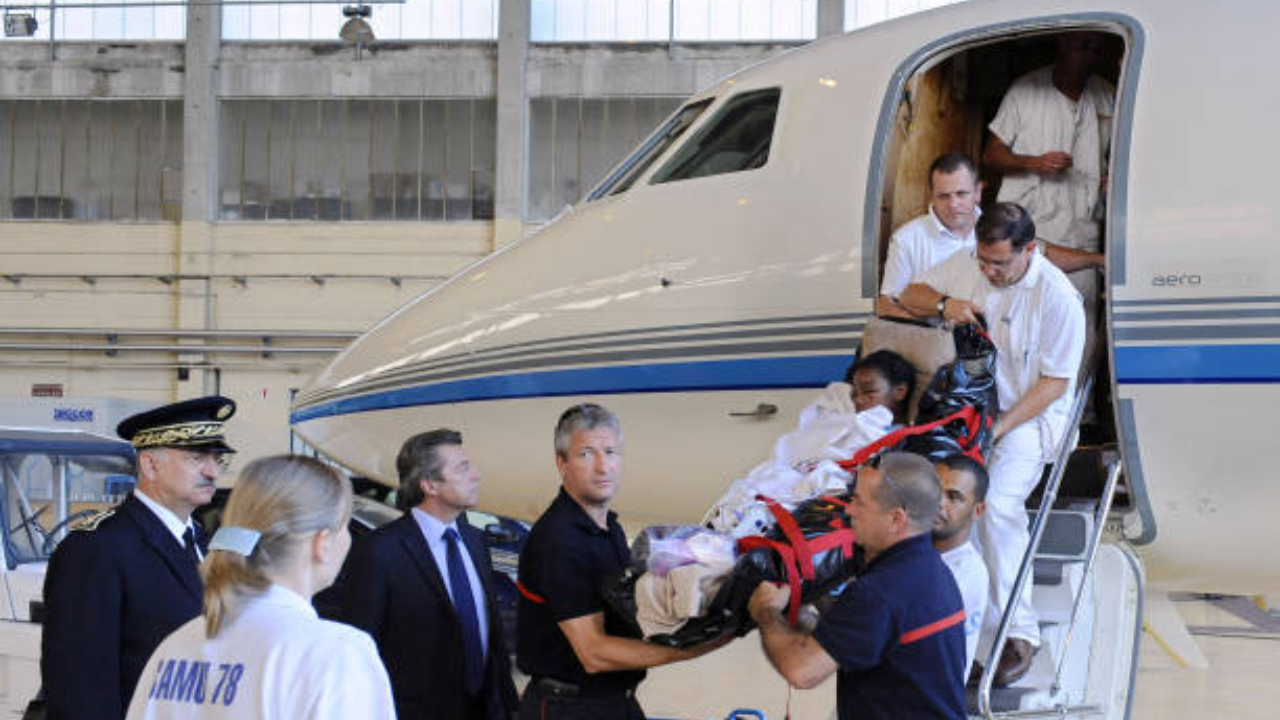
When she was brought ashore in Moroni and carried into El-Maarouf Hospital, doctors treated her for hypothermia, facial cuts, burns, and a fractured collarbone. Physically, her injuries were remarkably light given what she had endured.
Psychologically, the hardest blow was still waiting.
It was only later, back in France, that her father, Kassim Bakari, had to sit beside her hospital bed and tell her the truth she had spent nine hours fighting to outlive: her mother was not waiting at the airport. Aziza Aboudou had gone down with the plane.
What the Wreckage Left Behind
In the aftermath of a tragedy this stark, the public always searches for a clean moral—some reassuring lesson about human resilience or technological progress that makes the horror easier to digest.
The truth is messier and far less comfortable.
Yemenia Flight 626 exposed a fault line in global aviation that still exists beneath the surface of international travel. Prior to the crash, French aviation inspectors had already banned the specific Airbus A310 involved from operating in French airspace due to dozens of maintenance and safety deficiencies. Yet passengers could still purchase a ticket in Paris on a reputable-seeming itinerary, fly out of Charles de Gaulle on a modern jet, and be transferred mid-journey in Sana’a onto an aircraft that European regulators had deemed unfit to land in their own cities.
In 2013, the BEA published its final investigation report, placing primary blame on inappropriate crew actions during an unstabilized approach in poor weather. Years later, in 2022, a Paris criminal court convicted Yemenia Airways of involuntary manslaughter, imposing the maximum fine allowed under French law and ordering millions in damages for victims’ families.
Legal verdicts, however, do not alter the physics of a dark ocean.
Bahia Bakari grew up in the quiet glare of unwanted fame. She was dubbed the "Miracle Girl" by newspapers from Paris to Tokyo, invited to meet heads of state, and asked to co-author a memoir titled Moi Bahia, la miraculée—I, Bahia, the Miracle Girl—while still a teenager processing the loss of her mother. She turned down Hollywood offers to turn her ordeal into a commercial spectacle, choosing instead to guard her privacy and build an ordinary adult life away from cameras.
Consider what that restraint says about the real nature of survival.
We like to imagine that surviving a catastrophe turns a person into an invincible hero, forever immunized against ordinary fear. In reality, survival is not a trophy you place on a shelf. It is a heavy inheritance. Every flight you board afterward carries the memory of the cabin going quiet; every dark stretch of water holds an echo of the swell.
Yet somewhere in the Indian Ocean, during nine endless hours when every rational calculation dictated that a twelve-year-old girl who could barely swim should have vanished beneath the waves, Bahia Bakari proved something irreducible about human will.
She did not conquer the ocean. She did not outswim the current or overpower the storm.
She simply refused, one breath and one wave at a time, to let go until morning came.