The Price of Frozen Fat
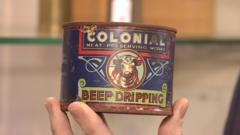
A small, unassuming tin containing beef dripping—a substance most modern kitchens would discard without a second thought—recently crossed the auction block. This wasn't just any rendered fat. It was a relic from the 1953 British Mount Everest expedition, the successful mission that saw Sir Edmund Hillary and Tenzing Norgay reach the highest point on Earth. While a competitor might report this as a quirky footnote in the world of memorabilia, the sale signals a deeper, more cynical shift in how we value exploration.
We are no longer just celebrating the feat of human endurance; we are commodifying its refuse.
The tin sold for a sum that would buy a luxury car, yet its contents are technically inedible and practically worthless. The buyer didn't pay for the beef. They paid for the proximity to a moment of perceived purity. In an era where Everest has become a high-altitude traffic jam of wealthy tourists and discarded oxygen canisters, these artifacts from the "Golden Age" of mountaineering represent a lost era of genuine mystery. However, the scramble to own these relics exposes the desperate nature of modern collecting.
Behind the Aluminum Lid
The 1953 expedition was a military-style operation. It wasn't the lean, alpine-style climbing we see today. It was a siege. Led by John Hunt, the team carried literal tons of equipment, including specialized high-altitude rations designed to provide maximum calories with minimum weight. Beef dripping was a staple. It was dense, energy-rich, and stable in extreme cold.
When the auction house listed this specific tin, they weren't just selling a kitchen staple. They were selling a piece of the logistics that conquered the mountain. To understand the "why" behind the staggering price tag, one must look at the provenance. This wasn't a random tin found in a garage; it was meticulously preserved, often passed down through the families of the original expedition members or support staff.
The market for Everest memorabilia has shifted from the gear used on the summit—boots, ice axes, and flags—to the mundane. This shift occurs when the primary artifacts are already locked away in museums like the Royal Geographical Society. When the "holy grails" are off the market, the market invents new ones. Suddenly, a half-eaten bar of Kendal Mint Cake or a tin of rancid fat becomes a high-value asset.
The Psychology of the Relic
Why would a rational investor put five figures into 70-year-old animal fat? The answer lies in the concept of contagion. In the world of high-end collecting, there is a belief—often subconscious—that objects carry the essence of the people who touched them or the events they witnessed. To own a piece of the 1953 expedition is to own a sliver of the grit and glory of Hillary and Norgay.
It is a secular form of religious relic hunting.
In the Middle Ages, cathedrals fought over the bones of saints. Today, the ultra-wealthy fight over the debris of explorers. This beef dripping serves as a physical bridge to a time when the world still had "blank spots" on the map. As our physical world becomes entirely mapped, tracked, and geotagged, the value of objects from the era of true discovery skyrockets. The less mystery we have in the present, the more we are willing to pay to own a piece of it from the past.
The Counter-Argument for Preservation
There is a strong case to be made that these items belong in the public trust rather than private vaults. When a private collector buys a piece of the 1953 expedition, that item often disappears from the historical record. It sits in a climate-controlled safe in London or New York, seen only by the owner’s inner circle.
Historians argue that even "minor" items like food tins provide invaluable data on the nutritional science of the mid-20th century. By analyzing the caloric density and chemical composition of these rations, we gain a clearer picture of how the human body was pushed to its limits before the advent of modern synthetic supplements. When the hammer falls at an auction, that potential for study is often lost.
Furthermore, the glorification of these scraps ignores the grim reality of Everest today. The mountain is currently an environmental disaster zone, littered with "modern relics" that no one wants to buy: shredded tents, empty fuel canisters, and human waste. There is a jarring irony in paying thousands for a 1953 food tin while the 2024 climbing season leaves behind tons of trash that the Nepalese government struggles to remove.
The Mechanics of the Memorabilia Market
The auctioning of the beef dripping wasn't a fluke. It was a calculated move by a market that has seen a 400% increase in the value of exploration-related artifacts over the last decade. Several factors drive this:
- Scarcity: Unlike coins or stamps, there was only one first successful summit. The pool of items is finite and shrinking.
- The "Hillary Effect": Sir Edmund Hillary’s persona—the humble beekeeper turned global icon—remains incredibly marketable.
- Asset Diversification: In volatile economic times, tangible assets with historical significance are seen as "hard" currency.
The process of valuation is also opaque. Auction houses rely on a mix of historical significance, physical condition, and the "story" behind the item. For the beef dripping, the story was everything. It wasn't just fat; it was the fuel for the feat.
The Ethics of Scavenging
We must also consider where these items come from. While many are legitimate heirlooms, a growing number of "relics" appearing on the market are scavenged from high-altitude camps. The line between archaeology and grave robbing is thin on Everest. While the 1953 items are generally above board due to their age and documented history, the hunger for Everest "stuff" encourages contemporary climbers to bring back debris in hopes of a future payday.
This creates a perverse incentive. Instead of "leave no trace," the incentive becomes "leave nothing behind because it might be worth something in fifty years."
Redefining the Summit
The sale of the beef dripping is a symptom of a culture that values the trophy over the triumph. We see it in the "summit photos" of climbers who were practically carried to the top by Sherpas, and we see it in the auction halls where the refuse of heroes is sold to the highest bidder.
The real value of the 1953 expedition wasn't in the gear they carried or the food they ate. It was in the proof that the impossible was, in fact, possible. By obsessing over the physical scraps, we risk losing sight of the spirit of the endeavor. We are trading the inspiration of the climb for the ownership of the trash.
If you are looking to understand the true legacy of Everest, look past the auction catalogs. The history of the mountain isn't written in beef dripping or discarded tins. It is written in the logs of the climbers who risked everything when the outcome was anything but certain.
Next time an "unprecedented" relic appears online, ask yourself if you are buying history or just paying for the ego of an empty tin.
Analyze the auction records of the last five Everest-related sales and you will see a pattern: the more mundane the object, the more the price is inflated by the narrative. We are no longer collectors; we are curators of a shrinking past. Stop looking at the artifacts and start looking at the mountain they came from. That is where the real story remains, far above the reach of the highest bidder.
Investigate the current efforts of the Sagarmatha Next project to see how actual "relics" are being turned into art to save the mountain environment.