Two seconds.
That is all it takes for an encrypted message sent from a cheap burner phone in a California strip mall to shatter a family’s front window in Punjab, turning an ordinary Tuesday evening of shared flatbread and warm lentils into the shrill, suffocating panic of shattered glass and lead.
For years, if you walked down the crowded lanes of Brampton, Surrey, or Fresno, you felt it before you ever saw it on the evening news. It lived in the lowered voices of banquet hall owners checking their rearview mirrors at red lights. It lingered in the nervous glances of local promoters signing contracts with Punjabi singers, wondering whose hidden tax they were about to pay. And then, in May 2022, the whisper became a roar heard around the world when Sidhu Moose Wala—a twenty-eight-year-old voice of a generation—was gunned down in broad daylight in Mansa.
Hours later, a Facebook post claimed responsibility. The name attached to it was Satinderjit Singh, known everywhere by a simpler, sharper alias: Goldy Brar.
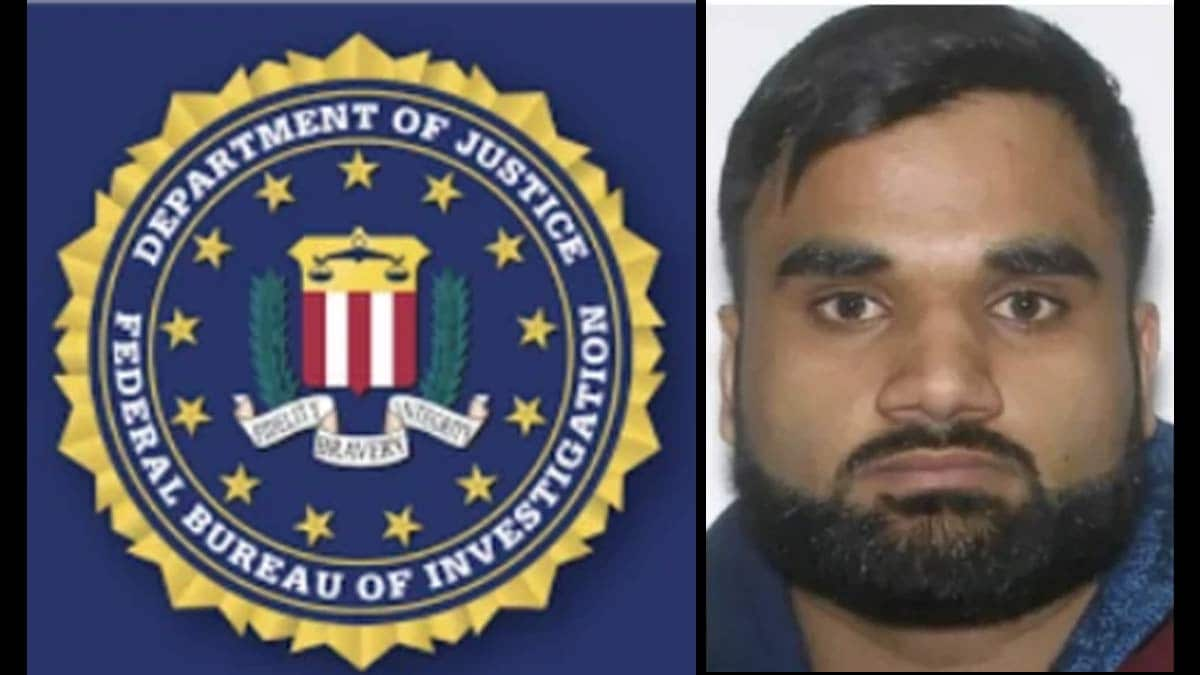
When the Federal Bureau of Investigation officially placed Brar on its Most Wanted fugitive list—citing murder, kidnapping, and extortion—the headlines read like standard wire copy. Another gangster. Another bulletin. Another mugshot stared at briefly over morning coffee before the thumb scrolls downward.
But if you stop scrolling, you realize this is not just a story about a fugitive running from federal agents. It is the story of how distance died, how a truck driver who crossed borders on a student visa built a transnational shadow empire without ever needing to hold a weapon himself, and why the FBI’s decision to hunt him changes the rules of modern organized crime.
The Illusion of Safe Harbor
To understand why Brar’s name on an American federal wanted poster carries so much weight, you have to understand the old architecture of fear.
Historically, crime was bound by geography. If a syndicate operated in the dusty plains of northern India, its reach ended where the ocean began. Families saved every rupee to send their sons and daughters to Canada or the United States precisely because those borders represented an unbreachable wall. Across the water lay quiet suburbs, predictable courts, and the blessed anonymity of starting over.
Goldy Brar proved that wall was made of paper.
Born in 1994 in Sri Muktsar Sahib, Punjab, Satinderjit Singh did not grow up as a mythical warlord. He was the son of a former police assistant sub-inspector. He held a bachelor’s degree. In 2017, he boarded a plane to Canada on a student visa, carrying the same laminated paperwork and nervous ambition as tens of thousands of other young men stepping off flights in Toronto.
Yet behind that ordinary immigrant trajectory sat an older, darker loyalty. While Lawrence Bishnoi—the syndicate’s ideological figurehead—remained locked inside high-security Indian prisons, someone on the outside needed to become the central nervous system of the operation. Brar stepped into that void.
Think of the syndicate not as a traditional street gang, where leaders stand on corners and enforce territory with their own fists, but as a cloud-based franchise. Bishnoi provided the brand and the prison-yard mystique; Brar became the chief operating officer working remotely from North America. Through encrypted apps, virtual private networks, and layers of disposable intermediaries, he transformed geographic exile into an operational advantage. Indian police could raid safehouses in Haryana or Rajasthan, yet the voice authorizing the wire transfers and selecting the targets sat thousands of miles away, protected by international extradition treaties and jurisdictional blind spots.
A Anatomy of Modern Extortion
Consider a hypothetical scenario that mirrors hundreds of real complaints filed across two continents over the past five years.
Picture a mid-sized freight company owner in California—let’s call him Harpreet. He arrived twenty years ago with two suitcases, slept in the cab of his rig through Midwest blizzards, and now owns twelve trucks and a modest warehouse. On a Thursday afternoon, his phone buzzes with an international VoIP number. The voice on the other end does not shout. It is polite, almost conversational. It knows where Harpreet’s daughter goes to school. It knows the exact license plate of his wife’s SUV. And it informs him that a "contribution" of two hundred thousand dollars is required to keep his family healthy.
If Harpreet hangs up, thinking it is a prank, a second message arrives ten minutes later: a video clip of his brother’s storefront back in Ludhiana, filmed from across the street by a teenager on a motorbike who was paid fifty dollars to press record.
That is the invisible engine of the Bishnoi-Brar network. It weaponizes the deepest emotional bond of the diaspora—the umbilical cord connecting immigrants in the West to the relatives they left behind in India. You cannot block a number when your mother’s front door is the collateral. You cannot simply change locks when the threat travels through fiber-optic cables faster than a police cruiser can turn onto your street.
I still remember the first time a friend in the music promotion business showed me one of those voice notes. We were sitting in a bright, noisy diner off a highway in New Jersey, surrounded by families eating pancakes. My friend kept his phone face down on the laminate table, his thumb tapping nervously against the edge of his coffee mug. When he finally turned it over and played the thirty-second audio clip, the contrast was sickening. Outside the window, sunlit suburban traffic hummed peacefully; inside the speaker, a calm voice laid out the exact price of survival.
Fear, when exported efficiently, requires remarkably little overhead.
From Local Feuds to Global Headlines
For a long time, law enforcement agencies treated these incidents as isolated, culturally specific disputes—problems that belonged to local community liaisons or distant Indian consulates rather than federal task forces.
Then came the escalation.
In October 2020, Brar’s cousin, Gurlal Brar, was shot dead outside a nightclub in Chandigarh. Investigators noted that this killing marked a sharp psychological pivot; what had been an ambitious criminal enterprise hardened into an obsession with vengeance and total dominance. By May 2022, when Sidhu Moose Wala was ambushed and killed by shooters armed with automatic weapons, the shockwaves hit international headlines. Moose Wala was not an obscure figure. He was a global streaming phenomenon whose songs echoed from arenas in London to car stereos in Los Angeles.
Suddenly, the fiction that this violence stayed contained within small towns collapsed.
Shortly after the Moose Wala murder, Indian authorities issued a Red Corner Notice through Interpol. Yet Brar remained elusive, slipping across the porous border between Canada and the United States, moving quietly through cities like Fresno and Sacramento, blending into the vast network of South Asian trucking corridors where cash moves easily and a familiar face rarely draws suspicion.
Meanwhile, the syndicate’s ambitions kept expanding. Investigations in both India and North America began linking Bishnoi operatives to high-profile murders, targeted shootings outside the homes of Bollywood figures, and cross-border arms smuggling routes that utilized drones to drop weapons across the Pakistan-India border. In Canada, the Royal Canadian Mounted Police eventually took the extraordinary step of publicly alleging that elements of the Bishnoi network were being used as proxies for violent intimidation on Canadian soil, triggering a diplomatic earthquake between Ottawa and New Delhi.
Silence was no longer a viable policy.
Why the FBI’s Stamp Changes Everything
When the FBI adds someone to its Most Wanted list, the move is often misunderstood by the public as merely symbolic—a digital poster hung on a government website.
In reality, it is a structural shift in how the machinery of the American state hunts a human being.
Before a federal designation of this scale, chasing a fugitive like Brar meant navigating a slow, exhausting maze of local police departments, municipal boundaries, and fragmented intelligence. A sheriff’s deputy in Central California pulling over a sedan for a broken taillight might never connect a polite driver carrying valid-looking identification to an extortion ring operating out of New Delhi and Toronto.
Placing Brar on the FBI’s Most Wanted list tears down those internal walls.
First, it unlocks federal task force resources across every field office in the country, linking immigration databases, financial intelligence units tracking cryptocurrency and informal hawala money transfers, and electronic surveillance warrants under a single investigative umbrella. Second, it turns every local patrol officer, border agent, and federal prosecutor into an active node in the search. Third—and perhaps most devastatingly for a man whose entire business model relies on projecting invincibility—it shatters his operational security.
Criminals who run remote empires depend on trusted couriers, safe apartments, and compliant associates who believe the boss is untouchable. The moment the FBI attaches a federal bounty and global visibility to a fugitive’s face, every associate in his orbit has to do cold, unforgiving math. Harboring a local enforcer is one thing; risking decades in a federal penitentiary for obstructing an FBI manhunt is something else entirely. Paranoia sets in. Burner phones get snapped in half. Safe houses suddenly lock their doors from the inside.
The Human Cost Left in the Wake
Still, it is worth being honest about what a wanted poster cannot fix.
Even if federal agents kick down a door tomorrow morning and put handcuffs on Satinderjit Singh, the ecosystem he helped pioneer does not vanish overnight. That is the unsettling truth that law enforcement officials quietly admit behind closed doors. You can arrest the operator, yet the blueprint remains out in the open—a repeatable formula showing how encrypted messaging, diaspora anxieties, and desperate young recruits can be stitched together into a weapon.
Look closely at the shooters recruited by these syndicates in India, and you rarely find hardened masterminds. You find nineteen- and twenty-year-old boys from villages with shrinking farmland and scarce jobs, seduced by social media reels that glorify weapons, brotherhood, and fast fame. They are promised visas to Canada, legal protection, or a few thousand rupees, only to discover too late that they were disposable ammunition fired by a man sitting comfortably half a world away.
On both sides of the ocean, ordinary people have paid the price for that asymmetry. Mothers in Punjab mourn sons lost either to bullets or to life sentences in bleak concrete cells. Business owners in North America still flinch when an unknown number lights up their screen after dark.
We like to believe that modern technology brings the world closer together—that fiber optics and satellite networks exist to connect families, bridge cultures, and erase the loneliness of distance. Watching the rise of Goldy Brar forces us to confront the shadow side of that promise. The very tools built to shrink the globe also allowed a voice in exile to reach across ten thousand miles and squeeze the throat of a stranger’s life.
Now, for the first time in years, the hunt is moving in the other direction—closing the distance, narrowing the exits, and proving that even in an era of ghosts behind screens, nowhere is truly out of reach.