Saltwater is a brutal archivist. It strips paint from steel, crusts optical lenses with microscopic grit, and eventually swallows whole everything humanity drops into its bottomless blue. But long before the sea claims a machine, it protects it. Or exposes it.
Picture a dark control room, somewhere off the coast of the Arabian Peninsula. The hum of cooling fans is a constant, low-frequency toothache. A cluster of technicians stare at monitors displaying flickering telemetry lines that mean only one thing: silence. The connection is dead. A multi-million-dollar autonomous marvel, an underwater glider designed to map the hidden contours of the deep without drawing a single breath, has vanished.
Except it did not vanish. It was caught.
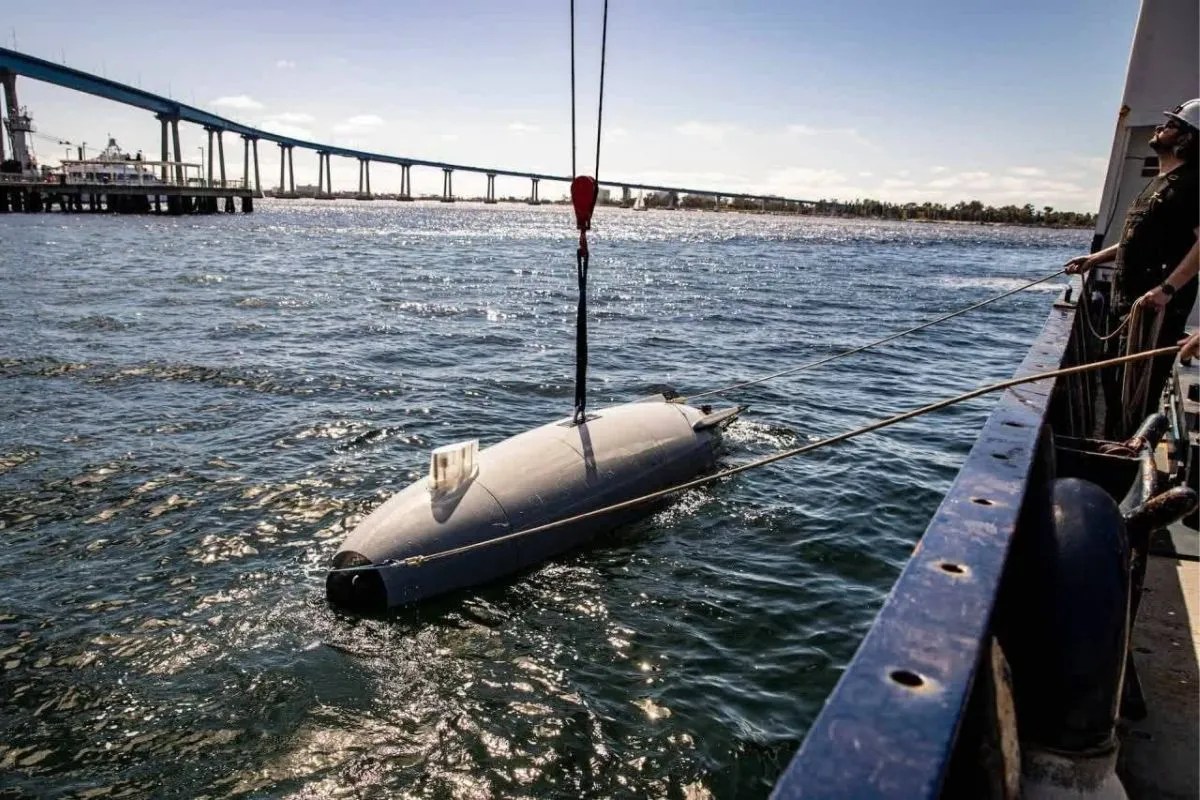
Beneath the choppy surface of the Persian Gulf, a game of high-stakes cybernetic hide-and-seek has escalated into something far more tangible. The object of desire is the Dive-LD, an uncrewed underwater vehicle valued at roughly two and a half million dollars. It is sleek. It is autonomous. It is packed with proprietary acoustic sensors, mapping software, and navigation algorithms meant to keep American naval operations invisible.
And now, it belongs to Tehran.
The Anatomy of a Ghost
Let us talk about what this machine actually is, stripped of the breathless hyperventilating on cable news. Imagine a metal torpedo, long and silent, gliding through pitch-black water using changes in buoyancy rather than noisy propellers. It drinks in the ocean data. It maps thermal layers, salinity gradients, and the acoustic signatures of passing submarines.
It is a scout.
In naval warfare, the side that controls the acoustic environment wins. The ocean is not a flat sheet of water; it is a chaotic soup of warm currents, cold trenches, and shifting thermal walls that bend sound waves like funhouse mirrors. If you know how sound travels through a specific stretch of the Persian Gulf, you know where to hide an aircraft carrier, and just as importantly, you know where to hunt one.
When a unit like the Dive-LD falls into the hands of a geopolitical rival, the loss is not merely financial. Two and a half million dollars is pocket change for a superpower. The real currency here is intellectual property, source code, and hardware architecture.
Imagine handing a locked safe to a master locksmith. They might not crack it on the first try. They might spend weeks sweating over circuit boards, reverse-engineering microchips, and running diagnostics. But give them enough time, and the safe opens. Every proprietary algorithm, every sensor calibration, and every frequency range the United States military uses to keep its underwater drones safe from electronic jamming is suddenly laid bare.
The Escalating Shadow War
Tension does not arrive with a thunderclap. It accumulates like barometric pressure before a summer storm. You feel it in the stiffness of the air, the guarded tone of diplomatic cables, and the quiet repositioning of destroyers just past the horizon.
For years, the waters around the Strait of Hormuz have been a laboratory for unmanned warfare. Both sides have tested the boundaries of international law using remote-controlled hulls and aerial eyes in the sky. Remember the captured aerial drones of past years? This is the aquatic sequel, and it is far more dangerous. Air is transparent; water is opaque. What happens beneath the waves stays hidden until someone turns on a spotlight.
When the news broke that naval forces linked to the Islamic Revolutionary Guard Corps had seized the underwater vehicle, the initial reaction in Western defense circles was a familiar, grim tightening of the jaw. It was not surprise. It was inevitability.
Consider what happens next in a scenario like this. Engineers at domestic naval research facilities are likely already pulling apart twin models, searching for backdoor vulnerabilities. They are asking a terrifying question: If they can read the sensor logs of this unit, what else do they know about our acoustic mapping network?
The leak is not just a data breach. It is a map of blind spots.
Living on the Edge of the Line
I have stood on the deck of a coastal patrol vessel when the radio chatter turns clipped and professional. You look out at the water, miles of empty, glittering blue, and you forget that underneath that surface lies a hyper-technological battlefield. Every square mile is watched, listened to, and calculated.
When hardware crosses enemy lines, the abstract world of geopolitics crashes brutally into the physical reality of metal and silicon. It shatters the illusion of technological supremacy. For decades, the narrative has been that advanced Western automation is untouchable, managed by algorithms too complex for adversaries to decode.
The Dive-LD incident proves otherwise.
Vulnerability is a humbling thing. It forces strategists to redraw their maps, rewrite their encryption protocols, and assume that every secret buried at sea has already been whispered to the enemy. As diplomatic channels strain under the weight of mutual suspicion, the silent war beneath the waves continues, uninterrupted by treaties or handshakes.
Out there, in the dark water, another drone is gliding right now. It carries no pilot, feels no fear, and records everything. And somewhere in the depths, someone is waiting to catch it.