The siren does not sound like a movie. It sounds like a wet, metallic shriek that vibrates inside your molars before your brain even registers what is happening.
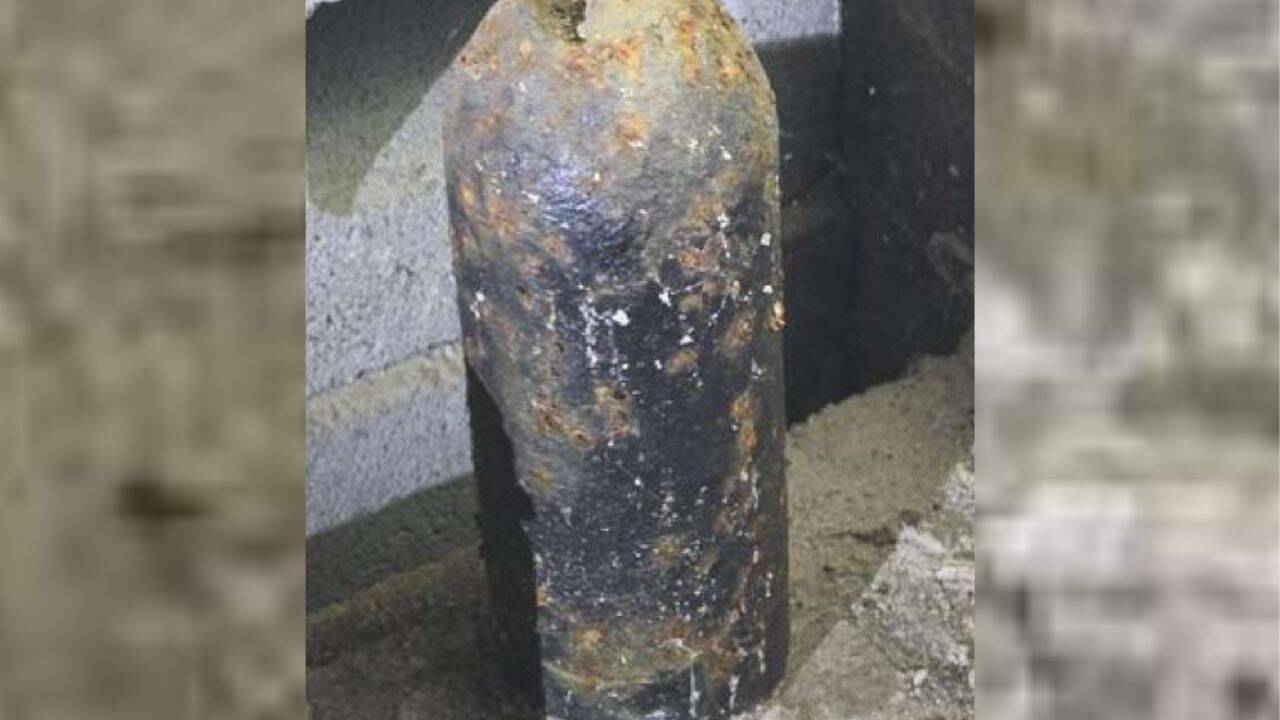
If you live in Seoul, or Tokyo, or along the jagged coastline of the Sea of Japan, you know the specific, cold paralysis that follows that sound. Your thumb hovers over a glowing glass screen. Your coffee goes untouched on the kitchen counter. Somewhere in the dark, a cylindrical tube of steel and solid fuel has just torn through the atmosphere, arcing high above the clouds before plunging into the grey water.
Hours earlier, a different kind of breach had already happened, entirely in silence.
To understand why North Korea launched ballistic missiles shortly after flatly rejecting Washington’s accusations regarding the massive Binance cryptocurrency heist, you have to stop looking at maps and start looking at ledgers. You have to stop thinking about generals in heavy wool coats pointing at radar screens, and start thinking about young men in dimly lit rooms in Shenyang, or Dalian, or Pyongyang, typing lines of code that turn digital numbers into rocket fuel.
We tend to treat cybersecurity and nuclear proliferation as two separate worlds. One belongs to the pale kids in hoodies drinking energy drinks; the other belongs to diplomats in grey suits arguing in Geneva.
That separation is a lie. And the smoke rising off the East Sea is the proof.
The Anatomy of a Modern Heist
Let us build a hypothetical scenario to make the invisible visible.
Meet Jin-woo. He is twenty-six years old, wears wire-rimmed glasses, and was pulled out of a provincial math competition at age fourteen by state recruiters. He has never seen a uranium centrifuge. He has never touched a launchpad. For the last eight months, Jin-woo’s entire life has revolved around a single, polite conversation on LinkedIn.
He has been pretending to be a recruiter for a European venture capital firm, chatting daily with a mid-level blockchain engineer who holds administrative keys to a major digital exchange. Jin-woo does not use brute force. He uses patience. He sends a PDF containing a fake job offer, laced with a sliver of custom malware.
The engineer clicks it.
Silence.
Six months later, hundreds of millions of dollars in digital assets vanish in the span of four minutes.
When the United States government and blockchain forensics firms trace the stolen funds from major platforms like Binance, they do not find a lone wolf in a basement. They find the Lazarus Group—a sprawling, state-sponsored cyber syndicate operating under North Korea’s Reconnaissance General Bureau. According to United Nations panels and independent crypto-security researchers, these digital thieves have siphoned billions of dollars from global exchanges over the last several years.
When Washington publicly pointed the finger at Pyongyang over the Binance-linked thefts, the reaction from the North Korean Foreign Ministry was predictable on the surface: a blistering, categorical denial. They called the accusations a "groundless smear campaign" fabricated by hostile forces.
Then, just hours later, the launchpads lit up.
Why Missiles Follow Keystrokes
You might wonder why a country accused of stealing digital coins responds with high-explosive hardware. To an outsider, it looks like a non-sequitur, a sudden fit of temper from an isolated regime.
Look closer at the mechanics of survival.
North Korea is one of the most heavily sanctioned nations on Earth. Its traditional arteries of foreign currency—coal exports, overseas laborers, seafood, textiles—have been systematically choked off by decades of international resolutions. A regime cannot buy carbon fiber, specialized guidance electronics, or liquid propellants with its own domestic currency, the won. Nobody outside the country will touch it.
To build an intercontinental ballistic missile, you need hard currency. You need dollars, yuan, or euros moving through shell companies in jurisdictions that look the other way.
Cryptocurrency solved an existential math problem for Pyongyang.
Think of the global banking system as a heavily guarded highway with tollbooths, cameras, and license plate readers at every exit. If North Korea tries to drive a truckload of cash down that highway, the Treasury Department freezes the road. Cryptocurrency, by contrast, is like a vast underground network of unmapped tunnels. Once digital tokens are stolen, they can be shoved through automated "mixers"—software protocols that chop funds into thousands of microscopic fragments, scramble them with other users' money, and spit them out clean on the other side.
From there, over-the-counter brokers convert those digital ghosts into physical cash. That cash buys components. Those components become missiles.
So when the United States publicly exposes a major crypto-laundering pipeline and sanctions the digital wallets associated with a massive exchange breach, Washington isn't just embarrassing Pyongyang. It is cutting the fuel line.
Firing missiles hours after denying the hack is not an irrational tantrum. It is a calculated, visceral signal. It says: Your sanctions have not stopped us. Your exposure has not slowed us down. Look at the sky.
The Invisible Victims
When news breaks about a "crypto hack" and a "missile test," most people skim the headline and move on. Neither event feels immediately personal if you do not hold tokens on an exchange or live within range of a short-range ballistic trajectory.
That distance is an illusion.
Consider Elena, another hypothetical character, though her story mirrors thousands of real ones. Elena is a thirty-four-year-old physical therapist in Ohio. She isn't a day trader. She put a modest portion of her savings into a major cryptocurrency platform because she worried about inflation and wanted a foothold in what financial magazines promised was the future of money.
When a major platform gets hit, or when the ecosystem trembles from billion-dollar exploits, the shockwaves hit people like Elena first. Exchanges freeze withdrawals. Liquidity evaporates. Trust fractures. Even when giant platforms like Binance absorb losses through emergency insurance funds or recover portions of stolen assets, the structural tax is paid by ordinary users through higher fees, tighter restrictions, and the gnawing anxiety that their life savings exist only as vulnerable entries on a server someone in Pyongyang is actively trying to crack.
Meanwhile, four thousand miles away in a coastal town in Japan’s Aomori Prefecture, an elderly fisherman named Kenji wakes up to the J-Alert system blaring on his television. He has ten minutes to decide whether to herd his aging wife into a concrete basement or stand on his porch watching the grey clouds for contrails.
Elena and Kenji will never meet. They speak different languages, live in different economies, and worry about entirely different nightmares.
Yet they are linked by the exact same ledger. Elena’s compromised digital security is the direct financial subsidy for Kenji’s morning terror.
The Myth of the Isolated Hermit
We love the caricature of North Korea as a backward, starving kingdom stuck in 1953, relying on vacuum tubes and rusty tractors. It is a comforting myth because it makes the threat feel small, predictable, and contained.
It is also dangerously wrong.
While millions of North Koreans still struggle with food insecurity and rolling blackouts, the state has poured its brightest minds and scarcer resources into an asymmetric elite. By the time a Western cybersecurity analyst is graduating from college with student debt, a North Korean cyber-operative has already logged ten thousand hours of state-mandated intrusion training.
They do not need a thriving domestic economy to dominate digital warfare. You only need a reliable fiber-optic connection—often routed quietly through neighboring networks—and absolute state impunity. If a hacker in Chicago steals fifty million dollars, they have to spend the rest of their life hiding from the FBI, unable to buy a house or board an airplane. If a hacker in Pyongyang steals fifty million dollars, they get a nicer apartment, extra rations for their parents, and a commendation from the state.
I remember speaking years ago with a former financial crime investigator who spent his career tracking illicit state funds through Eastern Europe and East Asia. He told me something that has haunted me every time a new missile launch flashes across the chyrons on cable news.
"We keep looking for warehouses full of cash," he said, rubbing his temples over a lukewarm cup of diner coffee. "We're still thinking like cops in the 1980s. Today, the bank vault fits on a thumb drive, and the getaway car travels at the speed of light. By the time we draft a press release condemning the theft, the money has already been melted down and poured into a rocket casing."
He was right. And the timeline between the accusation and the launch proves just how tight that loop has become.
The Flaw in Digital Trust
There is an uncomfortable truth hidden inside this geopolitical standoff, and it is one the technology industry hates admitting.
Cryptocurrency was built on an ideology of radical decentralization—the romantic belief that math could replace trust, that code could liberate money from governments, borders, and regulators. Every transaction is recorded on a public blockchain, visible to anyone with an internet connection.
In theory, that transparency should make theft impossible to hide.
In practice, transparency without enforcement is just a spectator sport. Security researchers can watch stolen funds hop from wallet to wallet in real time. They can see the exact addresses linked to North Korean operatives. They can draw neat, colorful graphs showing the money flowing through decentralized protocols and cross-chain bridges.
Watching a thief run down the street does not stop them if nobody is standing at the corner to tackle them.
Because digital assets move across borders without requiring permission from a central bank, rogue states have turned the very architecture of Web3 into an ATM. Major exchanges like Binance have spent hundreds of millions of dollars building compliance teams, partnering with law enforcement, and freezing illicit accounts whenever they can catch them. Still, the attackers only need to find one weak link—one careless developer, one unpatched smart contract, one compromised third-party bridge—to walk away with a fortune.
And when Washington steps in to name, shame, and sanction those digital pathways, Pyongyang treats the exposure as an act of war.
How the Cycle Feeds Itself
Look at the rhythm of the escalation. It follows a grim, predictable choreography:
- The Silent Drain: State-backed operatives infiltrate a high-value crypto target, using social engineering and zero-day exploits to siphon off tens or hundreds of millions of dollars.
- The Forensic Trail: American intelligence agencies and private blockchain investigators trace the laundering routes, eventually attributing the heist to North Korea and issuing fresh sanctions or public warnings.
- The Fierce Denial: Pyongyang’s state media unleashes a torrent of outrage, accusing Washington of fabricating cybercrimes to justify hostile policies and economic strangulation.
- The Kinetic Punctuation: Within hours or days, missiles roar off mobile launchers, reminding the world that North Korea’s leverage does not reside in diplomatic rooms, but in physics and fear.
Why do they deny the hack so vehemently if they are willing to openly brag about nuclear weapons?
Because nuclear weapons are framed domestically as a shield of glorious self-defense. Common bank robbery—even on a digital, billion-dollar scale—is harder to dress up in revolutionary poetry. More importantly, admitting to the thefts gives foreign governments the exact legal and moral ammunition they need to pressure crypto platforms, tighten global AML (anti-money laundering) rules, and squeeze the very grey-market brokers Pyongyang relies on to cash out.
Denial buys time. Missiles buy distraction.
What You Can Actually Control
It is easy to feel completely helpless watching two nuclear-armed adversaries play a high-stakes game across both cyberspace and the stratosphere. You cannot personally intercept a ballistic missile over the Sea of Japan, and you cannot single-handedly dismantle a state-sponsored hacking syndicate in Pyongyang.
Yet pretending this is purely a government problem misses the point. The battlefield runs straight through the devices sitting in our pockets and the financial platforms we trust with our money.
If you hold digital assets, or even if you simply live inside the modern financial grid, the lessons from this collision are brutal and immediate:
- Treat convenience as a vulnerability. Keeping large sums of cryptocurrency sitting on centralized exchanges—no matter how massive or reputable—means your wealth rests behind a door that nation-state armies are trying to kick down twenty-four hours a day. Cold storage, hardware wallets, and offline keys exist for a reason.
- Respect the human target. North Korean hackers rarely break cryptography; they break people. Phishing links, fake job offers, malicious calendar invites, and compromised browser extensions are their primary weapons. Skepticism is no longer paranoia; it is basic hygiene.
- Demand real accountability from platforms. The era of moving fast and breaking things in digital finance is over. When billion-dollar bridges and exchanges cut corners on security auditing to beat competitors to market, the collateral damage isn't just a dip in token prices—it is literally underwriting global instability.
The Glowing Screen at Dawn
Go back to that coastal town in northern Japan, just after the sirens fade.
The sun is coming up over the water, turning the grey waves a pale, metallic silver. People slowly step back out onto the narrow streets, checking their phones to see where the splashdown occurred, waiting for the official press conference from Tokyo or Washington to confirm that no ships were hit, no lives were lost this time.
Thousands of miles away, in a fluorescent-lit office building, a cybersecurity analyst stares at a screen filled with hexadecimal strings—long, cold chains of letters and numbers showing stolen coins splitting into smaller and smaller fractions, disappearing into the digital fog.
Two worlds, separated by oceans and ideologies, joined by a single current of invisible money.
The smoke over the water eventually dissipates in the morning wind, leaving the sky clear and empty once again—while deep inside the wires beneath the ocean floor, the quiet, relentless transfer of phantom wealth keeps right on flowing.