Silence.
That is what precedes a modern catastrophe—not the cinematic wail of air-raid sirens, nor the dramatic flashing of red warning lights across a dimly lit command center, but the quiet, unremarkable hum of a server rack cooling down at three in the morning while an automated script quietly rewrites the rules of a power grid three thousand miles away.
I still remember the first time I stood inside a Tier-4 data center in Northern Virginia, feeling the cold, dry air pull the moisture from my eyes while thousands of blades processed trillions of floating-point operations per second. You cannot see the electricity moving through the copper traces. You cannot smell the heat rising off a three-nanometer die buried beneath layers of liquid cooling. Everything looks sterile, orderly, and completely under human control.
We were wrong.
For the past several years, the dominant narrative surrounding artificial intelligence and semiconductor manufacturing has been framed as a zero-sum heavyweight bout between Washington and Beijing. Export controls, lithography bans, domestic subsidies, and supply chain decoupling have become the daily vocabulary of boardrooms from Silicon Valley to Shenzhen. Yet beneath the loud, patriotic posturing of trade wars, a much quieter, far more unsettling realization has begun to dawn on the very engineers who build the physical brains of modern AI. When the hardware itself becomes the battleground, neither side holds a shield strong enough to survive an unrestrained cyber conflict.
The Architecture of Vulnerability
To understand why a prominent Chinese semiconductor researcher recently stood before an international audience and urged American competitors to co-author shared ethical and security standards for AI chips, you first have to abandon the Hollywood myth of hacking.
A computer chip is not a monolithic block of magic. Think of a modern AI accelerator—the kind packed into clusters of tens of thousands to train frontier models—as a sprawling, hyper-dense metropolis built onto a fingernail-sized wafer of silicon. Billions of transistors act as microscopic gates, opening and closing billions of times per second. Between those gates run miles of microscopic wiring, memory caches, and specialized interconnects designed to move staggering volumes of data without bottlenecks.
Now, picture that metropolis being built by hundreds of different contractors who barely speak to one another. One team designs the intellectual property blocks for memory management in Austin. Another writes the firmware in Hsinchu. A third handles packaging and testing in Penang, while the final integration happens in Shenzhen or Oregon.
This globalized, hyper-specialized supply chain gave us the smartphone in your pocket and the generative models answering your emails. It also created a labyrinth where malicious logic—a hardware Trojan, a subtle backdoor in a firmware update, or an exploitable flaw in how an AI accelerator partitions memory—can hide in plain sight.
Unlike software bugs, which can be patched over the air on a Tuesday afternoon, a flaw baked into silicon is permanent. It sits at the lowest, most privileged layer of the computing stack, entirely invisible to the operating system, the firewall, and the human operator watching the dashboard.
A Hypothetical Night in November
Consider a hypothetical scenario—a thought experiment grounded in the exact technical vulnerabilities security researchers warn about today.
Let us introduce Elena, a senior grid operations engineer in Ohio, and Wei, a semiconductor verification specialist working at a fabless design house in Shanghai. They have never met. They speak different languages, answer to different governments, and spend their weekends worrying about entirely different things—Elena about her daughter’s college tuition, Wei about his aging parents’ healthcare.
In our scenario, Wei’s firm designs a specialized power-management microcontroller that eventually makes its way, through three layers of third-party distributors, into industrial transformers used across North America. Meanwhile, an American AI firm deploys an autonomous cyber-defense agent trained to hunt down network anomalies in real time, operating on advanced chips whose firmware was rushed to market to beat a quarterly earnings deadline.
Neither Elena nor Wei harbors any ill intent. Yet because Washington and Beijing have spent years treating technical dialogue as a national security liability, no shared baseline exists for how autonomous AI agents should behave when they encounter ambiguous hardware signals, nor is there a joint protocol for disclosing low-level silicon vulnerabilities before they are weaponized.
One rainy Tuesday night, an automated maintenance routine on a regional substation triggers an unexpected voltage fluctuation. The American autonomous defense agent, operating at machine speed and trained on incomplete threat intelligence, misinterprets the fluctuation as a coordinated hardware-level intrusion originating from foreign firmware. Within four hundred milliseconds—faster than Elena can lift her coffee mug—the AI executes a pre-authorized containment protocol, severing high-voltage interconnects across three states to protect the core network.
Across the Pacific, automated monitoring systems detect the sudden drop in North American grid telemetry, interpret it as preparation for an offensive strike, and spin up defensive countermeasures that inadvertently brick thousands of industrial controllers across coastal manufacturing hubs.
No human gave the order. No treaty was violated, because no treaty existed. Two machines, built on opaque silicon and governed by incompatible ethical guardrails, simply followed their optimization functions straight off a cliff.
Why the Cold War Playbook Fails Here
Whenever I share versions of this scenario with policymakers, someone inevitably brings up the Cold War. They point to nuclear deterrence, mutually assured destruction, and the red telephone connecting the White House and the Kremlin. If Washington and Moscow could manage thermonuclear weapons without blowing up the planet, surely Washington and Beijing can manage microchips.
That analogy is seductive, comforting, and dangerously flawed.
Nuclear weapons were extraordinarily difficult to build, impossible to hide at scale, and controlled by rigid, centralized chains of command. A satellite could count missile silos in Siberia or North Dakota with mathematical precision.
AI cyber capabilities built atop advanced semiconductors operate by the exact opposite physics. The same GPU cluster that trains a model to fold proteins and cure rare diseases can, with a different dataset and an altered objective function, discover zero-day vulnerabilities in critical infrastructure faster than any human team on Earth. Dual-use is not an edge case in computing; it is the foundational nature of the Turing machine.
Furthermore, you cannot verify compliance from orbit. As AI models become smaller, more efficient, and capable of running directly on edge hardware—inside autonomous drones, hospital networks, and financial clearinghouses—the line between civilian infrastructure and military weapon disappears entirely.
This is the exact pressure point that prompted the recent warning from Chinese chip circles. When leading researchers in Beijing look at the trajectory of AI-driven cyber offense, they do not see a weapon that China can monopolize. They see a storm that will flood every basement on the block, regardless of whose flag flies on the porch.
The Invisible Stakes of the Chip War
Look closely at what happens when geopolitical rivalry severs technical collaboration.
Over the past few years, export restrictions aimed at slowing China’s access to extreme ultraviolet lithography and high-bandwidth memory have forced Chinese engineers to innovate around constraints—stacking older chips, optimizing software kernels, and building domestic alternatives from scratch. At the same time, Western firms have scrambled to audit every line of code and every resistor on their circuit boards to ensure compliance with shifting regulatory blacklists.
In theory, this separation creates security through isolation. In practice, it breeds blindness.
When two ecosystems stop sharing research papers, stop attending the same verification conferences, and stop contributing to the same open-source security benchmarks, blind spots multiply on both sides. An exploit discovered by a researcher in Shenzhen stays locked inside a domestic database instead of alerting engineers in Santa Clara. A safety alignment technique developed in California gets dismissed in Beijing as an attempt to impose Western ideological constraints on foundation models.
Worse still, fierce commercial and strategic competition creates a relentless race to the bottom on safety. If a chipmaker or an AI lab believes its rival is six months ahead, the temptation to skip exhaustive hardware verification, cut corners on red-teaming, or deploy autonomous agents with minimal human oversight becomes almost irresistible.
I have sat in engineering post-mortems where brilliant, conscientious people admitted they knew a subsystem had an edge-case vulnerability, yet shipped it anyway because delaying launch meant ceding market share to a competitor. Multiply that human psychology by the existential stakes of national security, and you begin to see why engineers on both sides of the Pacific are quietly losing sleep.
What Shared Standards Actually Mean
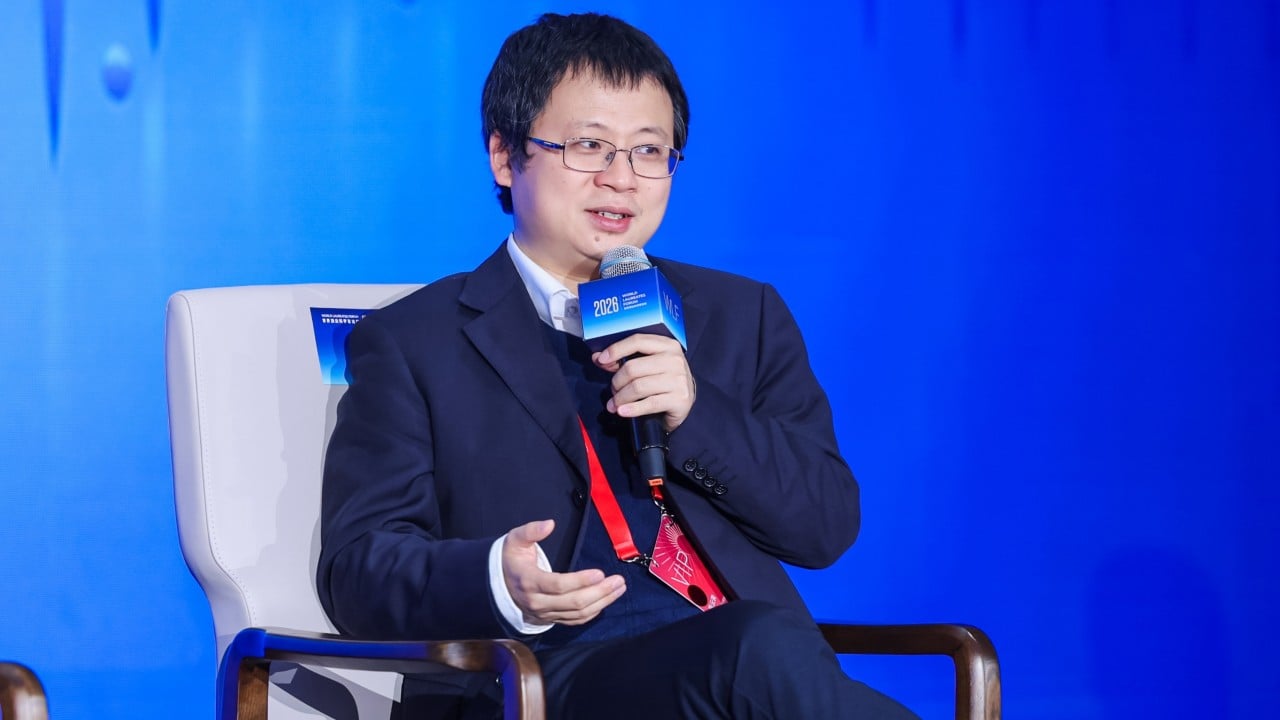
When a Chinese chip expert calls for shared ethics standards with American rivals, skeptics in Washington immediately roll their eyes. They hear a tactical plea designed to slow down American innovation or soften export controls.
That cynicism is understandable, given the history of broken promises around intellectual property and state-sponsored cyber espionage. Trust cannot be conjured out of thin air, nor should national security planners abandon healthy skepticism.
Yet demanding shared technical and ethical standards does not require naive trust. In fact, standards exist precisely because rivals do not trust one another.
Consider international aviation. During the height of geopolitical tensions, Soviet and American airliners still flew through overlapping airspace using standardized radio frequencies, standardized transponder codes, and standardized collision-avoidance protocols. Neither side trusted the other’s intentions, yet both recognized that mid-air collisions served nobody’s interests.
In the context of AI and semiconductors, shared standards would look surprisingly concrete, technical, and verifiable:
- Hardware Roots of Trust and Provenance: Agreeing on cryptographic methods to verify that a chip’s physical layout and firmware match its design specifications without revealing proprietary trade secrets. Zero-knowledge proofs already allow engineers to verify mathematical truths without exposing underlying data; applying similar principles to semiconductor supply chains allows both sides to prove a chip has not been tampered with.
- Red Lines for Autonomous Cyber Operations: Establishing explicit, verifiable constraints preventing AI models from being deployed autonomously against civilian critical infrastructure—power grids, water treatment plants, hospitals, and submarine communications cables.
- Cross-Border Vulnerability Disclosure: Creating neutral, technical clearinghouses—modeled after biological safety consortia or international nuclear inspection frameworks—where critical zero-day flaws affecting foundational hardware architectures can be responsibly disclosed and mitigated before criminal syndicates or rogue actors exploit them.
- Compute Governance and Safety Evaluations: Developing shared benchmarks for testing frontier models prior to deployment, ensuring that neither American nor Chinese labs release self-replicating cyber agents capable of escaping human containment.
None of these measures require either nation to surrender its technological edge. American firms can still compete fiercely on architecture and software; Chinese firms can still pursue domestic self-reliance. What changes is the floor beneath the competition—a mutual agreement not to burn down the building while arguing over who owns the penthouse.
The Human Element in the Machine
We tend to talk about artificial intelligence and geopolitics in abstractions—compute clusters, gross domestic product, fab capacity, and strategic deterrence. Abstractions are safe. They allow us to debate catastrophic risks as if we were moving wooden pieces across a Risk board after dinner.
It takes effort to remember that behind every wafer fab in Taiwan, every design studio in Austin, and every research institute in Beijing are human beings who share the exact same fragility.
When an AI-accelerated cyberattack shuts down a regional hospital network—something that has already happened through conventional ransomware, costing real human lives when ambulances had to be diverted—the malware does not check the political affiliation of the patient waiting for emergency surgery. When a corrupted firmware update bricks agricultural irrigation controllers during a summer drought, the crops wither identically in Iowa and Henan.
The most dangerous illusion of our technological era is the belief that we can build intelligent machines weaponized for geopolitical advantage while keeping those machines neatly fenced off from the rest of human civilization. Code leaks. Hardware circulates. Models get distilled, fine-tuned, and repurposed in basements from Eastern Europe to Southeast Asia within weeks of their release.
A Narrowing Window
History rarely announces its turning points with trumpet blasts. Usually, a window opens quietly—a paper published in an academic journal, a remark made at a technical symposium, an unexpected olive branch extended across a widening diplomatic chasm—and closes just as quietly if nobody walks through it.
Right now, the engineers who actually understand the physics of silicon and the mathematics of deep learning are telling us something our political leaders seem reluctant to hear. They are telling us that the complexity of modern AI hardware has outpaced our governance frameworks, that invisible vulnerabilities are accumulating faster than any single nation can audit them, and that without a shared language of restraint, we are wiring the global economy to a hair-trigger.
Listening to that warning does not mean ignoring genuine strategic rivalries or pretending that Beijing and Washington share the same political values. It simply means recognizing that survival in an age of autonomous machines requires a baseline of technical sanity that transcends borders.
Think back to that quiet server room at three in the morning—the steady hum of cooling fans, the blinking green status lights, the comforting illusion that everything inside the rack is under control. Somewhere inside those billions of microscopic gates, the next generation of intelligence is already waking up, learning at a speed no human mind can match, waiting to see what rules its creators decided to write before they lost the ability to hold the pen.