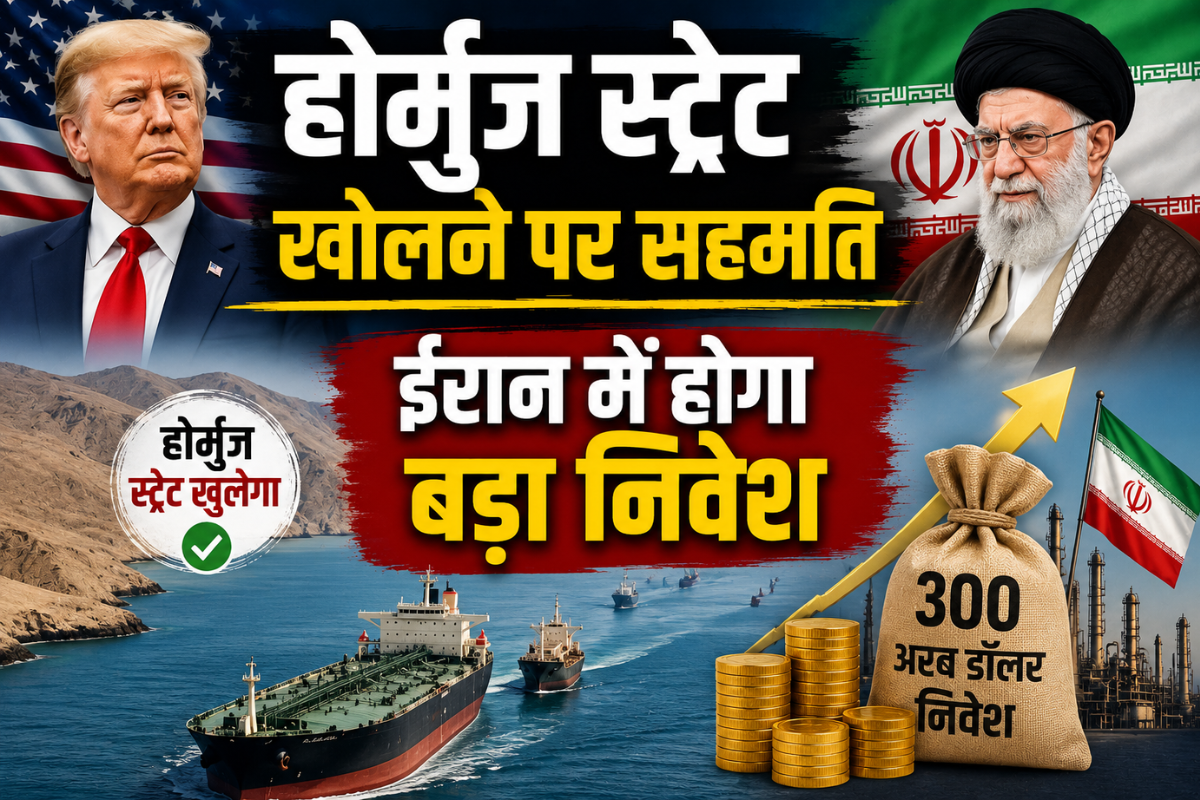
The global energy market hinges on a single, fragile variable: the unrestricted flow of maritime traffic through the Strait of Hormuz. Any diplomatic framework attempting to reconcile the United States and Iran must solve a two-variable equation that balances maritime security with massive capital injections. The rumored bilateral understanding—predicated on keeping the Strait open in exchange for a $300 billion investment pipeline into Iran—represents a high-stakes trade-off between western energy security and eastern capital realignment.
To evaluate the viability of this proposed arrangement, analysts must look past political rhetoric and break down the structural mechanics of the deal. This requires evaluating the operational realities of the Strait of Hormuz, the friction points of injecting $300 billion into a sanctioned economy, and the domestic political constraints facing executive leadership in both Washington and Tehran. If you enjoyed this article, you should look at: this related article.
The Chokepoint Mechanics: The Cost Function of Hormuz
The Strait of Hormuz is not merely a geographic feature; it is the central valve of the global energy supply chain. Approximately one-fifth of the world's total petroleum consumption passes through this 21-mile-wide passage daily. This reality establishes a direct causal link between Persian Gulf stability and global inflationary pressures.
The economic cost of disruption in the Strait functions as a multiplier across three distinct vectors: For another angle on this story, see the recent coverage from Reuters.
- The Maritime Insurance Premium: A localized kinetic threat instantly re-prices risk for commercial shipping. War-risk premiums can escalate by orders of magnitude within 48 hours, altering the freight economics of crude transport.
- The Global Supply Deficit: A complete blockade of the Strait removes roughly 20 million barrels of oil per day from the global market. Because global oil demand is highly inelastic in the short term, even a minor, temporary reduction in supply triggers exponential price spikes.
- The Strategic Refractory Period: Clearing sea lanes of maritime mines or resolving low-intensity asymmetric naval conflict cannot occur overnight. The time lag between a disruption and the restoration of safe transit guarantees prolonged market volatility.
Iran’s leverage has historically relied on its proximity to this chokepoint and its capability to deploy asymmetric naval assets, including fast attack craft, anti-ship missiles, and marine mines. The proposed diplomatic framework aims to trade this kinetic leverage for economic survival. By formalizing a guarantee of open transit, the US seeks to eliminate a systemic tail risk to the global economy, transferring the value of that risk reduction directly to Iran via asset unfreezing and investment authorization.
Deconstructing the $300 Billion Capital Injection
The headline figure of $300 billion in investment demands rigorous financial decomposition. In an economy that has suffered from years of secondary sanctions, hyperinflation, and capital flight, injecting capital of this magnitude introduces severe structural bottlenecks.
+--------------------------------------------------------------+
|               Total Capital Allocation Blueprint             |
+--------------------------------------------------------------+
|                                                              |
|   [ Liquid Asset Unfreezing ]  ---> Immediate Liquidity      |
|   - Frozen Central Bank Reserves     (Est. $50B - $70B)       |
|                                                              |
|   [ Infrastructure Credit Lines ] -> Medium-Term Capex       |
|   - Sovereign Loans & Line Allocations (Est. $100B - $120B)  |
|                                                              |
|   [ Foreign Direct Investment ]  ---> Long-Term Operations    |
|   - Energy Sector Joint Ventures     (Est. $110B - $150B)    |
|                                                              |
+--------------------------------------------------------------+
The realization of this capital cannot happen through a single lump-sum transfer. Instead, it must follow a three-tiered deployment schedule:
Phase 1: Liquid Asset Unfreezing
The immediate tranche comprises Iranian sovereign revenues currently locked in foreign banks due to secondary sanctions. This capital, estimated between $50 billion and $70 billion, resides primarily in jurisdictions like South Korea, Iraq, Japan, and India. Unfreezing these assets provides immediate liquidity to the Central Bank of Iran, stabilizing the rial and funding essential imports.
Phase 2: Sovereign Credit Lines and Infrastructure Financing
The second tier involves bilateral credit lines, largely driven by non-Western economies. Beijing and Moscow have long-standing strategic interests in securing Iranian logistics nodes. The infrastructure portion of the capital framework targets the development of the International North-South Transport Corridor (INSTC) and the expansion of the Chabahar and Bandar Abbas port facilities. This capital acts as a debt-driven mechanism rather than a direct cash transfer.
Phase 3: Energy Sector Foreign Direct Investment (FDI)
The remaining balance requires deep, long-term capital commitments to overhaul Iran’s decaying oil and gas infrastructure. Due to sustained underinvestment, Iranian oil fields suffer from steep natural decline rates. Reviving production to maximum capacity requires advanced enhanced oil recovery (EOR) technologies. This phase faces the highest friction, as multinational energy conglomerates require ironclad, multi-decade legal guarantees before deploying capital into a historically volatile jurisdiction.
The Sanctions Bottleneck and Banking Architecture
Announcing an investment target is fundamentally different from building the financial infrastructure required to execute it. The primary obstacle to moving $300 billion into Iran is the existing architecture of US secondary sanctions, specifically those targeting the financial sector under the National Defense Authorization Act (NDAA) and Iran's designation as a jurisdiction of primary money laundering concern under Section 311 of the USA PATRIOT Act.
International banks operate under a strict compliance model. Even if the executive branch waives specific sanctions, global financial institutions will refuse to process transactions involving Iranian entities unless several systemic conditions are met.
Clearance through the Society for Worldwide Interbank Financial Telecommunication (SWIFT) must be restored for Iranian commercial banks. Without SWIFT connectivity, moving hundreds of billions of dollars reverts to inefficient, opaque financial mechanisms that cannot scale to meet major investment demands.
Foreign financial institutions remain exposed to significant regulatory risk if a change in Washington's political leadership triggers a snapback of sanctions. This risk profile creates a chilling effect, preventing Tier-1 international banks from participating in Iranian projects.
Iran's regulatory environment presents internal challenges. The Financial Action Task Force (FATF) maintains Iran on its high-risk jurisdiction blacklist due to deficiencies in its anti-money laundering and countering the financing of terrorism (AML/CFT) frameworks. Until Tehran ratifies the Palermo and Terrorist Financing Conventions, compliance departments at major global banks will block institutional capital flows, regardless of any political agreements reached in Washington.
Executive Approval Dynamics: The Trump-Khamenei Friction
The ultimate execution of this economic framework depends on two domestic political focal points: the White House and the Office of the Supreme Leader in Tehran. Both leaders face distinct institutional constraints that shape their bargaining behavior.
       [U.S. EXECUTIVE CONSTRAINTS]               [IRANIAN DECISION VECTOR]
     +------------------------------+           +------------------------------+
     | - Congressional Check        |           | - Hardline Factional Pressure|
     | - Regional Ally Commitments  |           | - Systemic Sanctions Fatigue |
     | - Enforcement Mechanism Need |           | - Ideological Red Lines      |
     +------------------------------+           +------------------------------+
                    \                                   /
                     \                                 /
                      v                               v
                     [THE DIPLOMATIC FRICION POINT: EXECUTION]
The US administration approaches this framework from a position of transaction-oriented realism. The operational objective is to lower global energy costs and prevent a wider regional conflict without offering permanent geopolitical concessions. The executive branch faces severe domestic blowback if any deal appears to enrich Iranian proxies or lacks verification protocols. Any framework negotiated by the White House must contain explicit, verifiable linkages: capital velocity must match verifiable changes in Iranian regional and nuclear behavior.
Furthermore, the administration must navigate Congress, where opposition to sanctions relief remains intense. This reality forces the White House to rely on executive waivers and temporary licenses rather than formal treaty ratification, which inadvertently increases the long-term investment risks for foreign corporations.
In Tehran, Ayatollah Ali Khamenei must balance systemic economic survival against the foundational ideological tenets of the Islamic Republic. Sanctions fatigue has caused deep structural damage, visible in persistent inflation and widespread domestic labor unrest.
However, the Supreme Leader’s decision-making matrix is tightly constrained by hardline factions within the Islamic Revolutionary Guard Corps (IRGC). The IRGC controls vast sectors of the domestic economy and views economic liberalization and Western capital integration as a direct threat to its corporate monopolies and internal security apparatus.
For Khamenei to greenlight the deal, the economic inflows must be structured to bypass Western oversight while directly benefiting state-directed enterprises, all without compromising Iran's strategic defense posture.
Strategic Forecast: The Friction-Adjusted Reality
Given these structural constraints, the realization of a seamless $300 billion economic opening in exchange for maritime stability is highly improbable in its idealized form. The deal will likely yield a fragmented, risk-adjusted outcome driven by three concrete developments:
First, expect a highly restricted asset-release mechanism. Instead of open access to global financial networks, initial capital flows will be limited to strictly monitored escrow accounts held in third countries. These funds will be cleared exclusively for non-sanctioned humanitarian goods or specific, verified infrastructure projects managed by non-Western consortiums.
Second, the bulk of the $300 billion target will materialize as non-dollar bilateral trade commitments from Eurasia, particularly China. This capital will utilize alternative financial messaging systems like the Cross-Border Interbank Payment System (CIPS) to circumvent the US dollar clearing network. This shift will accelerate Iran's economic integration into eastern supply chains while minimizing its exposure to Western regulatory frameworks.
Finally, the maritime guarantee in the Strait of Hormuz will shift from an explicit diplomatic treaty to a tacit, transactional status quo. Iran will calibrate its regional posturing and naval maneuvers to match the pace of capital deployment from the escrow accounts. If capital flows stall due to banking friction or political changes in Washington, localized disruptions in the Strait will resume as Tehran tests the limits of its economic leverage. Investors and energy market analysts must price this ongoing instability into their long-term models, recognizing that no single diplomatic document can instantly dismantle decades of deeply rooted structural conflict.