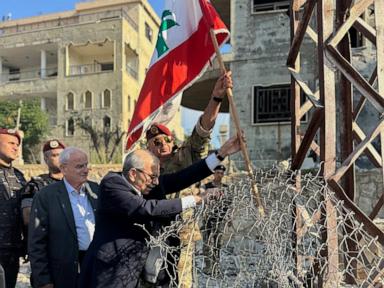
Lebanon’s demand for a complete Israeli military withdrawal represents more than a diplomatic boundary dispute; it exposes a structural breakdown in international security architecture along the Blue Line. When Prime Minister Nawaf Salam reasserted Beirut’s refusal to accept an ongoing foreign military presence in border zones, the declaration highlighted a tri-fold operational friction point: the tactical friction of buffer zones, the institutional fragility of United Nations Security Council Resolution 1701, and the domestic balance of armed authority inside Lebanon. Addressing this impasse requires moving past political rhetoric to evaluate the strategic mechanics governing the Lebanese-Israeli border corridor.
The Security Architecture of Resolution 1701
The diplomatic framework governing southern Lebanon relies on United Nations Security Council Resolution 1701, established to enforce a demilitarized zone between the Blue Line and the Litani River. The operational design of this framework rests on three distinct structural pillars.
- Monopoly on Force: Only the Lebanese Armed Forces (LAF) and the United Nations Interim Force in Lebanon (UNIFIL) are legally authorized to carry weapons or deploy tactical units south of the Litani River.
- Sovereign Territorial Integrity: Israel is required to execute a full military withdrawal behind the recognized international demarcation line, relinquishing forward operational positions and tactical outposts.
- Militia Disarmament: Non-state armed actors, specifically Hezbollah, must disarm their paramilitaries and dismantle military infrastructure within the designated southern sector.
The failure to fully realize these three conditions has created a persistent strategic vacuum. While diplomatic declarations treat Resolution 1701 as a complete equilibrium, operational reality reveals structural gaps. Israel asserts that non-state forces maintain covert logistical pipelines and concealed positions south of the Litani, justifying forward tactical positions as preventative containment. Conversely, Lebanon maintains that any continued foreign military presence violates international law, invalidates state sovereignty, and prevents the central government from establishing exclusive security jurisdiction.
The Operational Mechanics of Buffer Zones and Sovereign Friction
The tactical decision by foreign military forces to retain forward positions or establish designated buffer zones generates three direct operational consequences for regional stability.
First, tactical friction increases along border outposts. Static military outposts positioned within contested territory become focal points for non-state retaliation. Rather than serving as defensive barriers, isolated forward positions present vulnerable targets that invite perimeter surveillance, indirect fire, and small-arms engagements.
Second, the presence of foreign military assets undermines the institutional credibility of the Lebanese Armed Forces. For the central government in Beirut to claim state control across its territory, the national military must demonstrate exclusive operational command over border defense. When foreign troops maintain unilateral security corridors inside Lebanese territory, the central state’s legitimacy is weakened, providing non-state armed factions with a political justification to retain independent military arsenals.
Third, static containment strategies fail to address asymmetric supply networks. Tactical border holdings do not interrupt deep supply lines, standoff missile deployments, or decentralized command structures located north of the Litani River. A physical buffer zone along the immediate border provides temporary perimeter security for northern civilian settlements but fails to neutralize long-range precision assets.
The Tri-Vector Balance of Power
Evaluating the structural dynamics of southern Lebanon requires mapping the operational incentives of the primary actors engaged in the corridor.
       [Israel]  <--- Tactical Deterrence / Buffer Zones --->  [Lebanon / LAF]
          ^                                                          ^
          |                                                          |
  Asymmetric Standoff                                       Sovereign Monopoly
          |                                                          |
          v                                                          v
       [Hezbollah] <--- Strategic Autonomy / Regional Support ---> [UNIFIL / UN]
The State Authority Vector
The Lebanese government seeks to establish an exclusive monopoly on the legitimate use of force within its borders, a principle codified in the 1989 Taif Agreement. To achieve this objective, Beirut requires two baseline conditions: the complete physical exit of foreign military units from all border outposts, and sufficient international financial and material backing to equip the Lebanese Armed Forces. Without a full foreign withdrawal, the central government cannot enforce sovereign control without risking internal political collapse or open confrontation with domestic non-state actors.
The Security Deterrence Vector
Israel’s primary operational metric is the security of its northern border communities. Military planners prioritize forward defense mechanisms, early-warning radar arrays, and immediate reaction corridors over international diplomatic consensus. From this perspective, operational control over strategic high ground along the border is viewed as an essential countermeasure against potential cross-border incursions. Tactical withdrawals are thus made contingent on verifiable, enforceably demilitarized zones rather than political promises.
The Asymmetric Non-State Vector
Non-state armed actors operate within a strategic framework designed to exploit gaps between international treaties and ground realities. By framing their military apparatus as a necessary defensive shield against foreign occupation, these organizations utilize foreign military presence to justify independent command structures. A complete, internationally verified foreign withdrawal removes this core political narrative, shifting domestic pressure back toward state integration and disarmament protocols.
Strategic Execution Strategy for Sovereign Enforcement
Resolving the border impasse requires a structured, multi-phase operational strategy that aligns international diplomacy with verified physical movements on the ground.
Phased Tactical Reciprocity:
Establish a strict, verifiable timetable linking foreign troop retreats to the simultaneous tactical deployment of heavily equipped Lebanese Armed Forces units. Each sector vacated by foreign forces must immediately be occupied by state troops, preventing any power vacuum that non-state militias could exploit.Expanded UNIFIL Operational Mandate:
Upgrade UNIFIL's monitoring infrastructure with advanced modern surveillance capabilities, including integrated ground sensors, automated aerial reconnaissance, and real-time data sharing with state authorities. Peacekeeping units must possess unrestricted access to monitor underground infrastructure and arms transport routes within the designated zone.Demarcation Resolution and Arbitration:
Initiate technical border negotiations to resolve disputed border points along the Blue Line, including contested agricultural zones and elevated outposts. Formalizing universally recognized international borders eliminates territorial ambiguity, converting military containment lines into legally binding international boundaries.Targeted State Capacity Financing:
Direct international security assistance into expanding the personnel, transport mobility, and logistical capabilities of the Lebanese Armed Forces. State forces must possess the operational capacity to secure border perimeter check-points, intercept illicit weapons transfers, and maintain continuous patrol schedules across the entirety of southern Lebanon.
Relying on static military occupations or passive diplomatic statements creates an unstable equilibrium that delays open escalation without preventing it. Sustainable security along the Blue Line requires replacing unilateral tactical buffer zones with a fully funded, exclusive state military presence backed by precise international verification mechanisms.