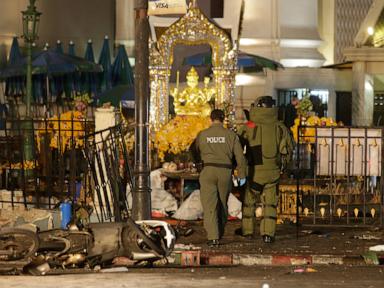
A Bangkok court has sentenced two ethnic Uyghur men, Yusufu Mieraili and Bilal Mohammad, to death for the 2015 Erawan Shrine bombing that killed 20 people and injured over 120. The verdict ends an agonizing, 11-year legal saga marred by allegations of forced confessions, systemic translation failures, and intense diplomatic pressure from Beijing. While Thai authorities present the ruling as a triumph of domestic justice, the conclusion of the country’s deadliest terror trial reveals a deeper, more troubling reality. This was never just a criminal case; it was a high-stakes geopolitical tightrope act where human rights were traded for regional alliances.
The August 2015 blast tore through the heart of Bangkok’s commercial district. The timing and choice of target—a shrine immensely popular with mainland Chinese tourists—sent immediate shockwaves through Southeast Asia. Yet, from the very beginning, the official narrative surrounding the perpetrators and their motives was plagued by contradictions.
The Disrupted Trafficking Narrative Versus Geopolitical Retaliation
Thai military and police officials initially scrambled to control the fallout. They insisted the bombing was merely a revenge plot orchestrated by a transnational people-smuggling syndicate. The military government argued that a recent crackdown on human trafficking networks along the Malaysian border had angered criminal bosses, prompting the deadly attack.
This explanation was convenient, but it deliberately downplayed a massive diplomatic crisis that occurred just one month before the bombing. In July 2015, the Thai junta forcibly repatriated 109 Uyghur asylum seekers to China. The deportation triggered global outrage and violent protests at Thai diplomatic missions in Turkey. Security experts immediately saw the Erawan Shrine attack as an act of asymmetric retaliation by radicalized elements or sympathizers of the persecuted Muslim minority fleeing Xinjiang.
By framing the tragedy as a localized criminal grievance rather than an international political attack, Bangkok attempted to shield itself from two compounding vulnerabilities. First, it protected its vital tourism industry from the stigma of international terrorism. Second, and more importantly, it avoided alienating Beijing, a regime that has spent over a decade demanding absolute compliance from its regional neighbors regarding the repatriation of Uyghur escapees.
A Decade of Judicial Dysfunction
The sheer length of the trial—spanning more than a decade—highlights the deep systemic flaws within the Thai justice apparatus. The case originally opened in a closed military tribunal under the junta before being transferred to a civilian criminal court in 2019.
+-------------------------------------------------------------------------+
|                    TIMELINE OF A DECADE-LONG TRIAL                      |
+-------------------------------------------------------------------------+
| 2015: Erawan Shrine bombed; Mieraili and Mohammad arrested.              |
| 2016: Trial begins in a military court; defendants plead not guilty.     |
| 2019: Case transferred to civilian Bangkok South Criminal Court.        |
| 2020-2022: Disruptions due to pandemic and systemic lack of interpreters.|
| 2024: Co-defendant Wanna Suansan acquitted due to insufficient evidence. |
| 2025: Thailand deports 40 more Uyghurs despite UN warnings.             |
| 2026: Four-judge panel hands down death sentences for premeditated murder|
+-------------------------------------------------------------------------+
The primary engine of delay was a bizarre and protracted struggle to secure competent, neutral interpreters. For years, proceedings ground to a halt because the court could not find individuals who spoke both Thai and the specific Uyghur dialect. In one instance, a court-appointed translator was arrested on drug charges, derailing months of legal progress.
The defense team consistently argued that the initial confessions given by Mieraili and Mohammad were extracted through torture, isolation, and psychological coercion during their initial military detention. Both men quickly retracted those statements once they gained access to civilian legal counsel. When the four-judge panel read the guilty verdict, Mieraili shouted in broken Thai that he had not received a fair trial. The court dismissed the torture allegations entirely, stating there was no physical evidence of abuse, a standard that international legal observers criticize as fundamentally flawed given the secret nature of military custody.
The Weight of Beijing
Beijing’s shadow hung over the Bangkok South Criminal Court throughout the entire process. Immediately following the verdict, the Chinese Foreign Ministry issued a statement welcoming the death sentences, praising Thailand for severely punishing the "utterly inhumane" perpetrators.
This alignment is part of a broader pattern of compliance. Bangkok’s reliance on Chinese investment, infrastructure projects, and trade has systematically eroded its willingness to uphold international asylum norms. As recently as 2025, Thailand ignored direct warnings from United Nations human rights monitors and deported another group of 40 Uyghur asylum seekers back to China, where they faced an immediate risk of arbitrary detention and state persecution.
"I mourn for Thailand," Yusufu Mieraili called out to reporters as he was led out of the courtroom in prison garb. "I ask the Thai people to help me."
His plea is unlikely to find traction. For Thailand, the execution of these two men offers a grim, definitive endpoint to an embarrassment that has lingered for eleven years. The defense has vowed to appeal the ruling to higher courts within the statutory 30-day window, but the trajectory of the case suggests that geopolitical necessity will continue to outweigh judicial scrutiny. By sealing the fate of the two defendants, the Thai state is sending a clear message to its powerful northern neighbor: domestic sovereignty will gladly bend to preserve bilateral harmony.