The sawdust tastes like copper.
It settles on the tongue first, fine and pale, sticking to the sweat of the upper lip before working its way into the throat. By midday, a carpenter cannot tell if the metallic tang comes from the freshly planed mahogany or the sheer, unadulterated terror of the air they are breathing. For another view, check out: this related article.
Woodworking in a city gripped by Ebola is not a craft. It is arithmetic.
Height. Width. Depth. Further coverage on this trend has been published by Medical News Today.
Get the numbers wrong, and the consequences do not stay neatly inside the ledger. They spill out onto the dirt roads, wrapped in mismatched sheets, hauled in the beds of rusted pickup trucks. In normal times, a coffin is an architectural extension of a life well-lived. It is carved with symbols of status, lined with velvet, polished until it catches the dim glow of a parlor lamp. Families gather to argue over wood grain and brass handles, turning grief into a domestic project of remembrance.
Those times vanished weeks ago.
(Note: While the specific workshop described here is a narrative composite built to mirror documented accounts from the West African outbreaks, the structural pressures, material shortages, and protocol shifts reflect verified conditions reported by humanitarian responders.)
Listen to the rhythm of the bench. Whish. Thump. Measure. Cut.
In a makeshift yard behind a clinic whose generator coughs every twenty minutes, a man named Thomas slides a raw plank of untreated pine across his calloused palms. He is thirty-four. He used to build dining tables that seated twelve. Now, he builds rectangular boxes with a strict ceiling of seventy-two inches. No custom orders. No ornamentation. Just straight lines and hasty galvanized nails.
"They want them fast," Thomas says, his voice flat, stripped of the cadence it used to carry. He doesn't look up from his saw. "They don't care about the polish. They just want the lid to close."
That is the geometry of an epidemic. The disease strips away the ceremony of death, leaving behind raw biology and administrative panic.
The Weight of Protocol
When the virus arrived, it did not announce itself with sirens. It whispered through handshakes, through the shared washing of a single elder's body, through the quiet tending of a feverish child. Within days, the mathematics of survival inverted. Traditional burial rites—the touching, the cleansing, the holding close—became death warrants.
Public health officials faced an impossible wall. How do you rewrite centuries of cultural reverence in the middle of a biological firestorm?
The answer was cold, clinical, and absolute: safe and dignified burials. But dignity, in the vocabulary of emergency management, often looks remarkably like haste.
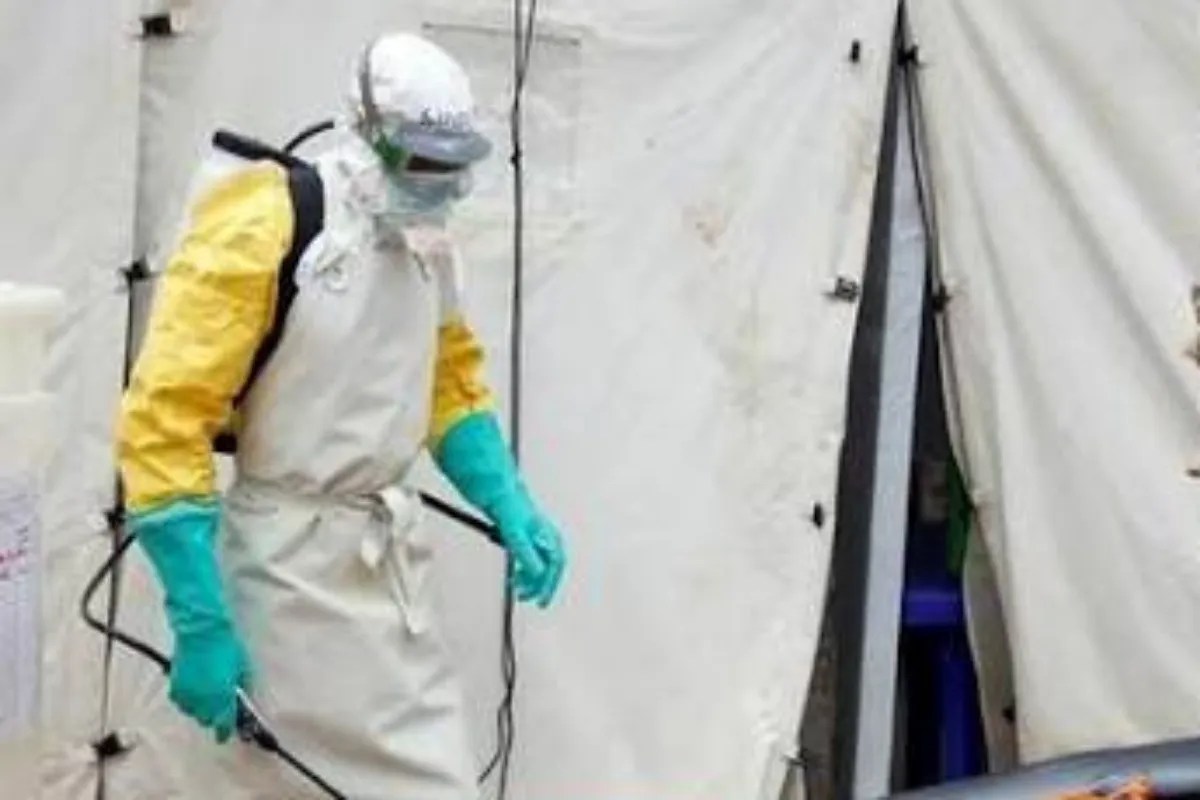
Consider what happens inside the isolation ward when a monitor flatlines. The breathing stops. The monitors quiet. But the danger does not. The virus remains resilient, clinging to skin and fluids, waiting for a careless touch. That is why the carpenters are summoned. They are the invisible logistics engine of containment. Without the boxes, bodies cannot be moved safely to the lime-dusted trenches at the city’s edge. Without the boxes, the chain of infection holds firm.
Thomas knows this. He feels the weight of every nail he drives. He is not just working wood; he is building a physical barrier between a community and its own destruction.
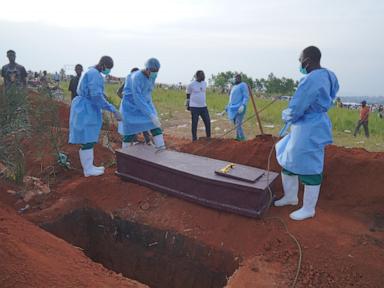
Yet, the speed required by the crisis creates a secondary grief. Families stand outside the perimeter fence, watching through chain-link and dust. They cannot wash the dead. They cannot dress them in their Sunday best. They watch men in yellow hazmat suits lower a plain pine box into a deep scar in the red earth, guided only by the muffled prayers of a distant imam or priest.
There is no viewing. There is no lingering. There is only the shovel hitting the lid. Thud. Thud. Thud.
The Anatomy of Scarcity
Supplies run low by Tuesday.
The hardware stores shuttered weeks ago when the market square became a ghost town of overturned baskets and fluttering quarantine notices. Thomas has to scavenge. He dismantles old shipping pallets behind abandoned warehouses, pulling out rusted nails one by one with the claw of his hammer, straightening them against a flat stone so they can be driven back into service.
It is a desperate choreography of reuse.
Plywood is scarce. Good timber is a luxury reserved for the living, though the living are hardly eating enough to justify the furniture anyway. The city is holding its breath. Curfew sirens wail at six, slicing through the heavy tropical evening, warning anyone still lingering in the alleyways to clear out before the spray teams move through with their chlorine tanks.
Thomas works by the beam of a single battery-powered lantern dangling from a rusted rafter. Moths swarm the amber light, crashing against the bulb, dropping dead into the sawdust.
He thinks of his uncle. The old man went out three days ago, coughing, waving away the ambulance until it was too late. Thomas wasn't allowed to build his box. Protocol dictated that burial teams handle suspected cases from start to finish, sealing the remains in heavy plastic before placing them in whatever generic container was available at the central depot.
That is the invisible scar left by an epidemic. It steals not only the lives of the fallen, but the agency of the survivors. It turns mourning into a spectator sport conducted from behind wire fences.
The Breaking Point
By Friday, the pile of finished boxes is gone. Every single one.
Thomas sits on an upturned paint bucket, his hands trembling slightly as he wipes a layer of fine dust from his eyes. His palms are torn, blistered raw beneath layers of hardened skin. His back aches with a deep, grinding fatigue that sleep cannot touch.
He looks out past the perimeter of his workshop toward the main road. A flatbed truck rumbles past, carrying a dozen more empty frames to the southern clinic.
The work will not stop tomorrow. The curves of the virus are stubborn, slow to bend, requiring thousands of small, exhausting human interventions to finally flatten. Every box built is a defeat for the disease, a tiny container of containment holding back a flood.
The sun dips below the corrugated iron roofs, painting the sky the color of a bruised peach. In the distance, a dog barks, and the low hum of the generator stutters and dies, plunging the yard into darkness. Thomas reaches out in the dark, finds his hammer, and waits for morning.