Language has weight. Sometimes it arrives like a stone dropped into still water, sending ripples across kitchen tables, Senate hearing rooms, and airport arrival gates thousands of miles apart.
Consider a hypothetical evening in a quiet living room outside Atlanta. A family originally from Port-au-Prince sits around a television, watching a political broadcast while the smell of griot and fried plantains lingers in the air. For months, their phones have buzzed with fragmented voice notes from cousins back home—messages describing shuttered hospitals, blocked roads, and the daily calculus of survival in a capital city gripped by gang violence and institutional collapse. When a clip plays on screen in which a prominent political figure dismisses nations like Haiti, Libya, Yemen, and Somalia with a crude, derogatory label, the room does not erupt into debate. It simply goes quiet.
That silence is the invisible stake of modern immigration politics.
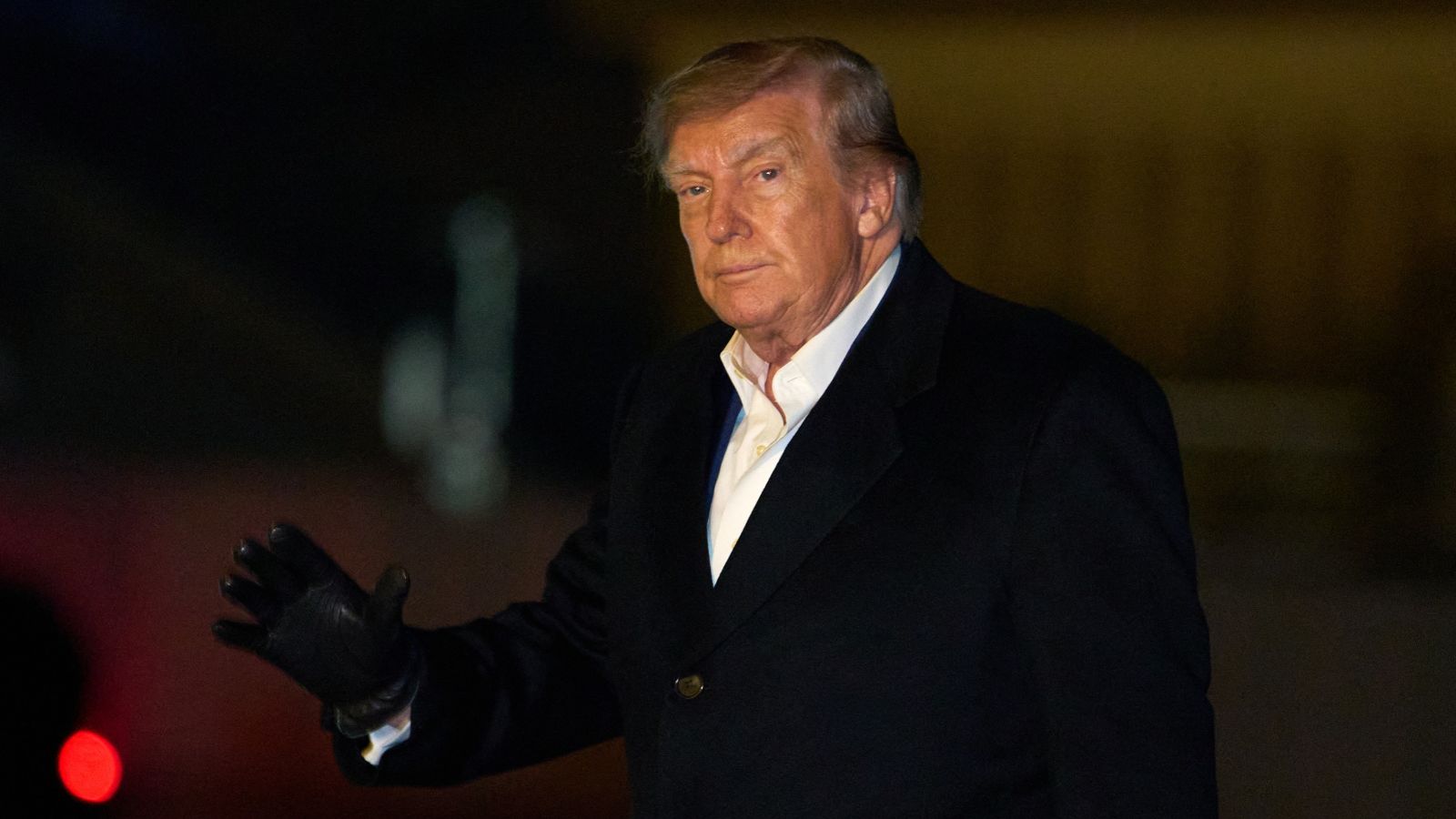
According to news reports detailing the exchange, President Donald Trump targeted Democratic Senator Jon Ossoff of Georgia over legislation aimed at extending humanitarian protections and support for Haiti, invoking immigration from Libya, Yemen, and Somalia while reviving the phrase "shithouse countries." On paper, the clash looks like familiar Washington friction—a clash between an executive advocating strict border enforcement and a senator representing a state with a growing Caribbean and immigrant constituency. Yet beneath the headlines lies a deeper, unresolved question about how a nation defines human worth, legal obligation, and national interest when crisis forces people to move.
The Anatomy of a Political Flashpoint
To understand why a single vulgarity can dominate news cycles and polarize voters, it helps to strip away the noise and look at the mechanics of the dispute.
On one side stands Senator Jon Ossoff, representing Georgia—a state whose demographic and political profile has shifted dramatically over the past two decades. Metro Atlanta is home to tens of thousands of Haitian Americans, alongside vibrant communities with roots in East Africa and the Middle East. Legislative efforts surrounding Haiti, such as Temporary Protected Status extensions or targeted humanitarian aid bills, are designed around a straightforward premise: when a country experiences acute armed conflict, natural disaster, or state failure, returning people to those conditions exposes them to severe danger, while destabilizing the broader region.
On the other side stands Donald Trump, whose political movement has consistently argued that American immigration policy must prioritize national security, economic protectionism, and cultural cohesion above broad humanitarian admissions. In targeting Ossoff and citing immigration from Haiti, Libya, Yemen, and Somalia, Trump framed the issue around vetting, resource strain, and the perceived risks of accepting migrants from nations experiencing severe instability or weak governance.
Critics of Trump's rhetoric argue that reducing entire sovereign nations to an epithet dehumanizes millions of people—including doctors, engineers, teachers, and U.S. citizens who trace their heritage to those regions. Supporters of his approach counter that blunt language cuts through diplomatic euphemism to highlight a real policy dilemma: how many people from collapsing states can the United States absorb without overwhelming municipal budgets, school systems, and security screening apparatus?
Both arguments speak to genuine anxieties. One fears the erosion of moral leadership and basic human dignity; the other fears the erosion of order, sovereignty, and domestic capacity.
Four Nations Behind the Headlines
When countries like Haiti, Libya, Yemen, and Somalia are grouped together in a single breath during a campaign speech or press conference, their distinct histories blur into a single caricature of dysfunction. Look closer, however, and four very different human realities emerge.
Haiti sits less than seven hundred miles from the coast of Florida. Its current crisis—marked by the assassination of President Jovenel Moïse in 2021, the collapse of central authority, and the rise of heavily armed coalitions controlling vast swathes of Port-au-Prince—did not occur in a vacuum. Centuries of foreign intervention, crushing debt obligations in the nineteenth century, catastrophic earthquakes in 2010 and 2021, and political turbulence have left millions displaced internally. According to United Nations estimates, over half a million Haitians have been forced from their homes inside their own country, facing acute food insecurity and a near-total breakdown of basic medical care.
Libya, across the Mediterranean, tells a different story. Once an oil-rich state with some of North Africa's highest literacy and healthcare indicators, Libya fractured following the 2011 NATO-backed uprising that toppled Muammar Gaddafi. Rival governments, militias, and foreign mercenaries turned the country into a fractured territory and a perilous transit corridor for migrants fleeing sub-Saharan Africa. When catastrophic flooding struck the coastal city of Derna in 2023, washing entire neighborhoods into the sea, the disaster exposed how deeply divided governance leaves ordinary citizens defenseless.
Yemen, at the southern tip of the Arabian Peninsula, has endured one of the world's worst humanitarian emergencies for nearly a decade. A complex civil war involving Houthi forces, the internationally recognized government, and regional coalitions shattered infrastructure, triggered widespread cholera outbreaks, and left millions reliant on international food aid. For Yemeni families—many with deep, multi-generational ties to American cities like Dearborn, Michigan, or Buffalo, New York—immigration policy is not an abstract talking point. It is the difference between reuniting with an aging parent or watching a loved one endure airstrikes and blockade shortages from afar.
Somalia, along the Horn of Africa, has spent decades rebuilding from state collapse in the early 1990s while confronting persistent insurgency from al-Shabaab and recurring, climate-driven droughts that devastate pastoral livelihoods. At the same time, the Somali diaspora in places like Minneapolis and Columbus has built thriving small-business corridors, produced elected officials, and sent hundreds of millions of dollars in remittances back home—functioning as an informal social safety net far more efficient than many foreign aid programs.
Think of humanitarian immigration policy like an emergency triage room during a regional storm. One perspective looks at the crowded waiting room and worries the hospital will run out of beds, staff, and medicine if the doors remain open. The other perspective looks at the people standing outside in the wind and recognizes that turning them away guarantees casualties. Neither concern is imaginary, yet the language used to describe the patients shapes how the staff treats them.
Historical Echoes in the American Argument
There is a temptation to treat every rhetorical explosion in contemporary politics as unprecedented. History suggests otherwise.
In the mid-nineteenth century, waves of Irish immigrants fleeing the Great Famine were routinely depicted in American newspapers as impoverished, disease-ridden, and incompatible with democratic self-governance. Decades later, similar arguments were marshaled against Southern and Eastern Europeans—Italians, Poles, and Russian Jews—culminating in the Immigration Act of 1924, which established strict national-origins quotas designed to preserve the existing demographic balance of the United States.
In 1939, those quotas and prevailing public skepticism contributed to the turning away of the MS St. Louis, a ship carrying more than nine hundred Jewish refugees fleeing Nazi Germany. Many passengers were forced to return to Europe, where hundreds perished in the Holocaust. That episode later prompted major reforms, including the Refugee Act of 1980, which codified international humanitarian obligations into U.S. law and established a formal framework for assessing asylum claims based on individual persecution rather than national origin alone.
Yet the tension never disappeared. During the 1980s and 1990s, Haitian migrants arriving by boat faced markedly different detention and interdiction policies than Cuban migrants arriving across the same stretch of water—a disparity civil rights advocates argued was rooted in race and Cold War geopolitics.
Understanding this history does not automatically resolve today's policy debates. A sovereign nation still has the legal right and practical duty to regulate its borders, verify identities, and manage fiscal impacts on local communities. What history does reveal is that how leaders talk about vulnerable populations often outlives the specific legislation being debated. Labels stick. They shape how neighbors view newcomers at the grocery store, how teachers interact with students in classrooms, and how future generations remember the character of their country.
The Weight of Words on Ordinary Lives
Return for a moment to that hypothetical family outside Atlanta—or to any first-generation nurse working an overnight shift in a Miami hospital, any small-business owner in Minneapolis, any college student in Houston whose parents arrived from Sana'a or Mogadishu.
I have sat in community meetings and immigration clinics where people bring folders thick with notarized translations, birth certificates, tax returns, and hospital records, hoping to prove that their lives deserve continuity. You see the physical toll of uncertainty in the way people hold their shoulders, the careful way they rehearse answers to questions they have not even been asked yet. When political discourse reduces their homeland to a punchline or a slur, the damage is rarely loud. It is quiet. It is a child asking on the ride home from school why people say bad things about the place where Grandma lives.
At the same time, it is equally important to listen to working-class residents in towns and cities who feel their schools are stretched thin, their housing costs are rising, and their voices are ignored when federal policies shift rapidly without local consultation. Dismissing their frustrations as mere prejudice only deepens the divide.
Honest governance requires holding both truths at once: communities need predictable, well-managed systems, and human beings fleeing collapse deserve to be spoken of with basic dignity.
Beyond the Spectacle
Political battles over bills like Senator Ossoff's Haiti legislation will continue through committee markups, floor speeches, and campaign rallies. Executive actions will be signed, challenged in federal court, and debated on cable panels.
Strip away the cameras and the applause lines, however, and the fundamental choice remains remarkably simple. A nation can enforce its laws, scrutinize its borders, and debate the limits of its generosity without stripping entire populations of their humanity. Strength does not require cruelty, and compassion does not require naivete.
Late at night, long after the television broadcast ends and the pundits move on to tomorrow's outrage, a mother in suburban Georgia still checks her phone for a single green checkmark showing her message reached Port-au-Prince.