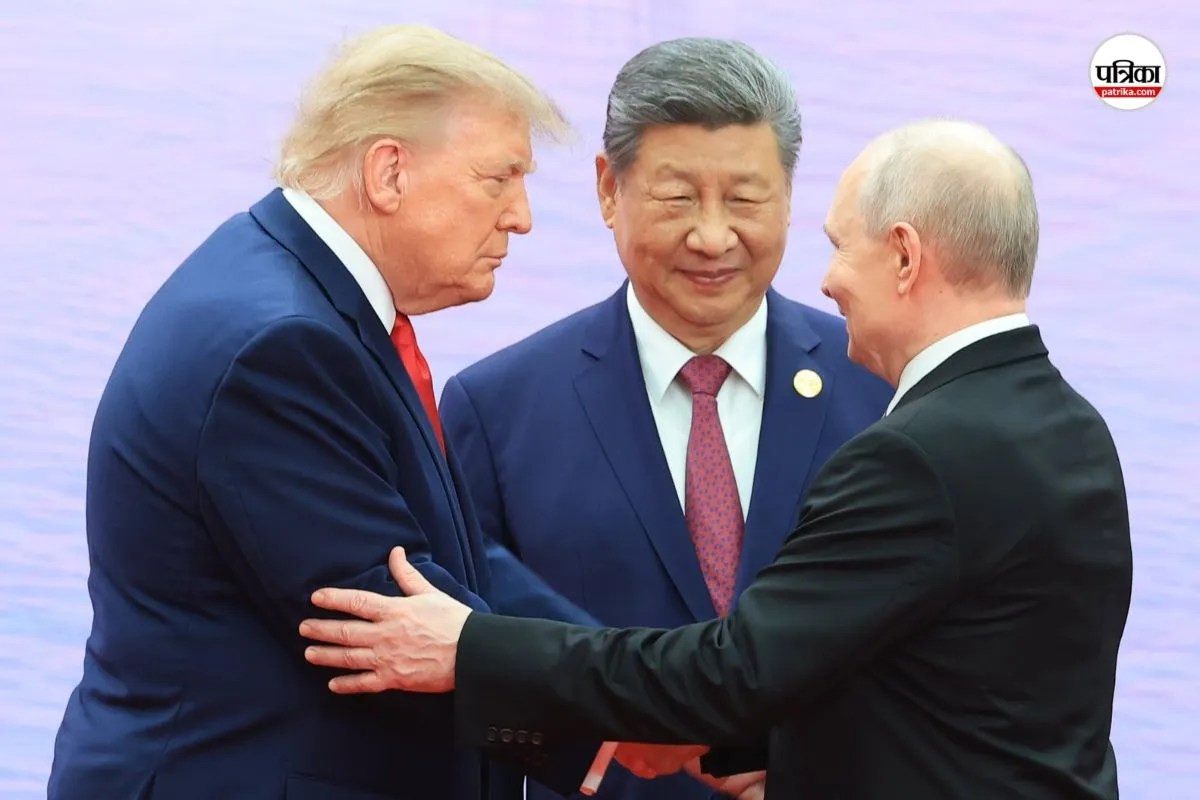
Media commentary characterizing the trilateral dynamic among Donald Trump, Vladimir Putin, and Xi Jinping as a zero-sum defeat for Washington relies on a flawed accounting of diplomatic payoffs. When commentators assert that Moscow and Beijing extracted maximum utility while the United States left empty-handed, they conflate immediate optics with structural geopolitical leverage. A rigorous evaluation of a G3 summit requires separating transactional concessions from institutional shifts, mapping the asymmetric time horizons of the three powers, and accounting for the constraints each leader faces at home.
The Analytical Flaw in Zero-Sum Summit Scoring
Mainstream commentary on great-power summits frequently defaults to a scorecard mentality: who signed an agreement, who made a public concession, and whose rhetoric dominated the news cycle. Analysts who argue that Putin and Xi achieved their core objectives while Trump returned empty-handed base their assessment on visible, immediate markers—such as diplomatic recognition, the softening of isolation, or the absence of enforceable commitments on trade and security.
This framing misses how trilateral diplomacy operates. In a three-player game, bilateral outcomes cannot be evaluated in isolation because every concession or deadlock between two actors alters the bargaining position of the third. Treating a summit as a simple ledger of immediate wins and losses ignores three structural variables:
- Asymmetric Time Horizons: Democratic administrations operate on two-to-four-year electoral cycles, incentivizing rapid, visible deliverables. Authoritarian systems in Moscow and Beijing operate on multi-decade horizons, allowing them to absorb short-term economic friction in exchange for incremental erosion of international norms.
- Baseline Expectations: For Moscow, mere participation in a high-level summit with Washington signals the failure of Western diplomatic isolation. For Washington, the baseline expectation is tangible policy reversal—such as territorial concessions, verifiable arms control, or structural economic reform—making any non-binding outcome appear as a failure.
- Audience Costs: Leaders incur domestic political penalties when they back down from public threats. Trump’s transactional approach relies on high-variance opening bids, which create sharp domestic scrutiny when immediate capitulation does not follow.
Deconstructing the Three Payoff Matrices
To evaluate whether any party truly left "empty-handed," the summit's outcomes must be broken down by each capital's distinct strategic utility function.
Moscow's Utility Function: Legitimacy and Temporal Arbitrage
For Vladimir Putin, the primary objective in engaging Washington is not necessarily a comprehensive settlement, which would require surrendering territorial or security buffers, but rather temporal arbitrage—buying time while fracturing Western cohesion.
- Diplomatic Normalization: Western commentary frequently notes that high-level engagement undermines the narrative of Russian pariah status. By sitting as an equal in a G3 framework, Moscow signals to non-aligned states in the Global South that sanctions and diplomatic isolation are temporary political tools rather than permanent structural realities.
- Decoupling Security Tracks: Putin’s negotiating strategy aims to separate bilateral strategic stability talks from regional conflicts. If Washington agrees to discuss nuclear frameworks or regional deconfliction without conditioning those talks on immediate ceasefires or territorial withdrawals, Moscow secures a major procedural victory.
- The Limits of Moscow's Gains: Analysts claiming Putin got everything he wanted overlook his structural vulnerabilities. Diplomatic optics do not alleviate domestic labor shortages, high interest rates, or Russia's deepening economic dependence on Chinese industrial inputs and energy markets. A summit that yields no sanctions relief leaves Russia’s long-term fiscal trajectory unchanged.
Beijing's Utility Function: Hedging and Institutional Dilution
Xi Jinping approaches a trilateral dynamic with a dual mandate: preventing a unified US-led containment coalition while managing domestic economic headwinds without conceding state-led industrial policy.
- Exploiting Transactional Bilateralism: Beijing prefers bilateral negotiations over multilateral coalitions because China’s market size gives it superior leverage against individual states. When Trump prioritizes direct, leader-to-leader bargaining, it sidelines traditional US allies in Europe and the Indo-Pacific, fulfilling a core Chinese strategic goal of weakening alliance architecture.
- Stabilization Without Capitulation: Global media observers often highlight that Beijing secures tactical pauses in tariff escalations or technology restrictions simply by offering minor agricultural purchases or vague pledges on fentanyl precursors. This allows Xi to stabilize expectations for foreign investors while continuing long-term investments in semiconductor self-sufficiency and supply chain dominance.
- The Limits of Beijing's Gains: Beijing's position is far from frictionless. While delaying US punitive measures buys time, it does not reverse the broader structural decoupling underway in global capital markets. Furthermore, standing alongside Putin in a G3 format risks accelerating European alignment with Washington’s trade restrictions, a strategic cost that diminishes Beijing’s diplomatic flexibility in Brussels.
Washington's Utility Function: Disruption and Leverage Realignment
The thesis that Trump returns "empty-handed" assumes his objective is traditional treaty-making. In practice, his diplomatic model treats summits as reconnaissance and leverage-testing exercises rather than endpoints.
- Testing the Sino-Russian Alignment: A primary strategic rationale for engaging both Putin and Xi simultaneously is to probe the fault lines between Moscow and Beijing. By offering bilateral incentives or signaling willingness to reset relations with one party, Washington attempts to introduce mutual suspicion into a partnership built largely on shared opposition to US hegemony.
- Shift from Multilateralism to Bilateral Leverage: Conventional US foreign policy relies on institutional consensus, which moves slowly and requires subsidizing allied security. By discarding multilateral guardrails, Trump seeks to force allies to bear greater defense and trade burdens while retaining unilateral tariff and sanction threats as immediate bargaining chips.
- The Structural Cost of Transactionalism: The critical vulnerability in Washington's approach is credibility erosion. When threats of maximum pressure are repeatedly paused for high-level summits that produce no verifiable enforcement mechanisms, adversaries learn to discount the threats. Without institutional follow-through, transactional diplomacy risks trading durable alliance trust for ephemeral personal rapport.
The Cause-and-Effect Chain Missed by Pundits
Media narratives that declare a definitive winner and loser immediately after a summit misunderstand the causal sequence of great-power competition. The real impact of a G3 meeting unfolds across three secondary mechanisms over the subsequent twelve to twenty-four months:
- Allied Hedging Behavior: When US allies observe Washington engaging Moscow and Beijing bilaterally without prior consultation, they do not simply wait for the next summit. Instead, European and Asian capitals initiate independent hedging strategies—accelerating indigenous defense procurement, negotiating separate trade accommodations with Beijing, or quietly relaxing enforcement of secondary sanctions. This erosion of collective bargaining power is the most concrete cost to Washington, yet it rarely features in immediate post-summit headlines.
- Bureaucratic Inertia vs. Executive Intent: Even when leaders reach informal understandings in closed-door meetings, implementation depends on domestic bureaucracies. In the United States, export controls, sanctions regimes, and defense appropriations are embedded in statutory frameworks and congressional oversight. A leader cannot unilaterally dismantle these structures overnight, meaning adversaries who believe they have secured a policy reversal often encounter sustained institutional resistance months later.
- Asymmetric Information and Miscalculation: High-level summits without rigorous pre-summit working groups generate ambiguity. Each side leaves the table interpreting vague verbal assurances to suit its domestic narrative. When subsequent actions contradict those interpretations—such as continued military posturing or new regulatory barriers—the resulting backlash is sharper than if no summit had occurred, increasing the risk of sudden escalation.
Evaluating the "Empty-Handed" Hypothesis
To determine whether an administration truly failed in a trilateral negotiation, analysts must apply three objective diagnostic tests rather than relying on editorial commentary:
- The Enforcement Test: Did the summit produce verifiable, time-bound benchmarks with automatic snapback penalties for non-compliance? If not, any proclaimed breakthrough is merely a temporary truce.
- The Alliance Cohesion Test: Did the diplomatic engagement strengthen or weaken the willingness of third-party allies to coordinate economic and security policies with Washington?
- The Resource Allocation Test: Did the outcome alter the material trajectory of military deployments, industrial subsidies, or capital flows between the three powers?
By these metrics, a summit that yields no signed communiqués is not automatically a defeat, just as a summit filled with warm rhetoric is not a victory. If Washington avoided locking itself into premature concessions while preserving its unilateral tariff and sanction authorities, it retained its core leverage—even if the immediate optics favored Moscow and Beijing. Conversely, if the absence of tangible deliverables reflects an inability to translate economic pressure into geopolitical compliance, then the critique holds weight.
Strategic Imperatives for Post-Summit Execution
Diplomacy at the G3 level does not end when the leaders depart; the post-summit phase determines whether tactical positioning converts into durable advantage. For Washington to prevent adversaries from pocketing the reputational benefits of engagement without paying a structural price, three operational steps are required:
- Re-anchor Allied Consultations Immediately: Conduct rapid, high-level briefings with key Indo-Pacific and European counterparts to clarify red lines, dispel rumors of unilateral side deals, and synchronize export control enforcement.
- Convert Verbal Assurances into Technical Working Groups: Assign mid-level officials to translate broad leader-level discussions into measurable compliance metrics within thirty days, forcing Moscow and Beijing to either commit to verifiable actions or expose their unwillingness to compromise.
- Maintain Asymmetric Pressure Mechanisms: Keep statutory sanctions, tariff authorities, and force-posture adjustments active during negotiations so that the cost of stalling remains higher for adversaries than the cost of making substantive concessions.