Direct democracy operates on a structural paradox: it promises immediate citizen agency while relying on bureaucratic architecture designed to temper political velocity. The current friction surrounding Alberta's "Water Not Coal" petition highlights a systemic mismatch between legislative mechanisms and political execution. When grassroots organizers delivered more than 200,000 signatures to Elections Alberta on June 10, 2026, they met a rigid, statutory framework designed to filter, delay, and potentially reshape the underlying legislative proposal before it ever reaches a ballot.
Understanding this conflict requires looking past rhetorical flashpoints to evaluate the precise legal parameters, bureaucratic gatekeeping, and asset-exposure dynamics driving both sides of the provincial resource debate.
The Citizen Initiative Act and the Architecture of Delay
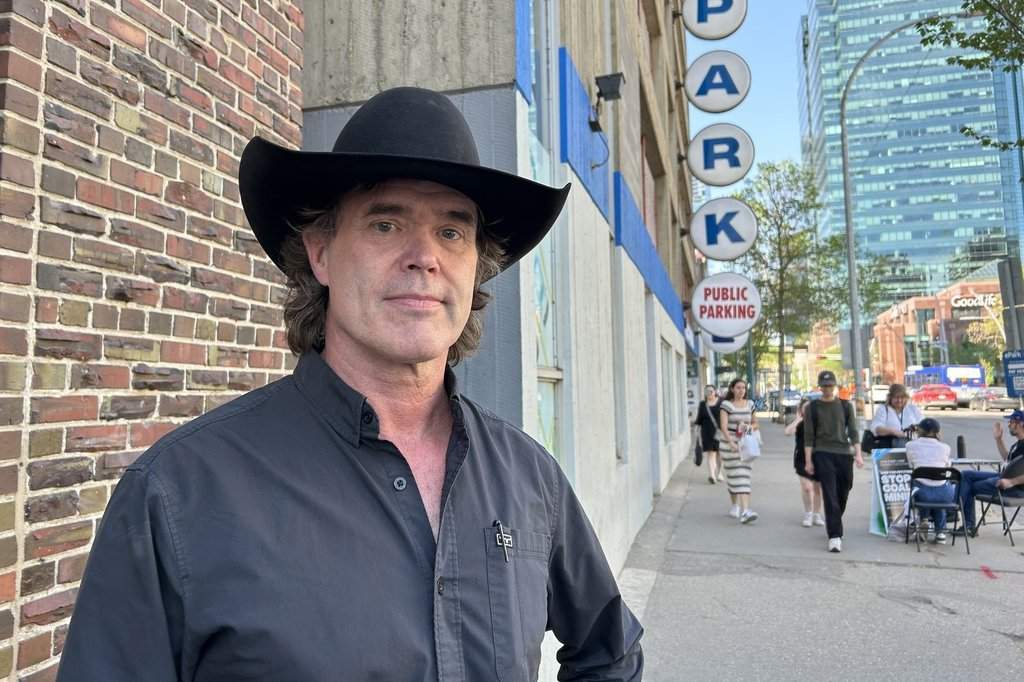
Grassroots momentum frequently misjudges the operational design of direct-democracy legislation. The "Water Not Coal" campaign, led by musician and rancher Corb Lund, sought to utilize Alberta’s Citizen Initiative Act to force a binding provincial vote. The mechanism imposes strict quantitative and administrative hurdles.
[Statutory Threshold: 177,732 Signatures]
               │
               ▼
[Elections Alberta Verification: 21-Day Window]
               │
               ▼
[Standing Committee Review: Multi-Month Legislative Filter]
               │
               ▼
[Cabinet/Referendum Order: Ballot Placement Deadlock]
To advance a legislative proposal under this act, organizers must secure signatures from at least 10% of the total votes cast in the preceding provincial election—a threshold set at 177,732 valid electors. While the campaign collected roughly 206,000 signatures, the transition from collection to legislative execution faces a series of structured bottlenecks.
The Verification Filter
Elections Alberta operates under a strict 21-day verification window closing no later than July 1, 2026. The agency applies a mathematical verification process designed to establish a 95% confidence level in the validity of the data. This involves verifying that only original sheets were used, ensuring no duplicate entries exist within the 120-day signing period, and evaluating a statistically valid random sample. The risk of signature attrition due to missing physical addresses, mismatched voter register records, or improper canvasser witnessing creates an initial point of vulnerability for the campaign.
The Standing Committee Loophole
The critical bottleneck is not quantitative, but structural. Premier Danielle Smith indicated that even if verified, the petition must transition to a legislative committee review process. Under the Citizen Initiative Act, once a petition achieves validation, the legislative proposal is submitted to the Speaker of the Legislative Assembly, who routes it to a standing committee of lawmakers.
Because the legislature is not scheduled to reconvene until October 27, 2026—eight days after the scheduled October 19 provincial referendum ballot—the committee process structurally prevents the question from appearing on this fall's vote. The committee retains the mandate to review the text and recommend whether the government should pass the law directly or send it to a referendum, effectively decoupling the petition from immediate ballot access.
The Text Sovereignty Battle
A secondary structural friction point rests in the wording of the ballot question itself. Direct democracy campaigns rely on precise text sovereignty to prevent the state from weakening their objective. The "Water Not Coal" petition advanced an explicit, exclusionary legislative demand:
“The Government of Alberta shall prohibit through legislation all coal exploration and mining activities within the Eastern Slopes of Alberta's Rocky Mountains, other than mines that are in actual production as of January 1, 2026. For clarity, this prohibition includes Northback Holdings' Grassy Mountain Project and Valory Resources' Blackstone Project, as well as any projects to expand any producing mines.”
By naming specific private corporate assets—Northback Holdings’ Grassy Mountain and Valory Resources’ Blackstone—the petition departs from general policy-making and enters targeted economic prohibition.
This specific wording creates an asymmetric risk profile for the provincial administration. If the government alters the text of the question during the committee phase to remove specific project designations or introduce broader "environmental safeguard" clauses, it compromises the core objective of the 200,000 signatories. If the government accepts the question verbatim, it establishes a precedent where targeted legislative bans can be driven directly by popular initiatives, disrupting standard regulatory and judicial assessment pathways.
The Economic and Environmental Risk Function
The core tension of this policy debate is rooted in competing risk definitions. The conflict matches localized environmental externalities against defined industrial yields.
       Industrial Yield Model:                  Environmental Risk Function:
┌───────────────────────────────────┐       ┌───────────────────────────────────┐
│ • High-Grade Steelmaking Coal     │       │ • Upstream Open-Pit Footprint     │
│ • Localized Employment Capital    │   vs  │ • Downstream Selenium Exposure    │
│ • Provincial Royalty Streams      │       │ • Watershed Capital Degradation   │
└───────────────────────────────────┘       └───────────────────────────────────┘
The industrial yield model advanced by proponents like Northback Holdings emphasizes metallurgical coal production for global steel manufacturing. The financial upside centers on direct localized employment and provincial royalty streams. Proponents point to localized support, citing a non-binding 2024 municipal referendum in Crowsnest Pass where 72% of participating residents voted in favor of the Grassy Mountain project.
The environmental risk function relies on a downstream cost analysis. The Eastern Slopes contain the critical headwaters feeding major western river systems, including the Oldman, Bow, Red Deer, Athabasca, and North and South Saskatchewan rivers. Open-pit metallurgical coal extraction alters these systems through two primary mechanisms:
- Selenium Leaching: Moving large volumes of waste rock exposes selenium-bearing formations to weathering. This triggers a systemic leaching process where water-soluble selenium enters the upper watershed. Downstream accumulation causes reproductive failure and skeletal deformities in aquatic species, creating long-term municipal and agricultural water-treatment liabilities.
- Hydrological Disruption: Removing sub-alpine land cover alters water retention and peak runoff timing. The change increases downstream vulnerability to both seasonal droughts and severe flooding events, which threatens the multi-billion-dollar agricultural corridor in southern Alberta.
Sovereign Risk and the Fiscal Liabilities of Policy Reversals
For the provincial executive, the strategic calculation is complicated by sovereign risk and capital flight. The history of Alberta’s coal policy since 2020 shows a volatile regulatory landscape:
- June 2020: The government rescinds the 1976 Coal Policy, opening Category 2 lands on the Eastern Slopes to open-pit exploration.
- February 2021: Following significant public pushback from ranchers, municipalities, and conservation groups, the government reinstates the 1976 protections and freezes exploration lease sales.
- 2022–2026: The province enters a regulatory gray zone where advanced projects attempt to navigate ongoing regulatory application hearings while final rules remain incomplete.
This policy volatility carries material costs. When a government unilaterally alters the regulatory framework governing active investments, it incurs direct fiscal liabilities. The province has already had to execute a $95 million settlement with an impacted coal enterprise following previous policy shifts.
Enacting a total, permanent ban via citizen referendum exposes the province to trade-agreement challenges and corporate litigation for de facto expropriation of mineral rights. Conversely, bypassing a validated petition to protect these industrial projects undermines the administration’s stated commitment to direct democracy and provincial autonomy.
Strategic Outlook
The government's path forward will likely focus on administrative containment rather than direct confrontation. By steering the validated petition into the standing committee framework post-July 1, the executive branches can easily defer any referendum action past the October 2026 ballot window. This strategy delays legislative or electoral action into 2027, successfully defusing immediate political momentum.
For industry operators, this delay offers a brief window to push advanced applications through the Alberta Energy Regulator before the legislative landscape hardens. For grassroots organizers, the strategic priority now shifts from signature accumulation to legal and political oversight of the committee phase. This is necessary to prevent structural adjustments or revisions to the ballot question text that would neutralize the petition's targeted restrictions.