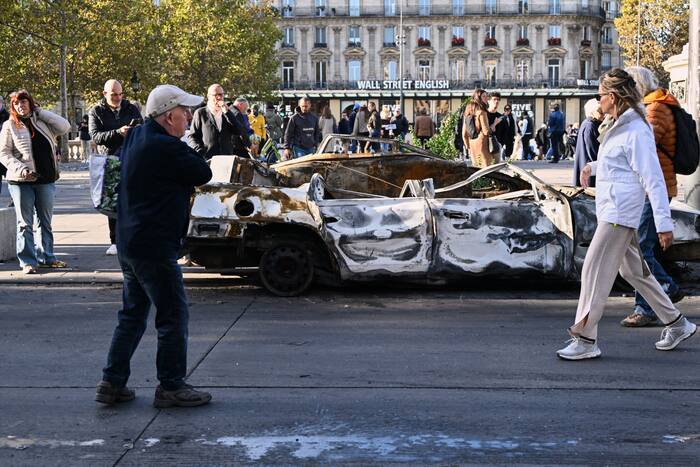
When roughly half a million people take to the streets to protest soaring living costs and worsening school conditions, governments usually expect peaceful dissent. What happened across France was anything but peaceful. With at least 1,800 people arrested, historic buildings ablaze, and widespread looting, the demonstrations quickly spiraled into some of the worst civil unrest the country has seen in years.
Let us look past the surface headlines to examine why these protests broke containment, who hijacked the movement, and what this means for the political landscape.
The Breaking Point Behind the National Rage
The core catalyst wasn't random. European inflation, heavily driven by energy shocks and international conflicts, has squeezed household budgets until they snapped. Families are struggling to afford basic groceries, heating, and fuel. At the same time, students and teachers have spent months pointing out crumbling infrastructure inside public schools, arguing that the education system is being starved of resources.
When official estimates placed turnout between 550,000 and 800,000 citizens, it became clear this was a mainstream working-class and student mobilization. People genuinely wanted a dialogue on economic survival. But peaceful economic grievances collided with a much darker element on the ground.
How Opportunists and Extremists Hijacked the Message
Every mass protest risks infiltration, but the scale of the destruction in cities like Paris, Marseille, Lyon, and Bordeaux caught authorities flat-footed. Masked and hooded groups bypassed legitimate picket lines to smash storefronts, pillage boutique shops, and torch vehicles.
The physical toll was severe. In Limoges, a 19th-century town hall was practically gutted by a deliberately set fire that local officials branded the work of a destructive horde. In Marseille, rioters forced their way into the lobby of City Hall and vandalized a local police station, while a tourist office went up in flames in Lyon.
Interior Minister Laurent Nuñez pointed the finger squarely at radical far-left factions alongside opportunistic criminal gangs hailing from impoverished suburbs who used the chaos purely for looting. More than 500 police officers, gendarmes, and firefighters sustained injuries during the clashes, highlighting the sheer intensity of the street battles.
The Political Fallout and Blame Game
President Emmanuel Macron faced an immediate political crisis, calling an emergency security meeting to steady a shaken administration. Prime Minister Sébastien Lecornu condemned the violence outright, drawing a firm line between the constitutional right to protest and criminal arson.
Yet, the riots immediately transcended domestic economics, drawing international commentary. Figures like U.S. Vice President JD Vance weighed in on social media, attributing the breakdown of public order to long-term immigration and integration challenges. Meanwhile, domestic opposition figures seized on the chaos to argue that the government has lost control of public security.
Average citizens caught in the middle expressed profound frustration. Many participants watched in horror as legitimate anger over inflation was completely overshadowed by burning cars and shattered glass, effectively delegitimizing the very cause they marched for.
As Paris Mayor Emmanuel Grégoire set up emergency support units to help devastated business owners assess unprecedented property damage, the path forward remains murky. The underlying economic pressures—inflation, high fuel prices, and underfunded public services—haven't gone away. If the French government fails to address the financial squeeze on everyday families, the anger simmering beneath the surface will inevitably find another spark.
French police arrest more than 1,800 people after violent protests
This video provides a concise overview of the massive nationwide demonstrations and the resulting clashes that led to widespread arrests across France.