Fear has a specific weight.
It starts behind the sternum, a cold, heavy dense stone that shifts whenever you take a ragged breath. You know the feeling. It is the three a.m. stare at the ceiling when the business account is bleeding out. It is the tremor in your hand before you click send on an email that might end a marriage, a career, or a lifelong identity. We spend our entire lives running from that weight. We build fortresses of insurance policies, polite routines, and careful compromises, all designed to keep the worst-case scenario at a safe, theoretical distance.
We treat catastrophe like a monster waiting in the dark.
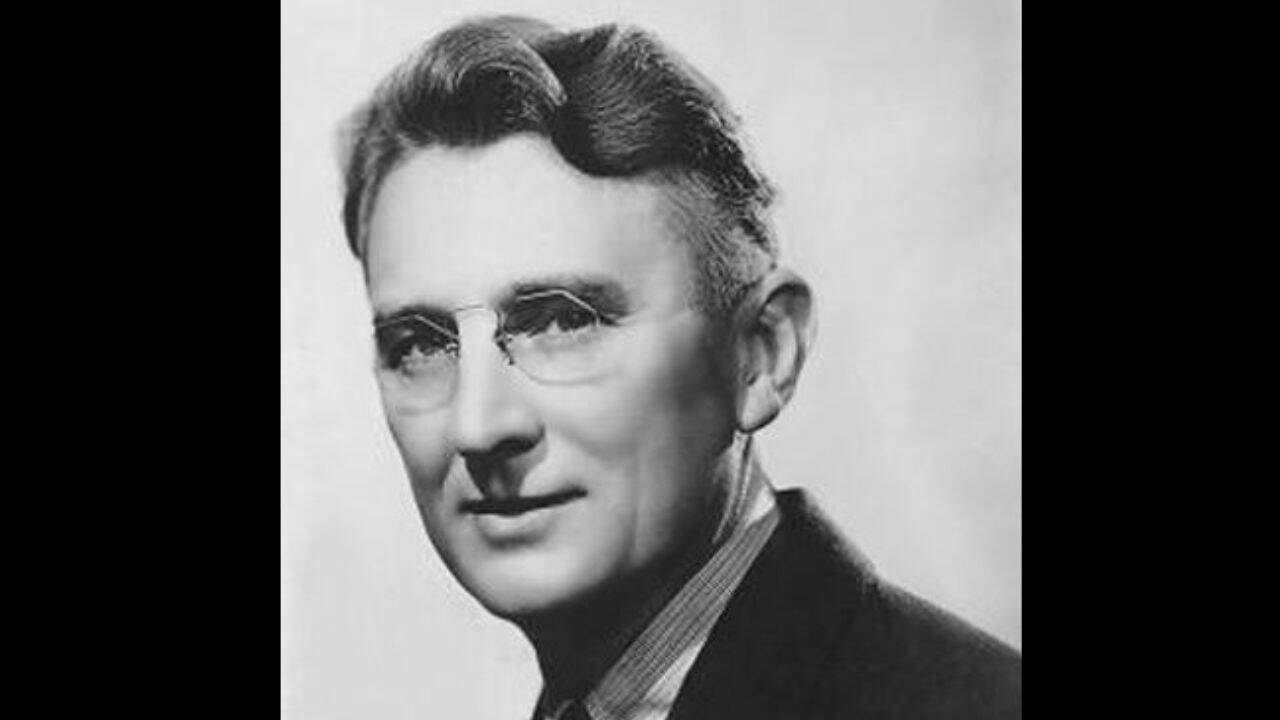
Dale Carnegie knew better. Decades ago, the man who wrote the book on how to stop worrying and start living dropped a sentence that sounds like a paradox until you test it against the fire of real life. He said that when we have accepted the worst, we have nothing more to lose. And that automatically means all the frantic, exhausting energy we spend hiding from our nightmares becomes instantly available for changing our reality.
Let me tell you about Elena.
(Note: Elena is a composite character drawn from interviews with small business owners who navigated the wreckage of the 2008 financial crash.)
Elena ran a boutique architectural firm in a mid-sized rust-belt city. She had twelve employees, a sleek brick-and-beam studio downtown, and a reputation built on sixteen years of relentless hustle. When the economic floor dropped out, her phone stopped ringing. For six months, she performed a terrifying magic trick. She paid payroll by draining her personal savings, then her retirement accounts, then by quietly maxing out four separate credit cards.
She lost twenty pounds. She stopped sleeping. Every morning, she woke up drowning in the terror of what would happen if she went under. The shame of failure tasted like ash in her mouth. She was terrified of the worst.
Then came Tuesday.
The bank called. The line of credit was frozen. There would be no miracle loan extension. The monster had finally broken through the front door.
Elena sat in her empty studio, the fluorescent lights buzzing overhead, and realized the thing she had been dodging for eighteen months had finally arrived. She was ruined. Her business was dead. Her credit was destroyed.
And then, something strange happened.
The stone behind her sternum vanished. The panic didn't spike; it evaporated. She looked at her trembling hands and realized a stark, liberating truth. The worst had already occurred. There was nothing left to protect. The bank could not take what was already gone. Her reputation could not be shattered further because the crash had already happened.
She walked out of that building, called her team into a circle in the park across the street, and told them the unvarnished truth. No corporate spin. Just reality.
"We are closed," she told them. "And I am broke."
What happened next shocks people who have never hit the bottom. Instead of running away, her lead designer looked at her and said, "Okay. So what do we do today?"
Because they were no longer defending a sinking ship, they started building a raft. Stripped of overhead, ego, and the crushing expectation of maintaining appearances, Elena and three of her former employees formed a lean, agile consultancy by the end of the week. They didn't need the brick-and-beam office. They didn't need the anxiety. They needed a laptop and a kitchen table. Within two years, that tiny, desperate venture was generating twice the profit of the old firm with a fraction of the stress.
Carnegie’s observation is not a piece of cheap motivational fluff. It is a psychological cheat code.
When you refuse to look at your worst fear, that fear acts as a phantom puppeteer. It dictates your choices. It makes you stay in toxic jobs, bad relationships, and failing projects because you are paralyzed by the thought of what might happen if it all falls apart. You invest massive amounts of cognitive bandwidth into maintenance. You manage perceptions. You spin plates.
You are exhausted because you are fighting a two-front war: trying to succeed while desperately trying to prevent failure.
Consider what happens when you drop the shield.
Imagine looking at your current crisis—whatever it is—and playing the tape all the way to the end. Let the business fail. Let the client walk away. Let the relationship end. Let people talk. Let the bank foreclose. Say the words out loud to an empty room: I will lose everything, and I will still be here.
This is what psychologists call the worst-case analysis. It is terrifying because our brains are hardwired to treat social or financial ruin as physical death. But financial ruin is not death. Loss of status is not death. Failure is an event, not an identity.
When you stare the worst in the face and say, "Fine. Do your worst," the nervous system undergoes a radical reset. The adrenaline stops flooding your system to fight an invisible ghost. The fog clears.
Suddenly, your vision sharpens. You stop asking, "How do I keep this fragile thing from breaking?" and start asking, "What can I build from the rubble?"
History is littered with people who discovered this secret by accident. J.K. Rowling was a divorced, living-on-welfare single mother when she wrote the first Harry Potter manuscript, noting later that she had hit rock bottom and realized she still had a daughter whom she adored, an old typewriter, and a big idea. The failure she feared so deeply had already materialized, leaving her with the freedom to pursue the only thing she actually cared about. Steve Jobs was ousted from Apple—his life's work—and called it the best thing that could have ever happened to him, because the heaviness of being a successful visionary was replaced by the lightness of being a beginner again.
They had nothing left to lose. And in that vacuum, they found everything to gain.
You might be standing at your own precipice right now. Maybe your industry is shifting underneath your feet. Maybe your health is faltering, or your life savings are shrinking, or a project you poured your soul into is collapsing.
Stop running.
Turn around and look the monster dead in the eye. Name the absolute worst outcome. Write it down. Look at it on paper. Realize, with a cold, clear clarity, that you would survive it. Your lungs would still draw air. The sun would still rise the next morning.
And once you accept that outcome—once you sign the mental release form accepting that the worst can happen and you will still be standing—watch what happens to your shoulders. Watch how fast the tension drains away.
That is the moment the game changes. That is the exact second you stop being a victim of circumstance and start becoming the architect of your own recovery.
Because when there is nothing left to lose, you are finally, terrifyingly, beautifully free to win.