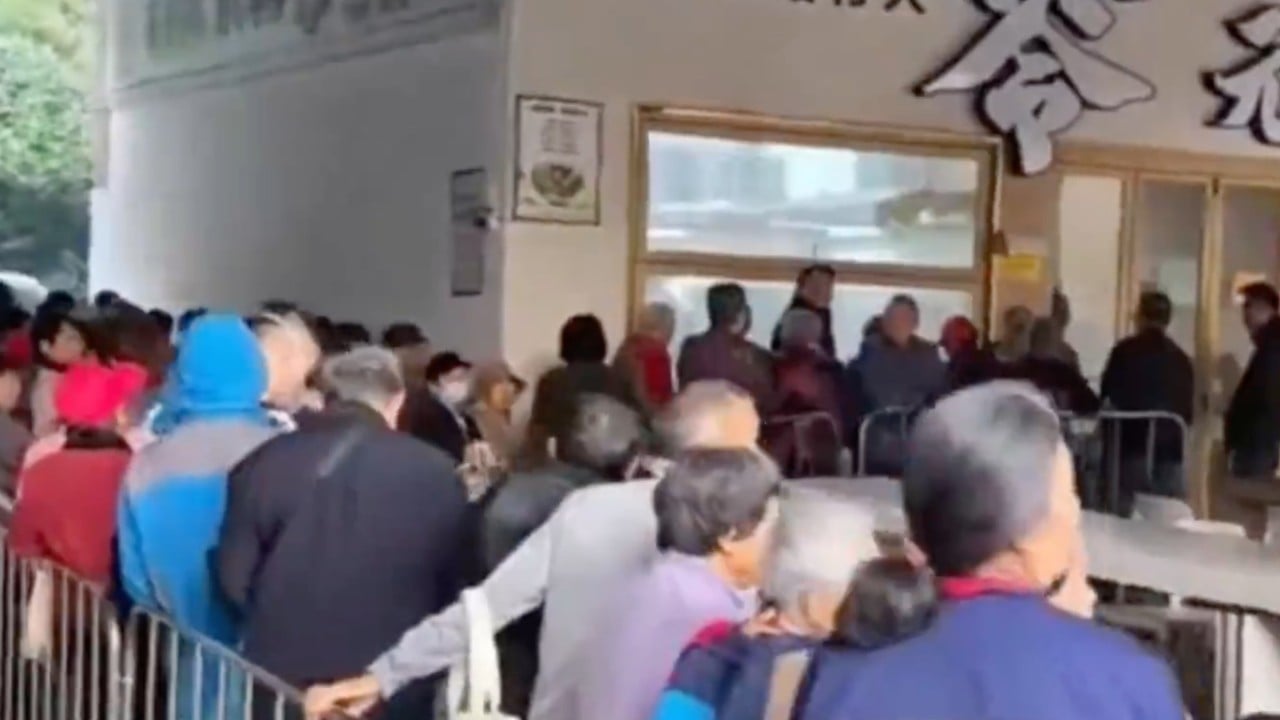
Every few months, a viral story emerges from a bustling Chinese metropolis following the exact same predictable script. A compassionate restaurateur opens a "free meal" noodle shop—no cash register, no questions asked, just hot bowls of broth and wheat served to anyone who walks through the door. Within weeks, the heartwarming human-interest piece hits a predictable wall of local friction. Neighboring food vendors complain to the press or local street committees that the charity storefront is "destroying the market," "stealing paying customers," and driving hard-working, razor-margin mom-and-pop shops toward bankruptcy.
Mainstream journalists lap this up. They frame it as an agonizing moral dilemma between pure altruism and brutal capitalism. They paint a picture where a single bowl of free noodles breaks the fundamental laws of supply and demand, forcing honest business owners to compete against the unbeatable price point of zero.
That narrative is pure economic illiteracy.
Having spent years dissecting unit economics, foot traffic patterns, and consumer psychology in the hyper-competitive food and beverage sector, I can tell you with absolute certainty that a charitable noodle shop does not kill adjacent restaurants. If a neighborhood eatery collapses within sixty days of a soup kitchen opening down the block, the free noodles didn't pull the trigger. They merely performed an autopsy on a business that was already dead.
The Myth of the Zero-Price Cannibal
The lazy consensus relies on a kindergarten-level understanding of economics: if Product A costs 15 RMB and Product B is free, rational consumers will always choose Product B, thereby starving the seller of Product A.
Real-world hospitality markets do not operate on binary price spreadsheets. They operate on utility stratification, social signaling, and friction costs.
When a commercial noodle shop sells a bowl of beef or braised pork noodles, they are not merely selling calories to stave off biological starvation. If human beings only bought food for caloric survival, every fine-dining establishment, artisanal bakery, and specialty coffee roaster on earth would have gone out of business the day bulk rice and multivitamins were invented. Paying customers buy convenience, customization, speed, social status, hygiene assurance, and specific flavor profiles.
A charitable noodle shop—by operational necessity—strips away almost every single one of those commercial attributes. To survive on donations or a founder's personal subsidy, a free eatery must standardize ruthlessly. You get one base broth, plain noodles, maybe a scatter of scallions or pickled greens, and zero customization. You wait in a slow-moving queue alongside the genuinely destitute, migrant day laborers between gigs, and elderly pensioners stretching meager stipends.
Here is the uncomfortable truth that polite commentators refuse to say out loud: social stigma acts as an invisible, insurmountable price wall.
In urban China—and indeed, in every dense commercial district globally—saving face (mianzi) is a primary driver of consumer behavior. An office worker earning a modest salary, a construction foreman treating his crew, or a student out with friends will not stand in a charity line to save two dollars. Doing so broadcasts financial destitution to everyone on the street. Furthermore, the opportunity cost of waiting twenty minutes in a charity queue destroys the value proposition for anyone whose time is worth more than minimum wage.
Therefore, the customer base of a free noodle shop and the customer base of a thriving commercial restaurant rarely overlap. The charity shop isn't stealing paying diners; it is serving non-consumers—people who, in the absence of the free meal, would have skipped lunch entirely, eaten instant noodles in a shared dormitory, or scavenged leftovers.
Why Neighboring Vendors Actually Panic
If the economics prove that free food doesn't steal viable customers, why do neighboring shopkeepers routinely protest, complain to reporters, and demand that local authorities shut these charitable operations down?
Because admitting your product is mediocre is painful. Blaming a saint is easy.
When you strip away the emotional rhetoric, the hostility from adjacent restaurants usually stems from three very real, entirely non-culinary business failures.
1. The Commodity Trap
In high-density Chinese street-food corridors, dozens of vendors often sell the exact same homogenized product—identical factory-made alkaline noodles, identical pre-packaged chili oil, and identical MSG-heavy bouillon bases. When a commercial restaurant offers zero culinary differentiation from a charity kitchen, it has already lost the war. If your 18 RMB bowl of noodles tastes indistinguishable from a free bowl made in a 50-liter stockpot by volunteers, your business model is broken. You aren't being undercut by charity; you are being exposed for charging retail prices for charity-grade food.
2. Aesthetic and Foot-Traffic Friction
This is the only legitimate grievance neighboring businesses hold, and mainstream reporters almost always bury it beneath sob stories about "lost revenue." A free meal center acts as a powerful magnet for marginalized populations—unhoused individuals, chronically unemployed laborers, and people dealing with untreated health issues. When fifty people queue outside a storefront for two hours at midday, they physically obstruct the sidewalk. Middle-class commuters and families naturally cross the street to avoid the congestion and perceived disorder.
Notice the distinction: the neighboring restaurant isn't losing customers to the free noodles; it is losing customers to sidewalk congestion. That is a municipal zoning and crowd-management problem, not a pricing or unfair-competition issue.
3. The Death of the Bottom-Feeder Margin
Every food district has bottom-tier operators who survive by cutting every conceivable corner—reusing frying oil, buying bruised produce, and banking on desperate customers having nowhere else to turn. A free kitchen wipes out the lowest rung of the market. It establishes a baseline floor for basic sustenance. Any commercial vendor operating right above that floor without offering superior protein, atmosphere, or speed gets crushed. And frankly, they should be. Markets evolve by eliminating operators who offer zero value above raw subsistence.
The Brutal Truth About Hospitality Unit Economics
Let's examine the actual mechanics of running a street-level noodle shop to see why blaming a charity is mathematically absurd.
Consider a standard, independent neighborhood eatery in a second-tier Chinese city. The owner faces three relentless fixed and semi-variable drains:
- Commercial Rent: Often consuming 20% to 30% of gross revenue in prime ground-floor retail spots.
- Labor and Compliance: Chefs, prep workers, dishwashers, municipal health inspections, and platform commissions (Meituan and Ele.me routinely take 18% to 25% of delivery orders).
- Ingredient Volatility: Pork, beef, cooking oil, and fresh aromatics fluctuate wildly.
To clear a modest net profit of 10% to 15%, a commercial shop needs high table turnover during peak windows (11:30 AM to 1:30 PM, and 6:00 PM to 8:00 PM) and a healthy average ticket size achieved through add-ons—braised eggs, extra beef slices, cold side dishes, and bottled beverages.
Notice where the profit actually lives. Nobody gets rich selling plain noodles. Plain noodles are a loss leader or a break-even anchor. The profit margin sits entirely in the toppings and the beverages. A bowl of plain noodles might yield a 2 RMB gross margin; adding a braised pork trotters, a side of pickled wood-ear mushrooms, and a cold soda pushes the gross margin to 12 RMB.
A free noodle shop offers none of the high-margin items. It does not sell braised beef shanks, cold beer, or spicy tripe. If a commercial restaurant is losing sleep because a charity is giving away plain boiled wheat in soy broth, that commercial restaurant never understood how to monetize its menu in the first place.
Dismantling the "Unfair Competition" Fallacy
When journalists interview angry neighboring vendors, readers inevitably ask: Doesn't giving away free goods violate basic rules of fair market competition?
This question rests on a completely flawed premise. In antitrust law and commercial economics, predatory pricing—selling below cost to drive competitors out of business—is only anti-competitive when the predator intends to capture a monopoly and subsequently raise prices to gouge consumers.
A charitable kitchen has no profit motive, no mechanism to capture market share, and zero ability to scale indefinitely. In fact, charitable eateries suffer from an inherent, self-limiting death spiral: the more popular they become, the faster they go bankrupt.
In a normal business, surging demand increases revenue, improves economies of scale, and expands profits. In a free-meal operation, surging demand multiplies cash burn without generating a single cent of offsetting income. Every additional customer is a direct financial liability. As a result, virtually every viral "free noodle shop" in China either quietly shuts down within six to eighteen months once the founder's savings evaporate, or transitions into a hybrid "pay-it-forward" model where paying customers subsidize suspended meals (daixiang) for the needy.
Fearing long-term market domination from a business model that loses money on every transaction is like fearing that a guy handing out free umbrellas during a thunderstorm is going to bankrupt Burberry.
What Smart Operators Do When Charity Moves Next Door
I have watched dozens of retail and restaurant founders panic when a disruptor—whether a heavily subsidized tech-backed coffee chain, a massive wholesale club, or a community charity kitchen—opens across the street. The ones who cry to the media go out of business. The sharp operators immediately pivot their positioning to exploit the contrast.
If you run a commercial restaurant and a free noodle shop opens twenty meters away, complaining is a waste of oxygen. Here is the exact playbook to turn their presence into your competitive advantage:
1. Aggressive Upmarket Pivot (The Contrast Play)
Never compete on price against zero. Move decisively upmarket. Immediately strip plain, low-margin noodles from your featured menu board. Rebrand your storefront around rich, complex proteins and labor-intensive broths that a charity kitchen could never afford to produce—slow-simmered bone marrow broth, hand-pulled noodles made to order, fresh-sliced ribeye, or signature braised brisket. The presence of a basic soup kitchen next door actually validates your premium pricing by creating an immediate visual contrast between bare subsistence and culinary craftsmanship.
2. Monetize Speed and Digital Convenience
Charity kitchens are analog, slow, and queue-dependent. Double down on frictionless execution. Optimize your digital ordering mini-programs, guarantee a 5-minute table service window for lunch-rush office workers, and build high-margin combo meals tailored for delivery platforms. Busy professionals will gladly pay 22 RMB to skip a thirty-minute line and eat in an air-conditioned dining room.
3. Build a "Suspended Meal" Partnership
Instead of treating the charity owner as an adversary, walk next door and propose a structural alliance. When the charity shop runs out of daily quota—which happens constantly—have them refer overflow guests to your shop for discounted basic bowls funded by a community tip jar or corporate sponsorship. You capture positive local press, build immense neighborhood goodwill, and transform a perceived threat into a high-trust community halo.
The Uncomfortable Downside of Charitable Disruptions
Intellectual honesty requires acknowledging where the contrarian view hits friction. While free noodle shops do not destroy healthy restaurants through price competition, they do create severe localized externalities that naive commentators ignore.
First, viral charity attracts performative grifters. Once a free eatery hits Douyin or Weibo, influencers, livestreamers, and shameless bargain-hunters flood the neighborhood. These people aren't hungry; they are there to film content or brag about gaming the system. They clog narrow streets, harass neighboring shopkeepers for B-roll footage, and turn a quiet commercial block into a chaotic circus.
Second, unmanaged altruism erodes neighborhood infrastructure. When a single small storefront tries to absorb the food insecurity of an entire district without municipal support, waste management, grease traps, and restroom facilities get overwhelmed. Neighboring vendors end up bearing the hidden costs of clogged drains and overflowing municipal bins while the charity founder collects all the moral praise.
Recognizing these operational headaches is critical. Neighboring businesses have every right to demand strict queue management, sanitary enforcement, and crowd control from local authorities. What they do not have is a God-given right to be protected from the existence of generosity because their own business relies on trapping impoverished customers with nowhere else to go.
Stop Blaming Broth for Bad Business Models
The next time you read a breathless headline about a compassionate noodle shop owner facing backlash from angry neighboring vendors, look past the manufactured moral outrage.
A healthy restaurant sells flavor, speed, atmosphere, and dignity. A charity kitchen gives away survival. Those two things do not occupy the same market, do not serve the same customer, and do not compete on the same axis.
If a business owner cannot convince paying customers to spend three dollars on a hot meal when the alternative is standing in a charity line for plain boiled dough, the problem isn't the free food next door. The problem is in the kitchen.