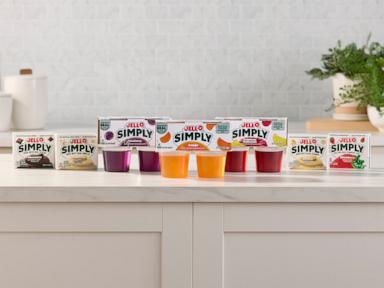
Kraft Heinz’s recent reformulation of its flagship Jell-O product line—replacing fruit juice concentrates with artificial colorants and synthetic flavor profiles—represents a classic execution of cost-minimization logic within mature consumer packaged goods (CPG) portfolios. While mainstream coverage frames this transition through the lens of consumer health or ingredient purity, a structural analysis reveals that the shift is driven by three specific economic variables: supply chain volatility mitigation, marginal cost optimization, and shelf-life extension.
By deconstructing the raw material inputs of gelatin-based desserts, we can map the exact financial and chemical mechanisms that dictate these manufacturing decisions.
The Tri-Particle Cost Function of CPG Reformulation
To understand why a multi-billion-dollar brand alters a legacy formulation, one must analyze the total cost function of the product. Every ingredient change seeks to optimize at least one of three distinct pillars:
1. Ingredient Input Cost Arbitrage
Fruit juice concentrates are highly volatile commodities. Their pricing is indexed to agricultural yields, weather disruptions, and global logistics bottlenecks. Synthetic colorants (such as Allura Red AC, Tartrazine, and Brilliant Blue FCF) and petroleum-derived flavor compounds offer a flat pricing structure. The cost per metric ton of synthetic colorants is orders of magnitude lower on an efficacy-adjusted basis than dehydrated fruit powders or clarified juice concentrates. A single gram of synthetic dye achieves the same visual density as fifty grams of fruit juice concentrate, radically altering the bill of materials (BOM).
2. Operational Processing Efficiency
Fruit juice contains naturally occurring fructose, glucose, and pectin. When subjected to the high-temperature, short-time (HTST) pasteurization processes required for commercial shelf-stable food production, these natural sugars undergo thermal degradation and Maillard browning reactions. This requires tighter process controls, slower line speeds, and frequent equipment cleaning cycles to prevent fouling. Replacing organic matter with chemically inert synthetic compounds simplifies the thermal processing envelope, increases throughput velocity, and reduces plant-level operational expenditures.
3. Distribution and Shelf-Life Stabilization
Natural fruit components carry endogenous enzymes and residual microbiological risks that accelerate organoleptic degradation. Over time, UV light exposure and ambient temperature fluctuations break down natural pigments (anthocyanins and carotenoids), leading to product discoloration on retail shelves. Synthetic dyes are structurally stable under broader pH and temperature ranges. Eliminating fruit juice reduces the water activity variance within the dry powder or pre-packaged gel matrix, extending the guaranteed shelf life from months to years.
Chemical Substitution and Consumer Perception Dynamics
The primary friction point in any product degradation strategy—often euphemistically termed "product optimization"—is the management of consumer sensory thresholds. The human palate distinguishes between natural and synthetic profiles based on two distinct vectors: volatile aromatic release and acid-sweet balancing.
When fruit juice concentrate is removed, the matrix loses its complex volatile organic compounds (VOCs). To compensate, flavor houses engineer highly targeted synthetic esters that mimic the top-notes of fruit while omitting the middle and base flavor notes that natural pulp provides.
The structural trade-offs of this chemical substitution can be broken down across three dimensions:
- Rheological Impact: Fruit juice adds solids to the gelatin matrix, influencing the bloom strength (the measure of gel firmness). Removing juice requires a recalibration of the gelatin-to-water ratio or the introduction of texturizers like carrageenan or adipic acid to maintain the signature Jell-O "mouthfeel" and clean break upon mastication.
- Acidulation Profiles: Natural fruit juices contribute inherent malic, citric, or tartaric acids. When these are stripped out, industrial-grade acidulants must be precisely dosed to match the target pH. If the pH drops too low, the gelatin protein chains undergo acid hydrolysis, weakening the gel structure. If it is too high, the flavor profile turns soapy.
- Visual Fidelity: Consumer purchasing behavior is disproportionately driven by visual expectations. Natural colorants fade non-uniformly, which signals decay to the human brain. Synthetic alternatives ensure absolute batch-to-batch uniformity across global manufacturing facilities, protecting the visual brand equity at the expense of ingredient simplicity.
The Strategic Trade-off: Margin Preservation vs. Brand Equity
Kraft Heinz operates in a hyper-competitive, low-margin retail environment where large grocers exert massive pricing pressure through private-label alternatives. In this economic landscape, brand managers face a binary choice: pass rising agricultural input costs onto the consumer or strip out premium ingredients to protect gross margins.
[Agricultural Cost Volatility]
       │
       ▼
[Margin Compression] ──► [Option A: Price Hike] ──► Volumetric Drop / Private Label Switch
       │
       ▼
[Option B: Formulation Degradation] ──► Synthetic Substitution ──► Margin Stabilization
Choosing formulation degradation carries specific, quantifiable risks. The strategy relies on the assumption that the mass-market consumer is price-sensitive but ingredient-agnostic.
However, this creates an immediate strategic bottleneck. By aligning the ingredient deck of Jell-O more closely with ultra-processed private-label equivalents, Kraft Heinz weakens the defensibility of its brand premium. If the product experience and ingredient quality are identical to a store-brand gelatin selling at a 40% discount, the long-term utility of the trademark erodes.
The second limitation of this strategy is the bifurcation of the consumer market. The modern grocery landscape is increasingly polarized between value-driven purchasers and health-conscious shoppers who actively audit ingredient lists for synthetic additives. By removing fruit juice and embracing artificial dyes, Jell-O permanently cedes the premium, health-conscious segment to emerging, clean-label disruptors who use agar-agar, real fruit juices, and natural sweeteners.
Tactical Implementation for Portfolio Management
For corporate strategists evaluating similar cost-reduction maneuvers within a legacy food and beverage portfolio, execution must follow a rigorous, gated framework to prevent catastrophic volume loss.
First, establish the sensory detection threshold through blind triangle testing. Panelists must be unable to statistically differentiate the reformulated product from the baseline at a 95% confidence interval. If detection occurs, the substitution rate must be scaled back or counterbalanced with texturizers.
Second, execute a phased regional rollout rather than a simultaneous global hard-switch. Select test markets with high private-label penetration to observe whether consumers switch to cheaper alternatives when the premium ingredient is removed. Monitor the volume velocity and repeat-purchase metrics over a minimum of 24 weeks to capture the true attrition rate once consumer households notice the subtle shift in taste or performance.
Third, adjust the marketing narrative to shift focus away from ingredient purity and toward convenience, stability, or price lock-ins. When a product loses its natural credentials, its positioning must pivot entirely to utility, nostalgic branding, or culinary versatility.
The long-term viability of the Jell-O brand depends on whether the capital preserved through these supply chain efficiencies is reinvested into modernizing the product line or simply used to prop up short-term corporate earnings. If the saved capital is not deployed into genuine innovation, the brand risks entering a terminal deflationary cycle, where continuous quality reductions lead to continuous volume declines.

