International soccer rules used to be absolute. If you got a straight red card in a World Cup match, you sat out the next game. No exceptions. No corporate lawyering. No midnight appeals.
That was until FIFA blew up its own rulebook.
The decision by global soccer's governing body to suspend the automatic one-match ban of United States forward Folarin Balogun is the most explosive off-field scandal of the 2026 World Cup. It pitted the Royal Belgian Football Association (RBFA) against Zurich in a furious legal war, triggered a massive civil war between UEFA and FIFA, and even dragged the White House into the disciplinary loop.
While Belgium ultimately crushed the US 4-1 on the pitch in Seattle, the legal and ethical fallout from the Folarin Balogun World Cup controversy is just starting to unravel. This isn't just a story about a clumsy tackle. It's a look at how political power can bypass the rules of the world's biggest sport.
The Red Card That Started a Cold War
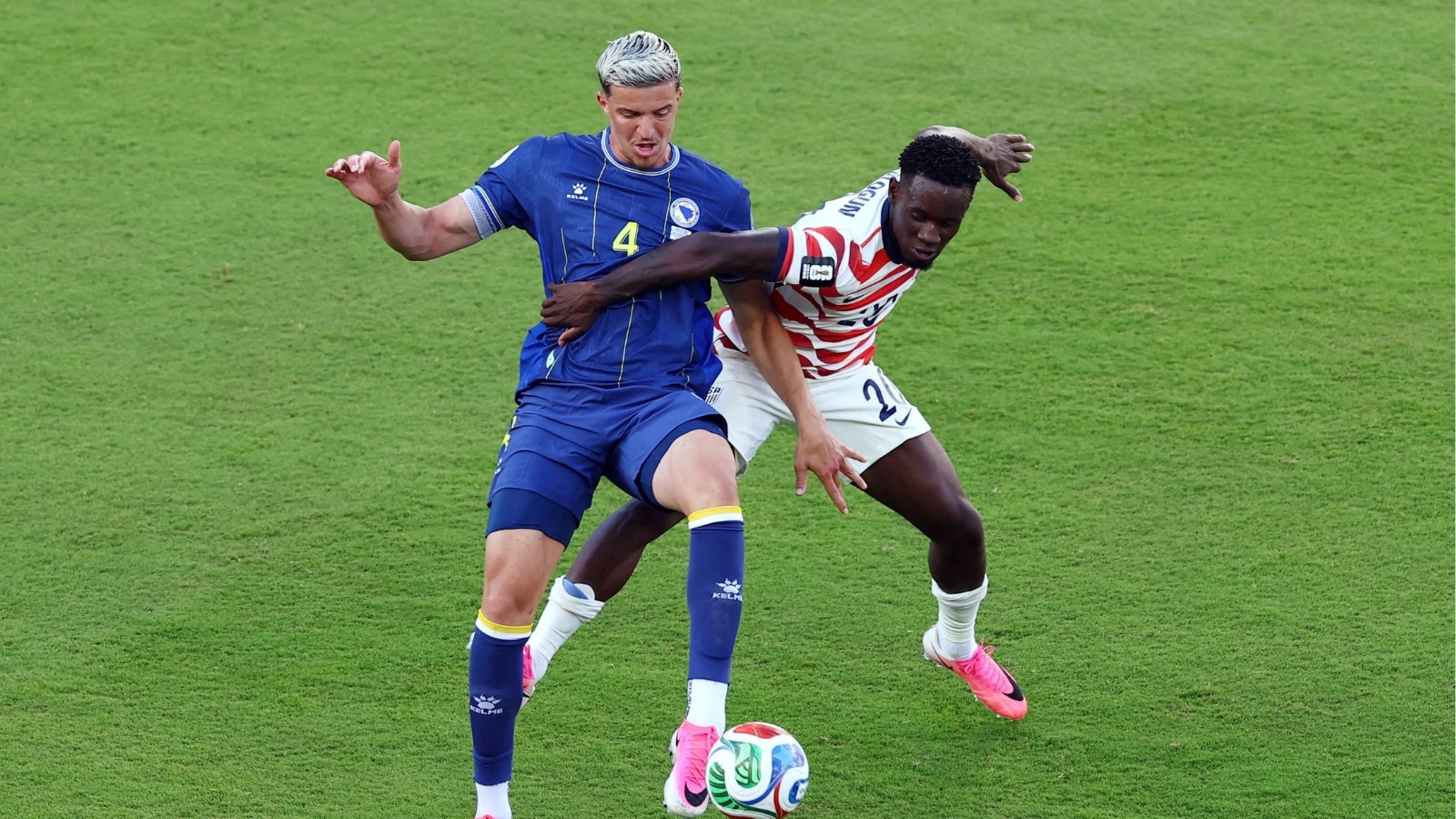
To understand why the Belgian federation went completely nuclear, you have to look at what happened in the Round of 32. During the US team's 2-0 win over Bosnia and Herzegovina, Balogun caught defender Tarik Muharemović on the ankle. It looked clumsy rather than malicious, but after a quick VAR check, the referee flashed a straight red card.
Under normal circumstances, the story ends there. Article 10.5 of the 2026 FIFA World Cup Competition Regulations states explicitly that a direct red card results in an automatic suspension from the team's subsequent match. FIFA even re-emphasized this exact rule in Circular No. 16, sent to every single federation back in May.
Then the phones started ringing.
US President Donald Trump made a direct personal call to FIFA President Gianni Infantino to argue Balogun's case. By Sunday evening, FIFA's disciplinary committee announced it had provisionally lifted the suspension for one year, replacing the mandatory sporting ban with a $40,000 fine. Balogun was suddenly clear to play against Belgium.
The last time a World Cup red card suspension was overturned like this? 1962, when the president of Chile successfully lobbied to keep Brazilian legend Garrincha in the tournament final.
Inside the Belgian Federation's Bureaucratic Trap
The RBFA didn't find out about the decision through official channels. They found out from media leaks.
When the Belgian soccer federation demanded a copy of the ruling and a clear explanation of how the process worked, FIFA didn't send answers. Instead, they sent a letter stating they chose to interpret Belgium's inquiry as a formal legal appeal.
Zurich then informed the RBFA they had only a few hours to complete an appeal that they hadn't actually filed yet. It was a classic bureaucratic ambush. According to FIFA's own rules, a reasoned decision must be officially shared with an opponent before an appeal is even admissible. FIFA essentially forced an appeal into existence and engineered it to be thrown out on technical grounds, all while keeping the actual text of the Balogun ruling hidden.
It gets worse. During the mandatory match coordination meeting in Seattle, Belgian officials noticed that FIFA had completely scrubbed the section regarding player suspensions from its official presentation slide deck. That exact presentation topic had been featured before all four of Belgium's previous matches. When the RBFA asked why the rules were suddenly being hidden, FIFA ignored them.
Faced with a complete wall of silence, the Belgian federation notified US Soccer that they were playing the match under protest, viewing Balogun as entirely ineligible.
Why Article 27 Sets a Dangerous Precedent
FIFA defended its shocking U-turn by pointing to Article 27 of its Disciplinary Code. This specific clause gives a judicial body the power to suspend the enforcement of a disciplinary measure. They argued that the fine and a one-year probationary period meant the sanction was simply "dormant" unless Balogun committed a similar foul within the next 12 months.
But European soccer bodies aren't buying the explanation. UEFA immediately released a blistering statement, warning that when the guardians of the game stop guaranteeing the certainty of the rules, the entire integrity of the World Cup is compromised.
The technical arguments FIFA used to defend the move are incredibly weak. They claimed that overturning red cards is common practice in top-tier European domestic leagues. True, but domestic leagues use an independent panel to review obvious referee errors before a suspension kicks in. They don't have politicians calling the organization's president to settle matters privately over the weekend.
The long-term problem here is obvious. If political intervention can wipe away a red card for a host nation's star striker, what happens during the next knockout round? What stops another powerful nation from demanding a clean slate for their captain before a semi-final?
What Happens Next in the Legal Battle
Don't let the 4-1 final score fool you. Just because Belgium won the match doesn't mean this legal battle evaporates. The RBFA made it clear that their campaign is about defending the fundamental ethics of international competition, and they have multiple avenues left to pursue.
First, the Belgian federation can escalate the case directly to the Court of Arbitration for Sport (CAS) in Lausanne, Switzerland. While CAS cannot retroactively change the 4-1 match result or put the US back in the tournament, a formal ruling against FIFA would be catastrophic for Gianni Infantino's administration. It would legally prove that the governing body violated its own operational tournament regulations to favor a specific team.
Second, there is the potential for civil litigation. The European Commission, operating right out of Brussels, has already chimed in. Glenn Micallef, the EU commissioner for sport, publicly warned that weaponizing sporting rules for political purposes destroys the autonomy of the sport. If the RBFA pushes forward with a civil suit, it could force FIFA to open its books and reveal the exact timeline of the communications between the executive branch and Zurich's disciplinary committee.
For fans and federations alike, the immediate next step is keeping a close eye on the remaining World Cup knockout matches. The precedent has been set. Every single red card issued from this point forward will be judged against the lenient, politically altered standard given to Folarin Balogun. If FIFA expects teams to respect the referee on the field, they need to stop rewriting the rules of the game behind closed doors.