Everyone loves a good PR victory. Drop a few thousand tons of recycled clamshells into the muck, mobilize a platoon of sunburned volunteers in hi-vis vests, snap some aerial drone shots of dark patches forming against the pale sand, and declare nature officially healed. Eighteen months later, press releases flood the local news cycle. Crabs are scuttling. Small fish are darting. The ecosystem has returned.
Except it has not.
I have watched millions of conservation dollars get funneled into these coastal vanity projects, and the reality on the water bears almost no resemblance to the glossy marketing copy. We are mistaking temporary colonization for structural rehabilitation. An artificial reef placed in an unstable hydrodynamic environment without addressing the upstream hydrologic architecture is not restoration. It is an expensive aquarium decoration exposed to the elements.
Let us dismantle the lazy consensus currently dominating marine biology boardrooms.
The Eighteen-Month Illusion
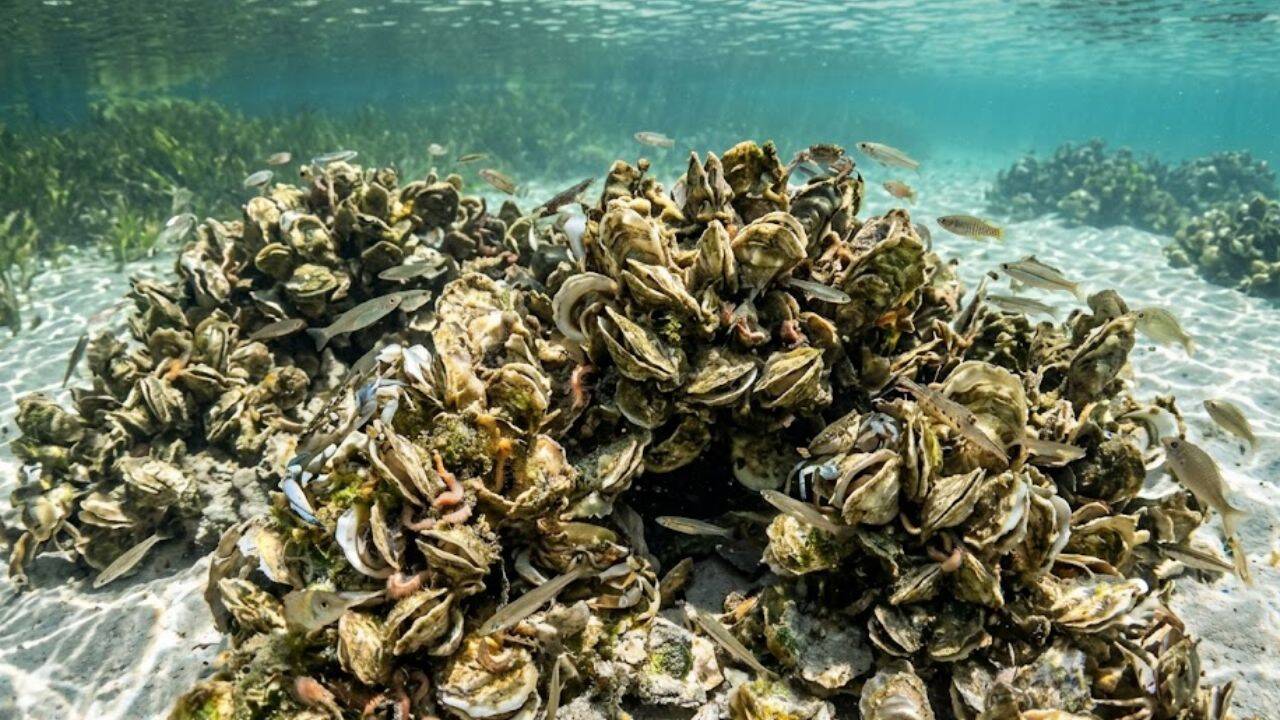
The core narrative of the typical Florida oyster restoration project follows a predictable script. Substrate goes down. Larvae drifting on the current settle onto the calcium carbonate. Within a year and a half, biomass metrics tick upward. Barnacles arrive first, followed by mud crabs, small blennies, and transient juvenile seatrout using the newly textured bottom as cover from predatory pelagics.
Researchers publish papers celebrating the rapid bounce in local biodiversity. Foundations write glowing annual reports. Donors feel great about their checks.
Then year three hits.
A severe summer storm cycle churns the bay. Or worse, the state water management district opens upstream floodgates to dump nutrient-laden, hypersalinity-altering agricultural runoff straight down the estuary to protect inland real estate. The newly established reef, lacking the structural depth, genetic diversity, and sediment-anchoring root systems of a historic, self-healing bed, experiences massive mortality. The shells sink into the soft silt. The recruitment loop breaks.
We did not restore an ecosystem. We built a temporary nursery that resets to zero every time the regional water management regime flexes its muscles.
The Problem With Counting Crabs
Ecological health is routinely measured by counting the wrong things. When monitoring teams evaluate a restoration site, they tally species richness and density on the hard substrate itself. Naturally, if you drop solid structure onto a featureless mudflat, organisms will inhabit it. Put a parked car in the middle of a desert and lizards will use it for shade. That does not mean you have restored the desert.
Focusing entirely on the micro-habitat of the reef ball or shell bag ignores the macro-failure of the surrounding watershed. Oysters are filter feeders, yes, but they are also geological architects. A functional oyster reef does not just sit on the bottom; it grows vertically at a rate that matches or exceeds relative sea-level rise. It dampens wave energy, protects marsh grass behind it, and alters local sediment transport.
When we build low-profile reefs that depend entirely on artificial seeding or passive spat settlement without fixing the underlying water quality, salinity balance, and sediment starvation, we are putting a band-aid on an arterial bleed.
Look at the data from independent monitoring groups working outside the institutional grant feedback loop. Across dozens of small-scale shell-bag deployments in Florida estuaries, long-term survival rates past the five-year mark hover well below what the brochures advertise. The survivors are almost exclusively those located in hyper-specific, sheltered micro-locations where natural hydrology was already doing half the heavy lifting.
The Uncomfortable Economics of Shell Recycling
Consider the logistics of the raw material. Conservation groups proudly collect bucketloads of discarded shells from local seafood restaurants. It feels grassroots. It feels authentic.
It is also a drop in the ocean.
An industrial-scale restoration project requires thousands of tons of material. Restaurant recycling programs, while great for community engagement, supply a microscopic fraction of what is actually needed to reverse decades of estuarine degradation. To compensate, projects increasingly rely on mined fossil shell or concrete aggregate.
When you factor in the fuel burned to haul restaurant waste, cure it, transport it to staging yards, load it onto barges, and dump it into shallow bays, the carbon ledger of a volunteer shell-bagging day starts to look deeply questionable. We are burning diesel to sink calcium carbonate into an environment that will likely bury it in silt within thirty-six months because we refuse to tackle the real culprit: the unnatural pulse-release of freshwater from Lake Okeechobee and surrounding agricultural canals.
What Real Coastal Recovery Looks Like
If you want to fix Florida's estuaries, stop obsessing over the terminal end of the pipe and start fighting upstream.
True recovery requires three radical shifts in how we approach marine intervention.
First, restore natural freshwater timing and volume. Oysters need a delicate salinity gradient. Slamming an estuary with billions of gallons of polluted agricultural discharge followed by months of drought-induced hypersalinity kills adult oysters faster than any predator. Until water managers are forced to prioritize estuarine health over politically connected sugar and real estate interests, every shell placed in the water is destined for the graveyard.
Second, design for vertical accretion, not just initial colonization. Stop building flat, single-layer reefs that easily get buried by shifting silt. We need massive, high-relief structures engineered to withstand severe tropical storm energy and keep pace with rising tides.
Third, stop funding projects based on vanity metrics. Tie conservation grants to five-year and ten-year survival benchmarks, not eighteen-month biodiversity spikes. If a restoration site collapses the moment a hurricane passes or a seasonal discharge occurs, it was poorly engineered, no matter how many mud crabs lived there during their first summer.
The coast does not need more feel-good volunteer photo-ops. It needs policy courage and engineering that respects the raw physics of water and sediment.
Stop patting yourselves on the back for dumping shells in the mud while the tap upstream remains wide open.